Fewer People Are Going to College. Here's Why That's a Good Thing. The time and money spent on college can often be used more productively. Reason · Apr 25, 2023
Spying, sabotage, subversion, people-smuggling: the brave women who resisted the Nazis through non-violence Many people think Nazi Germany was beaten only through military violence, and mainly by men. As Barack Obama said in 2009: “Nonviolence could not have halted Hitler’s armies”. In fact, non-violent action was widely used in resisting Nazism. Brave women often led it. They later got little recognition, though this… The Conversation · Apr 24, 2023
Genocide resisters, long overlooked by history, step into the spotlight The anniversary of the Armenian Genocide is marked every year on April 24. That was the date in 1915 when hundreds of Armenian community leaders were arrested by the government of the Ottoman Empire in the capital Constantinople, now known as Istanbul. The Conversation · Apr 24, 2023
Diseases gave us the rise of Christianity, the end of the Aztecs and public sanitation. How might future plagues change human history? “Every once in a while a book lands on your desk that changes the way you perceive the world you live in, a book that fundamentally challenges your understanding of human history.” So began the blurb that came with this book. Aha! I thought. The usual advertising hyperbole, a gross… The Conversation · Apr 18, 2023
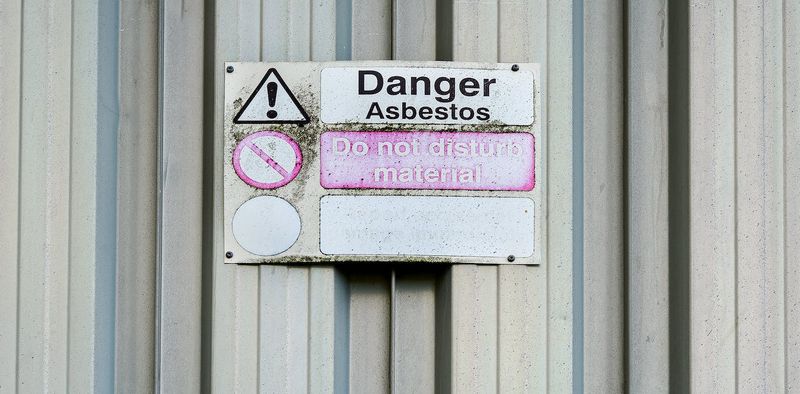
The hidden danger of asbestos in UK schools: 'I don't think they realise how much risk it poses to students' Being diagnosed came as a complete shock. You do not imagine that you are going to go into a school to teach children and come out with an industrial disease. The Conversation · Apr 18, 2023
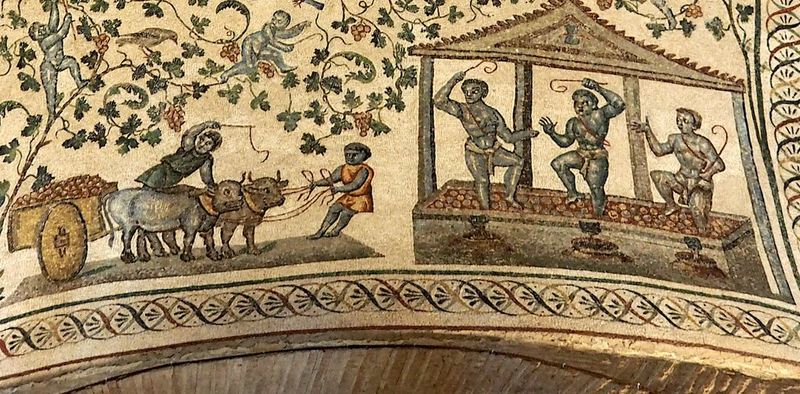
A newly uncovered ancient Roman winery featured marble tiling, fountains of grape juice and an extreme sense of luxury Recent excavations at the Villa of the Quintilii uncovered the remains of a unique winery just outside Rome. The Conversation · Apr 17, 2023
Caveat emptor: a new book on the best lines in Latin misses the bigger picture One of my favourite Roman artefacts to show visiting school groups or beginner’s Latin classes is a floor mosaic from the House of the Tragic Poet in Pompeii. The mosaic depicts a chained dog accompanied by the Latin words, CAVE CANEM (“beware of the dog”). The Conversation · Apr 17, 2023
Friday essay: in an age of catastrophe is there still a place for utopian dreams? Or might our shared vulnerability be the key? As utopian oases dry up, a desert of banality, and bewilderment spreads … The Conversation · Apr 13, 2023
Defying the Holocaust didn't just mean uprising and revolt: Remembering Jews' everyday resistance Richard Glazar insisted that no one survived the Holocaust without help. To this Prague-born Jewish survivor, who endured Nazi imprisonment at Treblinka and Theresienstadt, plus years in hiding, it was impossible to persevere without others’ support. Glazar conceded that some of his fellow Treblinka survivors were “loners,” but he nevertheless… The Conversation · Apr 11, 2023
The crucifixion gap: why it took hundreds of years for art to depict Jesus dying on the cross The cross, or crucifix, is arguably the central image of Christianity. The Conversation · Apr 6, 2023
International Criminal Court has cited Russia's deportation of Ukrainian children a war crime: on Russia's long history of weaponising deportation On March 17, the International Criminal Court cited Russia’s deportation of Ukrainian children as a war crime for which President Vladimir Putin is being held responsible. The Conversation · Apr 3, 2023
Revealed: How archaeologists are shedding new light on how Hitler was defeated Operation Cobra was arguably the most successful allied western European military land operation of the Second World War The Independent UK · Mar 31, 2023
This Buddhist sculpture probably won’t ‘rewrite history’ – Western Australia already has a rich Chinese past Does the discovery of a Ming Dynasty Buddha sculpture found near Shark Bay in remote Western Australia “rewrite history” and suggest the Chinese first visited Australia 600 years ago? The Conversation · Mar 27, 2023
How do superconductors work? A physicist explains what it means to have resistance-free electricity The modern world runs on electricity, and wires are what carry that electricity to every light, television, heating system, cellphone and computer on the planet. Unfortunately, on average, about 5% of the power generated at a coal or solar power plant is lost as the electricity is transmitted from the… The Conversation · Mar 24, 2023
Daily Mirror · Mar 17, 2023 Inside Abu Ghraib prison where US tortured Iraqi detainees in horrendous war crimes WARNING DISTRESSING CONTENT: On March 20, 2004, the US and UK Coalition invaded Iraq on the false belief that dictator Saddam Hussein was manufacturing weapons of mass destruction and planned to use them on his own people
ABC News · Mar 17, 2023 St Gertrude's Day prompts brief look at cats in art history Felines have been featured in fine, and not-so-fine, art since long before their memes and videos dominated the internet.
The Conversation · Mar 13, 2023 What exactly is the internet? A computer scientist explains what it is and how it came to be Curious Kids is a series for children of all ages. If you have a question you’d like an expert to answer, send it to [email protected].
The Conversation · Mar 6, 2023 Music, silence, love and power: the engrossing story of a child prodigy in the court of Louis XIV Brilliant. Inventive. Devilish.
ABC News · Mar 3, 2023 Pink Floyd's enigmatic, record-breaking album The Dark Side Of The Moon turns 50 The iconic cover art, the boundary-pushing sonics, that thing where it supposedly synchronises with The Wizard Of Oz — Pink Floyd's legendary album is one of the most successful releases of all time.
The Conversation · Mar 1, 2023 Hilma af Klint, a painter at the forefront of abstraction Can an exhibition of work by a little-known Swedish artist change our understanding of avant-garde art? The history of early 20th-century art seems to be sufficiently set that the spectral appearance of an artist on the periphery of Europe wouldn’t change it in any way. However, the phenomenon of Hilma…
The Conversation · Feb 27, 2023 Join the Counterforce: Thomas Pynchon's postmodern epic Gravity's Rainbow at 50 Books age at variable rates. Some, indexed to topicalities with mayfly longevities, are decrepit before they’re published. Others, lively and seductive on first appearance, are dry husks a decade later. More durable works may still feel noble a century hence, if suspended in aspic.
The Conversation · Feb 24, 2023 Why are so many Gen Z-ers drawn to old digital cameras? The latest digital cameras boast ever-higher resolutions, better performance in low light, smart focusing and shake reduction – and they’re built right into your smartphone.
The Conversation · Feb 23, 2023 Friday essay: 'killed by Natives'. The stories – and violent reprisals – behind some of Australia's settler memorials First Nations people please be advised this article contains distressing imagery of a retaliatory shooting.
The Conversation · Feb 22, 2023 Enrico Caruso: the first big opera star of the 20th century 25 February 2023 marks the 150th anniversary of the birth of Enrico Caruso, one of the most admired tenors in history and one of the first to have his voice preserved for posterity through phonographic recordings.
Daily Mirror · Feb 19, 2023 Unsolved mystery of redhead serial killer after bodies found dumped along motorways The term "Redhead Murders" was given to six to eleven redhead women after the first murder in 1980 in Wetzel County, West Virginia, US, which was committed by a suspected male serial killer








 International Business Times UK
 The Conversation
 Bored Panda
 The Independent UK
 Euronews
 LiveScience
 Radio France Internationale
 Salon
 Space
