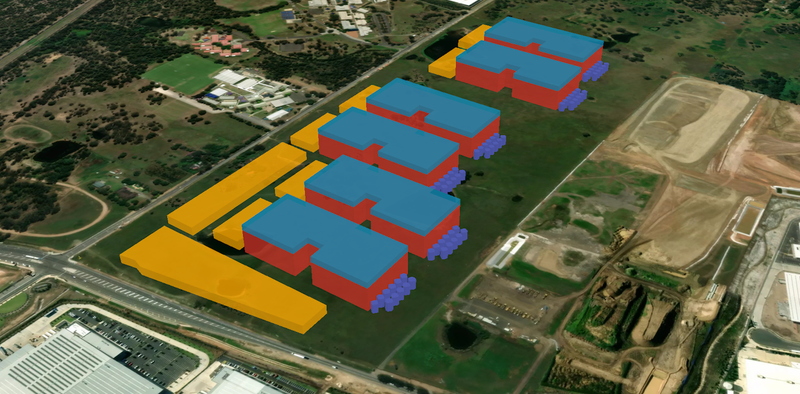
Can Australia build one of the world’s largest data centres? ➡️ Click here to read the full interactive The Conversation · Feb 9
Autistic people seem to feel joy differently – here’s what it can tell us about neurodivergence When people talk about autism, they often think about a child who is different and may be distressed by their surroundings. Or if the conversation moves beyond childhood, the focus might be about an autistic adult with analytical superpowers, such as The Good Doctor or Patience, who still has difficulty… The Conversation · Feb 9
The workplace wasn’t designed for humans – and it shows Input. Output. Targets met. Value created. Performance delivered. Strip work down to its essentials and for many people, this is what remains: a machine-like focus on producing, performing and optimising. The Conversation · Feb 9
Why walking in a national park in the dark prompts people to turn off lights at home As soon as you drive over the top of the Peak District and down into Sheffield you can see the light pollution – and it’s horrible, said a participant in a research project into darkness and light pollution. The Conversation · Feb 6
US experiencing largest measles outbreak since 2000 – 5 essential reads on the risks, what to do and what’s coming next The measles outbreak in South Carolina reached 876 cases on Feb. 3, 2026. That number surpasses the 2025 outbreak in Texas and hits the unfortunate milestone of being the largest outbreak in the U.S. since 2000, when the disease was declared eliminated here. The Conversation · Feb 6
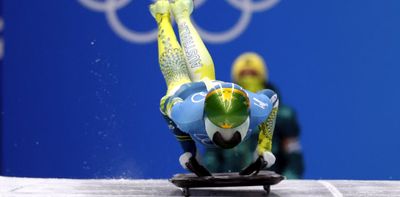
From ski jumps and sliding bobsleds to engineering snow, here are 5 essential reads on the science of the Winter Olympics Thousands of the world’s best athletes will flock to Milan and Cortina d’Ampezzo in Italy in February 2026 for the 25th Winter Olympics. While sports fans are focused on the athletic feats of the Olympians, science enthusiasts can also have fun watching them. The Conversation · Feb 6
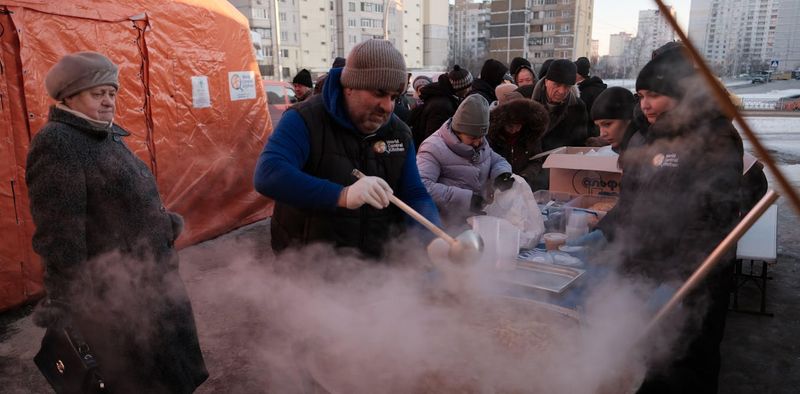
Ukraine is being left out in the cold This article was first published in The Conversation UK’s World Affairs Briefing email. Sign up to receive weekly analysis of the latest developments in international relations, direct to your inbox. The Conversation · Feb 6
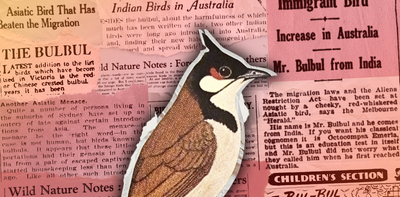
Can a bird be an illegal immigrant? How the White Australia era influenced attitudes to the bulbul In early January, authorities from South Australia’s Department of Primary Industries took to the streets of Adelaide on the hunt for a suspicious individual. The Conversation · Feb 5
How the UK government plans to limit ‘forever chemical’ pollution – and what’s missing The UK government has published its first national plan to deal with per- and polyfluoroalkyl substances, better known as Pfas or “forever chemicals”. These chemicals have been used for decades in products such as firefighting foams, non-stick cookware, clothing, electronics and many industrial processes. Because many Pfas do not break… The Conversation · Feb 5
Milan Cortina Winter Olympics: history, new events and Australian medal chances This year’s Winter Olympics will be held in northern Italy, starting on Friday. The Conversation · Feb 5
City skylines need an upgrade in the face of climate stress When structural engineers design a building, they aren’t just stacking floors; they are calculating how to win a complex battle against nature. Every building is built to withstand a specific “budget” of environmental stress – the weight of record snowfalls, the push of powerful winds and the expansion caused by… The Conversation · Feb 4
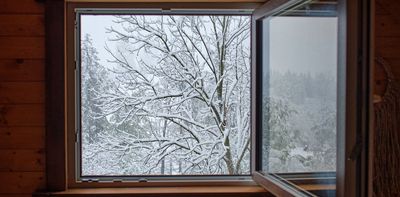
Lüften sounds simple – but ‘house-burping’ is more complicated in Pittsburgh Recently, the German term “lüften” has been circulating on social media and trending on Google. The term refers to the practice of opening windows and doors to replace stale indoor air with outdoor air, a longtime practice in many European homes. Americans have dubbed it “house burping” in many videos… The Conversation · Feb 4
How to keep plant-based foods on the table now that Veganuary is over Campaigns like Veganuary (an initiative that encourages people to eat a plant-based diet in January) have been hugely successful in raising awareness about the climate and the health benefits of eating this way. However, making the switch longer term is not always easy – especially when there are usually limited… The Conversation · Feb 3
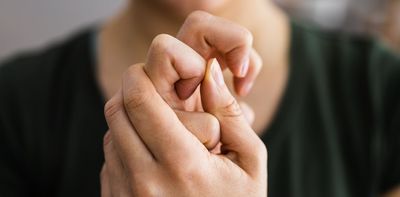
Is cracking your neck bad? And why can it feel so good to crack your back, knuckles and knees? Joint cracking is one of those habits most of us acquire without thinking about it. A knuckle popped mid-sentence. A back twisted as we stand up. A neck gently crunched while the kettle boils. It is common, oddly satisfying and, for anyone sitting nearby, faintly alarming. The Conversation · Feb 3
The Conversation · Feb 3 These voices are the loudest in Australia’s ‘climate wars’ There’s a reason political commentators refer to Australia’s “climate wars”. Every time a climate policy is put on the table, supporters and opponents come out in force and duke it out.
The Conversation · Feb 2 Greenland’s ‘green mining’ row highlights the key tensions in the energy transition Green finance is built on a promise: that capital can be redirected to support the transition to a low-carbon economy while avoiding the environmental mistakes of the past. That promise is getting harder to keep.
The Conversation · Feb 2 Drastic water shortages and air pollution are fuelling Iran’s protests This roundup of The Conversation’s climate coverage was first published in our award-winning weekly climate action newsletter, Imagine.
The Conversation · Feb 2 Preventable deaths in a warming world: how politics shapes who lives and who dies In Brownsville, Texas, three members of the Galvan family died after a malfunctioning air conditioner left them exposed to extreme heat. Aged between 60 and 82, all three had chronic health conditions, including diabetes and heart disease. This makes it harder for the body to regulate temperature and increases vulnerability…
The Conversation · Feb 2 New data show where the parties got their money from in the lead-up to the 2025 election Australia’s political parties set new records in funds raised and spent in the lead-up to the 2025 federal election. Now, nine months later, Australians finally get a look at who funded the parties’ election campaigns.
The Conversation · Jan 30 Introducing our new Science & Technology editor The Conversation Canada is thrilled to announce Heather Walmsley, one of the founding editors who helped us launch in 2017, is returning to the fold. She was instrumental in establishing The Conversation Canada as an independent source of news and views from the academic and research community. Over the next…
The Conversation · Jan 30 New limits on global trade of sharks won’t be enough to save them from overfishing – new research More than one-third of sharks and rays are now threatened with extinction, making them among the most imperilled vertebrates on Earth. Why? Overfishing, both as targeted catches for their valuable fins, meat, gills and liver oil, and as bycatch in nets and lines set for other fish.
The Conversation · Jan 30 Some people gain confidence from thinking things through, others lose it – new research Have you ever made a decision, only to find yourself second-guessing it moments later? Maybe you spoke up in a meeting and immediately wondered if you said the wrong thing, or left a social gathering feeling confident, only to replay your actions in your head and feel uncertain. For many…
The Conversation · Jan 29 Trump’s clash with the gun lobby This article was first published in The Conversation UK’s World Affairs Briefing email. Sign up to receive weekly analysis of the latest developments in international relations, direct to your inbox.
The Conversation · Jan 29 Curious kids: how old is fire on Earth? Please can I ask how old is fire on earth, not tamed by people but since when has there been fire and flames on the planet.
The Conversation · Jan 28 Small-scale farmers produce more of the rich world’s food than previously thought – new study Who grows our food? This seemingly simple question is getting harder to answer in a world where our food crosses borders to get to our plate.













 The Conversation
 LiveScience
 Medical Daily
 The Economic Times
 Bored Panda
 International Business Times
 Latin Times
 Space
Space
 We Got This Covered
