Thursday news quiz: Stolen jewels, breakdancing fools and a car that’s breaking the rules Test yourself on topical news trivia, pop culture and general knowledge every Thursday. How will you fare? The Guardian - UK · Sep 3
Astronomers discover mysterious 10-sided cloud structure at Saturn's south pole A mysterious giant 10-sided pattern of clouds has recently formed around Saturn's south pole, a new study finds. Space · Sep 2
Scientists find a huge 10-sided wave pattern swirling in the clouds over Saturn's south pole Scientists have discovered an enormous 10-sided wave pattern in the icy ammonia clouds over Saturn's south pole The Independent UK · Sep 2
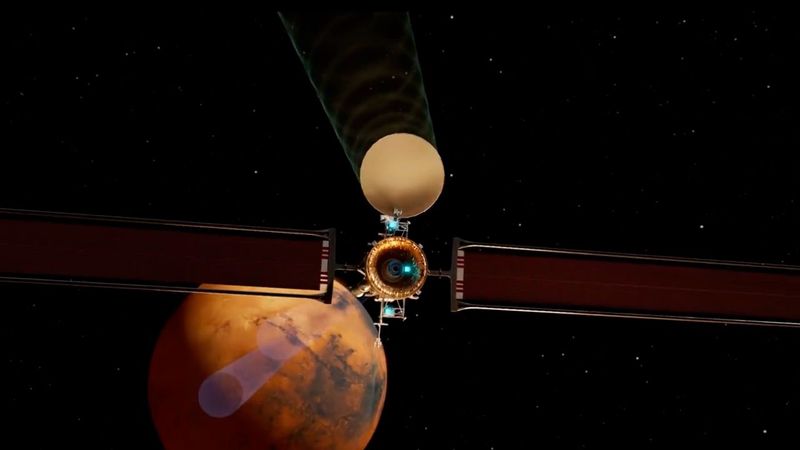
Blue Origin wins $700 million contract to build NASA's next Mars orbiter NASA has picked Blue Origin to build its next Mars telecommunications orbiter, awarding a $700 million contract to Jeff Bezos' spaceflight company. Space · Sep 2
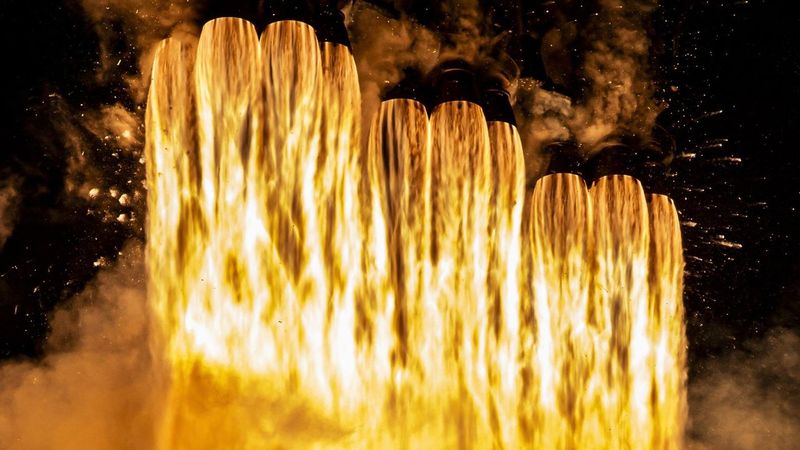
Falcon Heavy brings the heat | Space photo of the day for Sept. 2, 2026 An incredible launch photo captures fire spewing from a SpaceX Falcon Heavy rocket during the launch of NASA's Roman Space Telescope on Aug. 30, 2026. Space · Sep 2
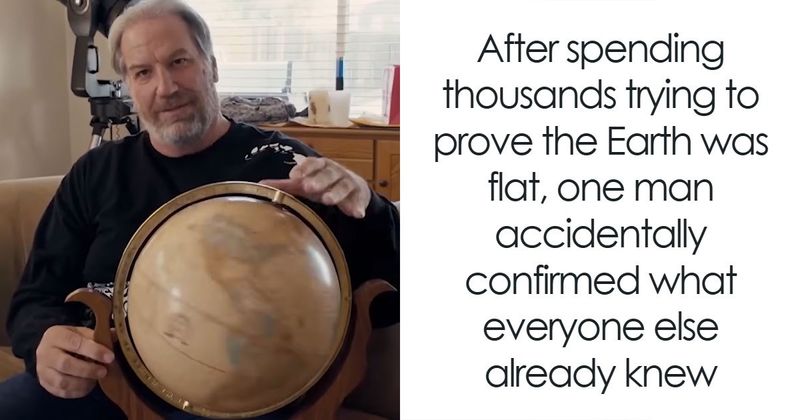
Flat Earther Spends $20,000 On An Experiment To Prove The Earth Is Flat, Does The Exact Opposite Bob Knodel spent $20,000 building an experiment to prove the Earth was flat. His own equipment proved the exact opposite, and he spent the rest of his life trying to make it make sense. Read the full article to see how this true believer was made to doubt himself. Bored Panda · Sep 2
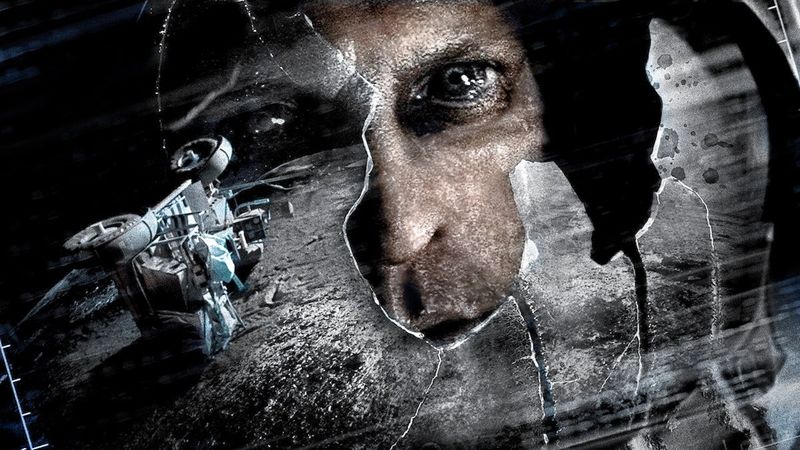
15 Years Later, The Worst Found Footage Movie Still Falls Frustratingly Short Ironically, maybe someone should revisit the premise. Inverse · Sep 2
Trump is proposing a US Space Academy – if created, it could blur the lines between NASA and the military During a visit to NASA’s Johnson Space Center in Houston on Aug. 28, 2026, President Donald Trump signed an executive order to create a United States Space Academy. The Conversation · Sep 2
Nasa scientists grew corn seeds in space and found something strange: How microgravity confused roots & shoots that normally know exactly which way to grow Nasa scientists grew corn seeds in space: NASA conducted an intriguing experiment on corn seeds grown in the absence of gravity’s guiding force. The seedlings developed healthy-looking tissues but grew in unpredictable directions, highlighting the important role gravity plays in plant orientation and growth. Other plants, including Arabidopsis, have also… The Economic Times · Sep 2

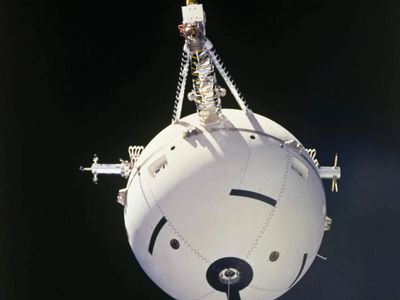
In 1996, Columbia reeled out a satellite on a 19.7-km conducting tether; the line snapped after nearly 5 hours of data, but the system reached about 3,700 volts The Space Shuttle Columbia embarked on an innovative mission, aiming to generate electricity through a tethered satellite system employing a long wire. This experiment yielded impressive voltage and current, albeit briefly. Unfortunately, a flaw in the tether's insulation led to an electrical arc and subsequent breakage. Yet, the mission provided… The Economic Times · Sep 2
The moon might be hiding a history of ancient supernova explosions Scientists have managed to extract the history of supernova explosions in our cosmic backyard from radioactive isotopes found in moon dust. Space · Sep 2
In 2010, NASA launched a 12-pound, loaf-of-bread-sized satellite with two Bacillus populations; radiation exposure reached about 15 times that of the ISS orbit NASA's O/OREOS mission embarked on an exciting journey to observe how bacteria withstand the rigors of space radiation. The compact satellite, about the size of a loaf of bread, zipped around Earth’s magnetic poles, subjecting dried bacterial spores to intense radiation over several months. While initial germination and growth were… The Economic Times · Sep 2
NASA satellites compared the Aral Sea between 2000 and 2014; river diversion left its eastern basin as exposed desert NASA's satellite images illustrate a dramatic transformation of the Aral Sea from 2000 to 2014, driven by the diversion of rivers for agricultural purposes. The resulting shrinkage has left behind salt flats and disrupted local communities and climates. Nevertheless, the construction of dams by Kazakhstan has sparked a modest recovery… The Economic Times · Sep 2
In 1998, NASA sent oyster toadfish into space on Space Shuttle Columbia; over 16 days in orbit, researchers studied how their balance systems adapted to microgravity In 1998, saltwater toadfish participated in the Columbia's Neurolab mission, offering insights into the effects of microgravity on the nervous system. Their inner ear adaptations revealed how their vestibular system modified its sensitivity in the absence of gravity. Upon returning to Earth, the adjustments mirrored the disorientation experienced by astronauts,… The Economic Times · Sep 2
The Economic Times · Sep 2 In 1998, NASA flew crickets on Neurolab to study how spaceflight affects developing nervous systems; across the 16-day mission, they joined about 2,000 animals in space During the Neurolab mission, the space shuttle Columbia hosted 2,000 animals, crickets being one of them, to examine spaceflight's impacts on brain and nervous system development. By focusing on the crickets' fundamental gravity-sensing mechanisms, scientists identified key alterations in cellular processes. These discoveries on neuropeptide and interneuron dynamics are vital…
The Economic Times · Sep 2 In 1967, Biosatellite II irradiated parasitic wasps for 2 days in orbit; females later laid as many eggs as controls, and hatchability remained excellent A 1967 NASA mission sent parasitic wasps into orbit around Earth. These wasps showed surprising resistance to radiation damage while in space. Ground experiments failed to replicate this protective effect observed in orbit. This old experiment raises questions about spaceflight's impact on living cells. The findings remain relevant for future…
International Business Times UK · Sep 2 Trump Health Clips Spark Dementia Claims From Psychologist as White House Doctor Insists He's Fine A forensic psychologist's viral clips have sparked fresh claims of dementia and stroke in Donald Trump, but the president's White House doctor says he is in excellent health.
Space · Sep 1 Two astronauts replace ISS camera and docking aid on 6th-ever all-female spacewalk (video) NASA astronaut Jessica Meir and ESA astronaut Sophie Adenot replaced a camera and a docking aid during a 6-hour, 49-minute spacewalk outside the International Space Station on Tuesday (Sept. 1).
The Economic Times · Sep 1 In 2006, NASA and French Space Agency CNES launched a satellite in a joint mission to probe the properties of Earth's thin clouds and aerosols In 2006, NASA and French Space Agency CNES launched a satellite in a joint mission to probe the properties of Earth's thin clouds and aerosols. CALIPSO studied clouds and airborne particles from orbit. Its data helped scientists understand climate, weather and air quality, while its observations improved atmospheric models and…
The Economic Times · Sep 1 In 1990, NASA sent a X-ray telescope into space on Space Shuttle Columbia for the first time to perform observations of galactic and extragalactic objects: What was BBXRT? In 1990, NASA sent a X-ray telescope into space on Space Shuttle Columbia for the first time to perform observations of galactic and extragalactic objects. The Broad Band X-ray Telescope, or BBXRT, flew during the STS-35 mission as part of the ASTRO-1 payload. It studied X-ray sources across a broad…
Latin Times · Sep 1 Trump Wants a Space Academy. Houston's Already Lobbying For It Trump's new commission has 120 days to design a US Space Academy. Houston wants it, but cost and NASA's Latino hiring gap remain open.
The Economic Times · Sep 1 Science says space smells different after astronauts return inside, Here’s the chemistry behind the strange odor Astronauts have described the smell as resembling spent gunpowder, ozone, burning metal and welding fumes. NASA even worked with fragrance chemist Steven Pearce to create a simulated version of the odor for astronaut training.
Space · Sep 1 NASA's Roman Space Telescope is just one of a few missions named after real-life women NASA's Roman space telescope, which launched on Aug. 30, is part of a small set of missions named after female historical figures.
International Business Times UK · Sep 1 Forensic Psychologist Assesses Donald Trump's Public Speeches for Potential 'Neurological Issues' Dr. John Paul Garrison analyses Trump's movements during a NASA speech, suggesting possible neurological signs, while emphasising no diagnosis is made.
Space · Sep 1 Repairing the ISS 250 miles above Earth | Space photo of the day for Sept. 1, 2026 A photo of ESA astronaut Sophie Adenot on the outside of the International Space Station captures the staggering altitude at which the crewed laboratory orbits Earth.