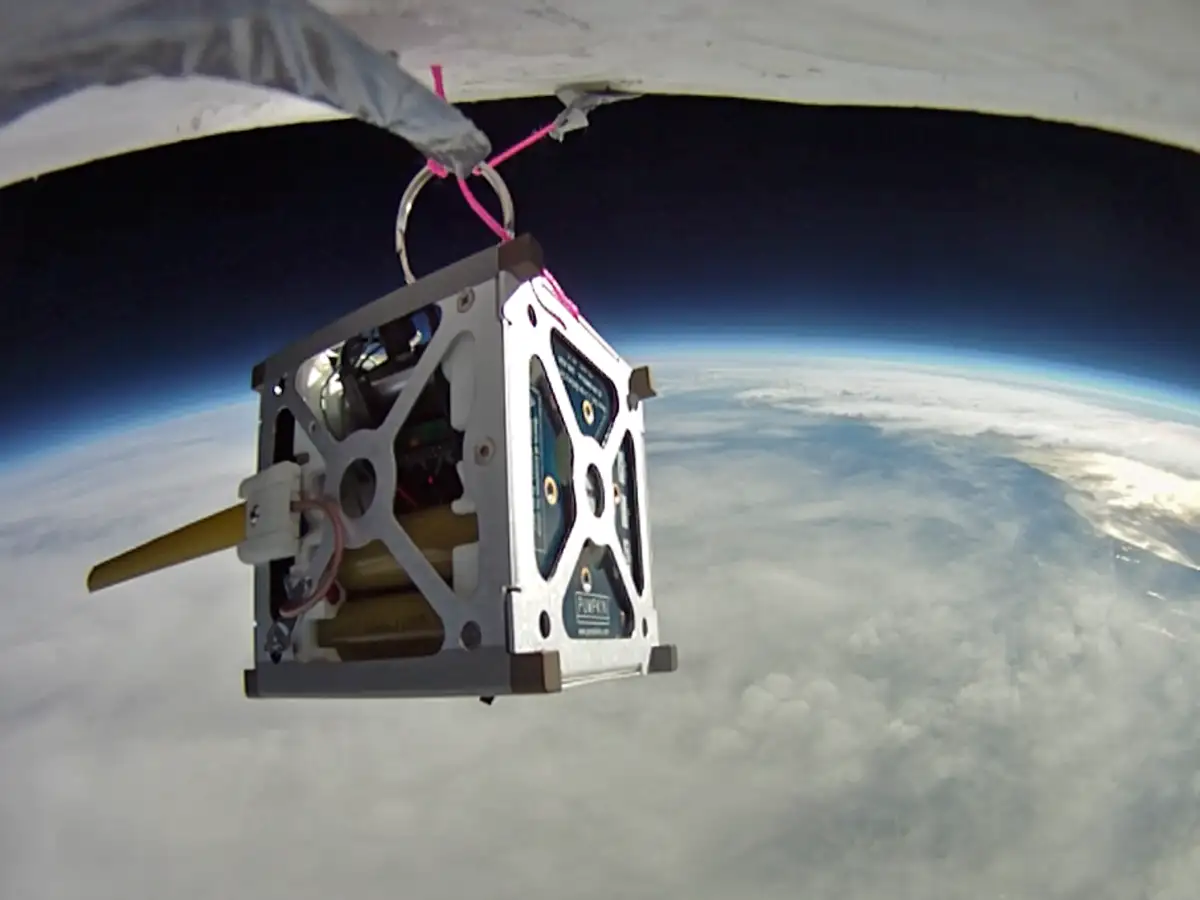
Space exploration and spaceflight research often evoke images of astronauts and large spacecraft, but some of the most revealing experiments have flown on satellites no bigger than a loaf of bread. However, O/OREOS, a spaceflight mission conducted by NASA, worked in quite a different way. In terms of size and weight, the entire spacecraft did not exceed about 12 pounds and was roughly the size of a loaf of bread. Even so, it addressed a key question: how can living organisms survive in a radiation environment far harsher than the one experienced by astronauts.
O/OREOS, short for Organism/Organic Exposure to Orbital Stresses, launched on 19 November 2010 aboard a U.S. Air Force Minotaur IV rocket from Kodiak, Alaska, according to NASA Ames Research Center's mission overview on eoPortal. Two separate cultures of Bacillus subtilis bacteria were located on the spacecraft in their dried state and designed for automatic activation during various periods of the mission.