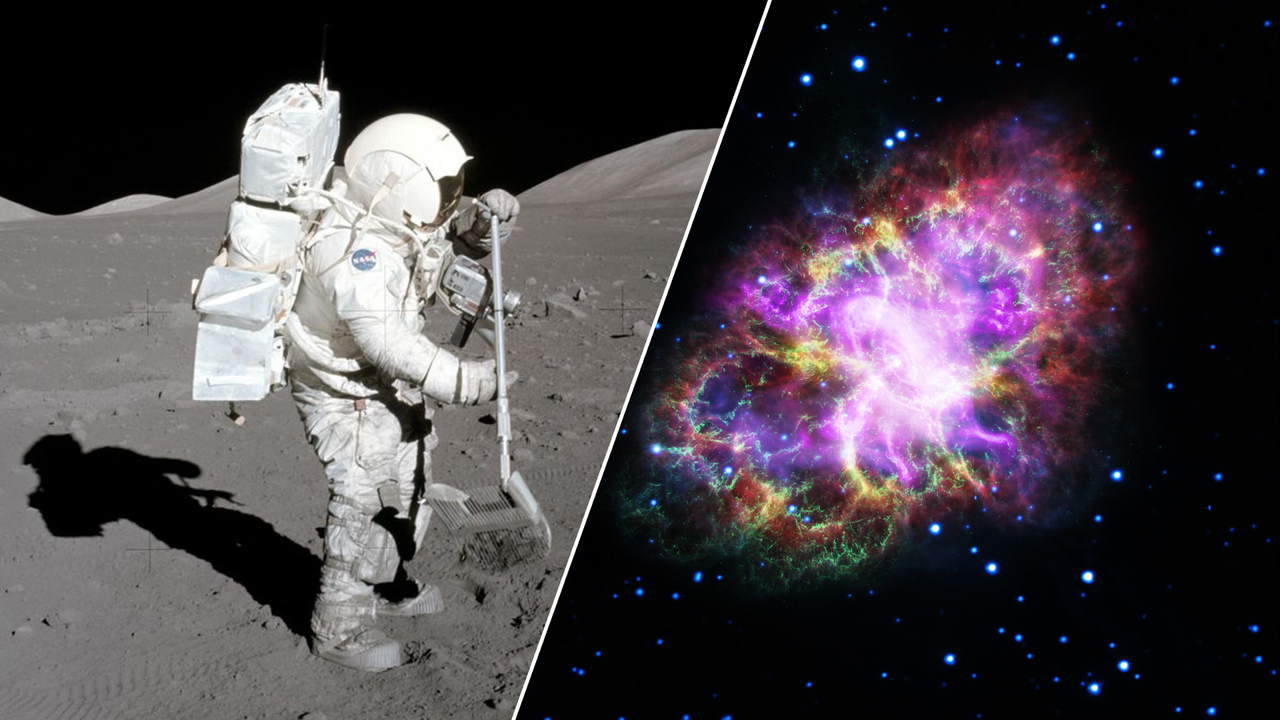
It's now possible to disentangle the sprinkling of supernova dust on the moon from the lunar dirt it is mixed up in, thanks to a new computer model that opens up the moon's surface as a time capsule holding details about the history of supernova explosions near the Earth as our solar system has travelled through space while orbiting the galaxy.
When stars explode as a supernova, they shower space with debris, some of which is in the form of radioactive isotopes traveling at high velocity. Some of these radioisotopes enter the solar system to fall on all the planets and moons, including Earth and its moon. Studies of radioisotopes in deep-sea sediments on Earth, coupled with those found in samples of lunar dirt – what scientists term 'regolith' – brought back by the Apollo missions, point to two recent peaks in supernova activity, 2.3 and 7.3 million years ago.