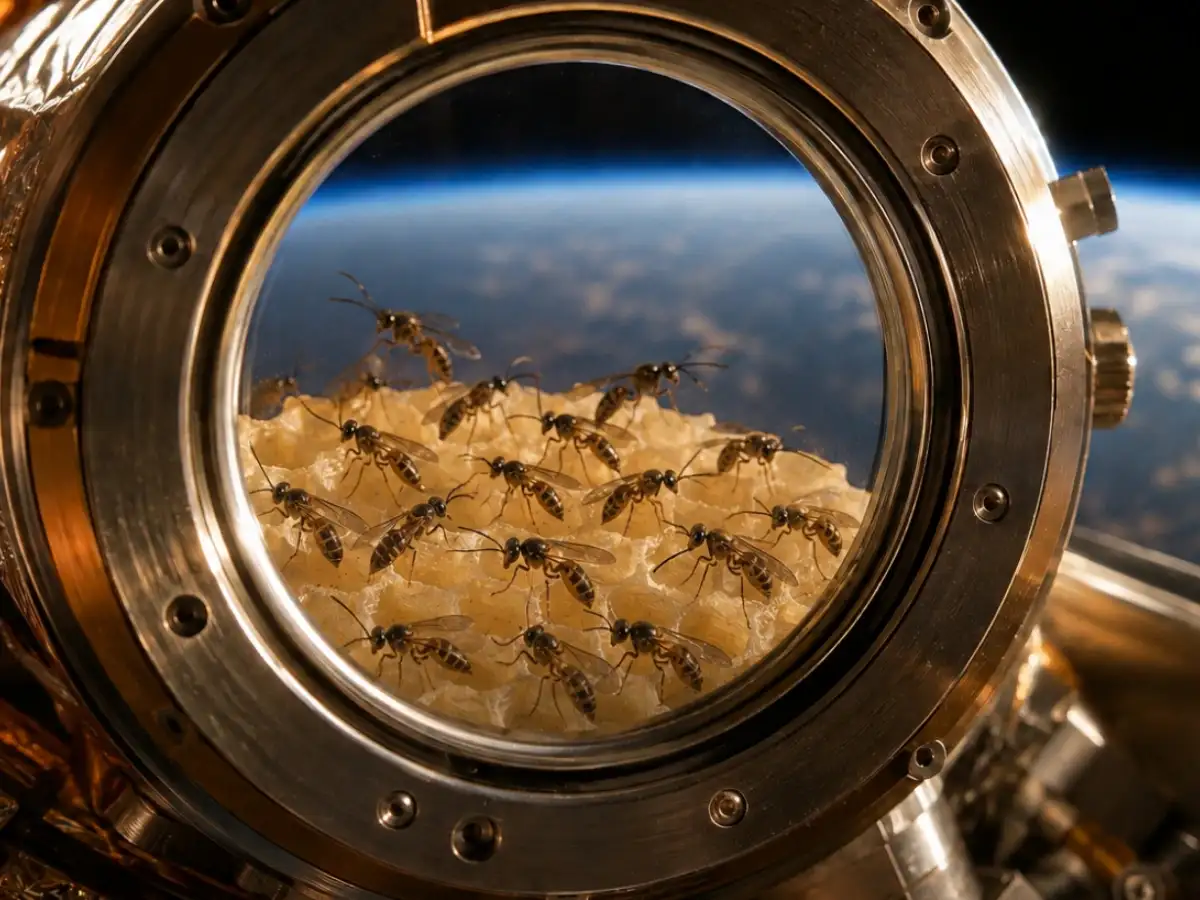
In September 1967, NASA launched a small satellite called Biosatellite II into orbit. Inside was an unusual cargo: insects, frog eggs, microorganisms, and plants, spread across 13 biology experiments, according to NASA's mission archive. Scientists exposed some of the wasps aboard to gamma radiation as they orbited Earth. The female wasps that were irradiated in orbit laid the same number of eggs as those that stayed on the ground, and the eggs hatched at excellent rates, according to NASA's technical report on the mission. That was surprising, because radiation typically damages egg production. More than 50 years later, this small experiment still raises questions about the effects of spaceflight on living cells.
What actually happened in orbit