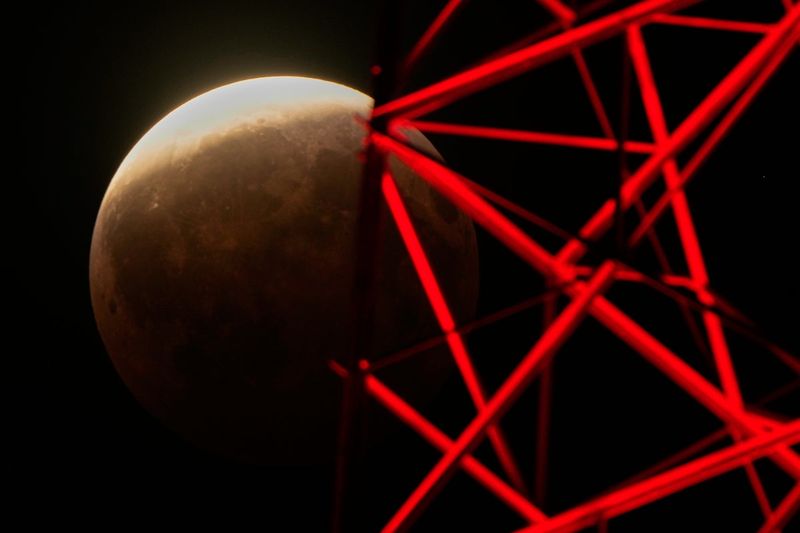
Scientists find new details on how exactly the Moon was formed New research suggests that we might have missed something very important in our understanding of how the Moon formed. The Independent UK · Sep 2
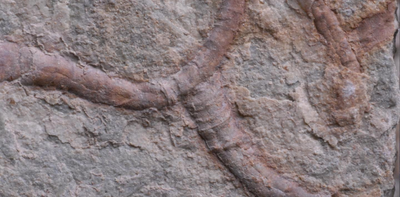
Ancient fossil from China reveals animal-microbe partnerships dating back 550 million years We often think of microbes as organisms that live around us, like the salmonella bacteria and flu viruses that cause illness. But some of our most intimate relationships are actually with the microbes living inside of us. The Conversation · Sep 2
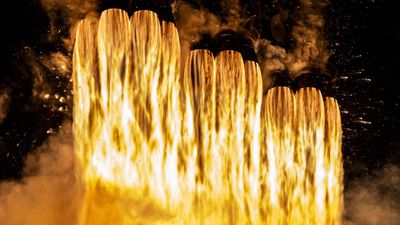
Falcon Heavy brings the heat | Space photo of the day for Sept. 2, 2026 An incredible launch photo captures fire spewing from a SpaceX Falcon Heavy rocket during the launch of NASA's Roman Space Telescope on Aug. 30, 2026. Space · Sep 2
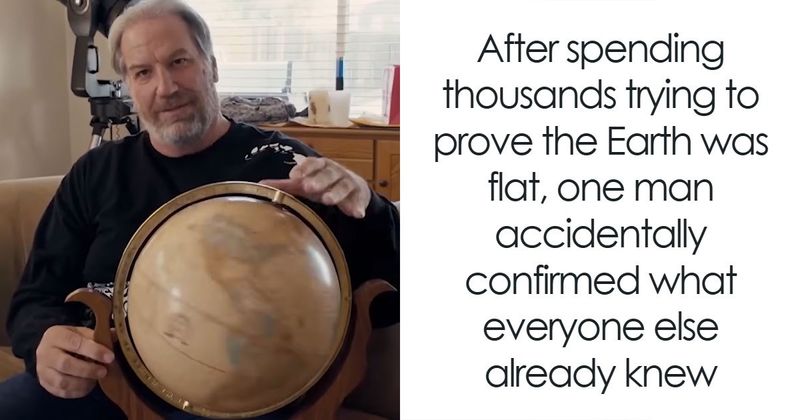
Flat Earther Spends $20,000 On An Experiment To Prove The Earth Is Flat, Does The Exact Opposite Bob Knodel spent $20,000 building an experiment to prove the Earth was flat. His own equipment proved the exact opposite, and he spent the rest of his life trying to make it make sense. Read the full article to see how this true believer was made to doubt himself. Bored Panda · Sep 2
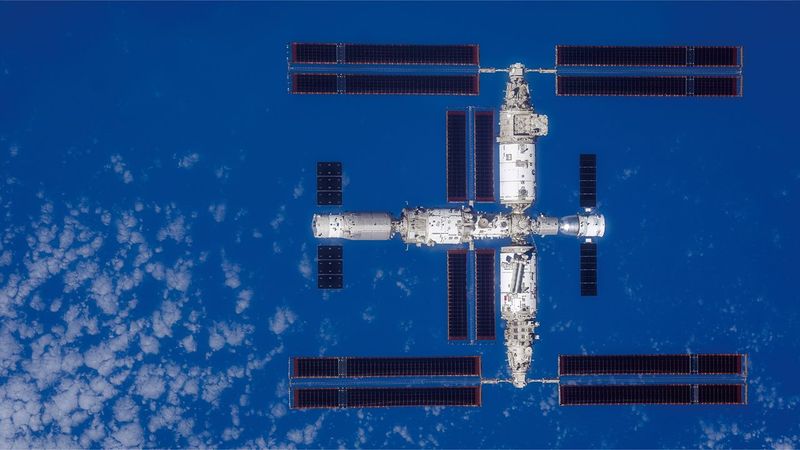
A bright space station will soar over the US this week — and it's not the ISS. Here's how to see it What's that bright light in the sky? Here's how to see China's Tiangong space station with the naked eye this week. Space · Sep 2
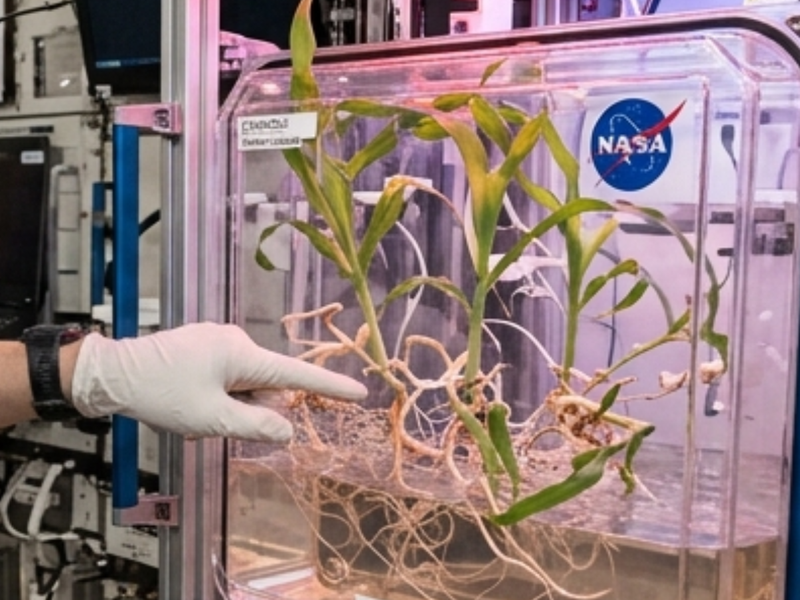
Nasa scientists grew corn seeds in space and found something strange: How microgravity confused roots & shoots that normally know exactly which way to grow Nasa scientists grew corn seeds in space: NASA conducted an intriguing experiment on corn seeds grown in the absence of gravity’s guiding force. The seedlings developed healthy-looking tissues but grew in unpredictable directions, highlighting the important role gravity plays in plant orientation and growth. Other plants, including Arabidopsis, have also… The Economic Times · Sep 2
As Lanterns continues to drop Green Lantern lore, DCU fans have a newfound respect for Superman's Guy Gardner DCU fans are rewatching Superman as Lanterns airs and are seeing Guy Gardner a whole lot differently Total Film · Sep 2
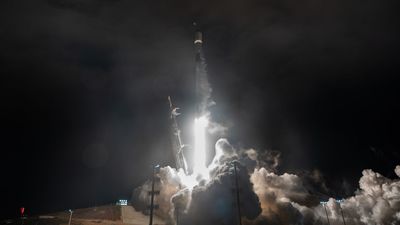
SpaceX Falcon 9 rocket launches Starlink satellites to orbit on its 35th flight A SpaceX Falcon 9 rocket launched 27 Starlink satellites from California early this morning (Sept. 2). It was the 35th flight for the rocket's first stage. Space · Sep 2
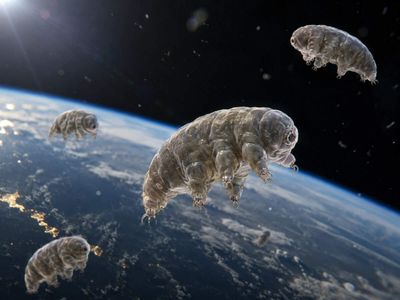
In 2007, ESA sent 3,000 tardigrades into low Earth orbit; after 10 days of vacuum and UV-A/UV-B exposure, 68% revived upon rehydration Known for their resilience, tardigrades have astonishingly withstood the harsh conditions of outer space. Their unique protein showcases an ability to shield cells from radiation damage. Researchers are now investigating how this protein might protect human cells, potentially benefiting cancer patients during radiation therapy. This groundbreaking discovery may also provide… The Economic Times · Sep 2
US, China arm for space warfare: Hunter satellites and orbital weapons China and the United States are developing advanced military space capabilities. Both nations are preparing for potential conflict extending into Earth's orbit. Maneuverable satellites and spaceplanes are key components of these evolving strategies. Allied nations are also participating in joint military operations in space. This competition highlights the growing importance… The Economic Times · Sep 2
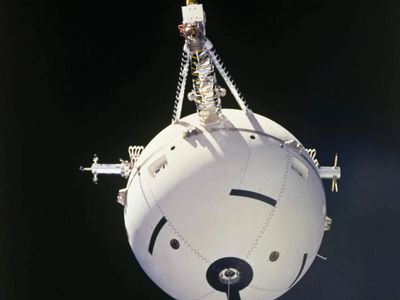
In 1996, Columbia reeled out a satellite on a 19.7-km conducting tether; the line snapped after nearly 5 hours of data, but the system reached about 3,700 volts The Space Shuttle Columbia embarked on an innovative mission, aiming to generate electricity through a tethered satellite system employing a long wire. This experiment yielded impressive voltage and current, albeit briefly. Unfortunately, a flaw in the tether's insulation led to an electrical arc and subsequent breakage. Yet, the mission provided… The Economic Times · Sep 2
Russian Starlink rival flounders after entire batch of satellites fails to reach operational altitude — many of the 16 launched hit less than half their 870km target, and two are already falling back to Earth The entire second batch of Russian Rassvet satellites have failed to reach their target operational altitudes, according to reports. Tom’s Hardware · Sep 2
The moon might be hiding a history of ancient supernova explosions Scientists have managed to extract the history of supernova explosions in our cosmic backyard from radioactive isotopes found in moon dust. Space · Sep 2
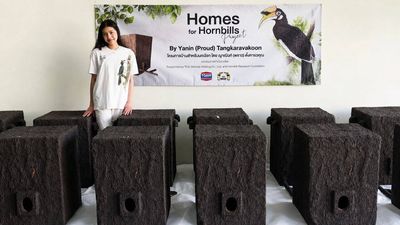
Meet Yanin ‘Proud’, a 17-year-old Thai student who built artificial hornbill nests from recycled plastic and won two global conservation awards At just 17, Thai student Yanin ‘Proud’ Tangkaravakoon has turned a concern for endangered hornbills into a unique conservation project that gives discarded waste plastic a new purpose. Her initiative, ‘Homes for Hornbills’ creates artificial nests designed to provide breeding spaces for hornbills as natural tree cavities become harder to… The Times of India · Sep 2
The Economic Times · Sep 2 In 2010, NASA launched a 12-pound, loaf-of-bread-sized satellite with two Bacillus populations; radiation exposure reached about 15 times that of the ISS orbit NASA's O/OREOS mission embarked on an exciting journey to observe how bacteria withstand the rigors of space radiation. The compact satellite, about the size of a loaf of bread, zipped around Earth’s magnetic poles, subjecting dried bacterial spores to intense radiation over several months. While initial germination and growth were…
The Economic Times · Sep 2 In 1967, Biosatellite II irradiated parasitic wasps for 2 days in orbit; females later laid as many eggs as controls, and hatchability remained excellent A 1967 NASA mission sent parasitic wasps into orbit around Earth. These wasps showed surprising resistance to radiation damage while in space. Ground experiments failed to replicate this protective effect observed in orbit. This old experiment raises questions about spaceflight's impact on living cells. The findings remain relevant for future…
The Independent UK · Sep 2 UN says humanity has failed in key global warming target but all hope is not lost UN’s most optimistic scenario has warming peaking at 1.8C around the middle of the century if governments pursue the most ambitious climate goals available
Space · Sep 1 Scientists trace 7 stages of a meteorite's life, from hurtling space rock to Earth's surface Studying 75 meteorites falling to Earth, scientists have identified the seven stages a space rock goes through as it crashes through our atmosphere.
The Economic Times · Sep 1 In 2006, NASA and French Space Agency CNES launched a satellite in a joint mission to probe the properties of Earth's thin clouds and aerosols In 2006, NASA and French Space Agency CNES launched a satellite in a joint mission to probe the properties of Earth's thin clouds and aerosols. CALIPSO studied clouds and airborne particles from orbit. Its data helped scientists understand climate, weather and air quality, while its observations improved atmospheric models and…
The Economic Times · Sep 1 In 1990, NASA sent a X-ray telescope into space on Space Shuttle Columbia for the first time to perform observations of galactic and extragalactic objects: What was BBXRT? In 1990, NASA sent a X-ray telescope into space on Space Shuttle Columbia for the first time to perform observations of galactic and extragalactic objects. The Broad Band X-ray Telescope, or BBXRT, flew during the STS-35 mission as part of the ASTRO-1 payload. It studied X-ray sources across a broad…
Space · Sep 1 The 12 best sci-fi movies of the 2000s A decade of returning franchises and wonderfully new beginnings.
The Economic Times · Sep 1 Science says space smells different after astronauts return inside, Here’s the chemistry behind the strange odor Astronauts have described the smell as resembling spent gunpowder, ozone, burning metal and welding fumes. NASA even worked with fragrance chemist Steven Pearce to create a simulated version of the odor for astronaut training.
Inverse · Sep 1 Who Are The Guardians Of The Universe? 'Lanterns' Alien Organization Explained Episode 3 of Lanterns gave us our first look at the Guardians of the Universe, a well-meaning alien organization responsible for a lot of trouble for the GLC.
Euronews · Sep 1 ESA's BepiColombo mission nears major turning point on Mercury approach The European Space Agency's (ESA) BepiColombo mission to the planet Mercury faces its most critical manoeuvre yet, as a pair of probes drop off the mothership on their way to one of the solar system's most extreme places.
Space · Sep 1 Repairing the ISS 250 miles above Earth | Space photo of the day for Sept. 1, 2026 A photo of ESA astronaut Sophie Adenot on the outside of the International Space Station captures the staggering altitude at which the crewed laboratory orbits Earth.















 The Economic Times
 The Conversation
 The Independent UK
 International Business Times UK
 The Times of India
 MyLifeXP
 Times Life
 The Guardian - UK
 Euronews
 Bored Panda
 France 24
 The Guardian - US
