
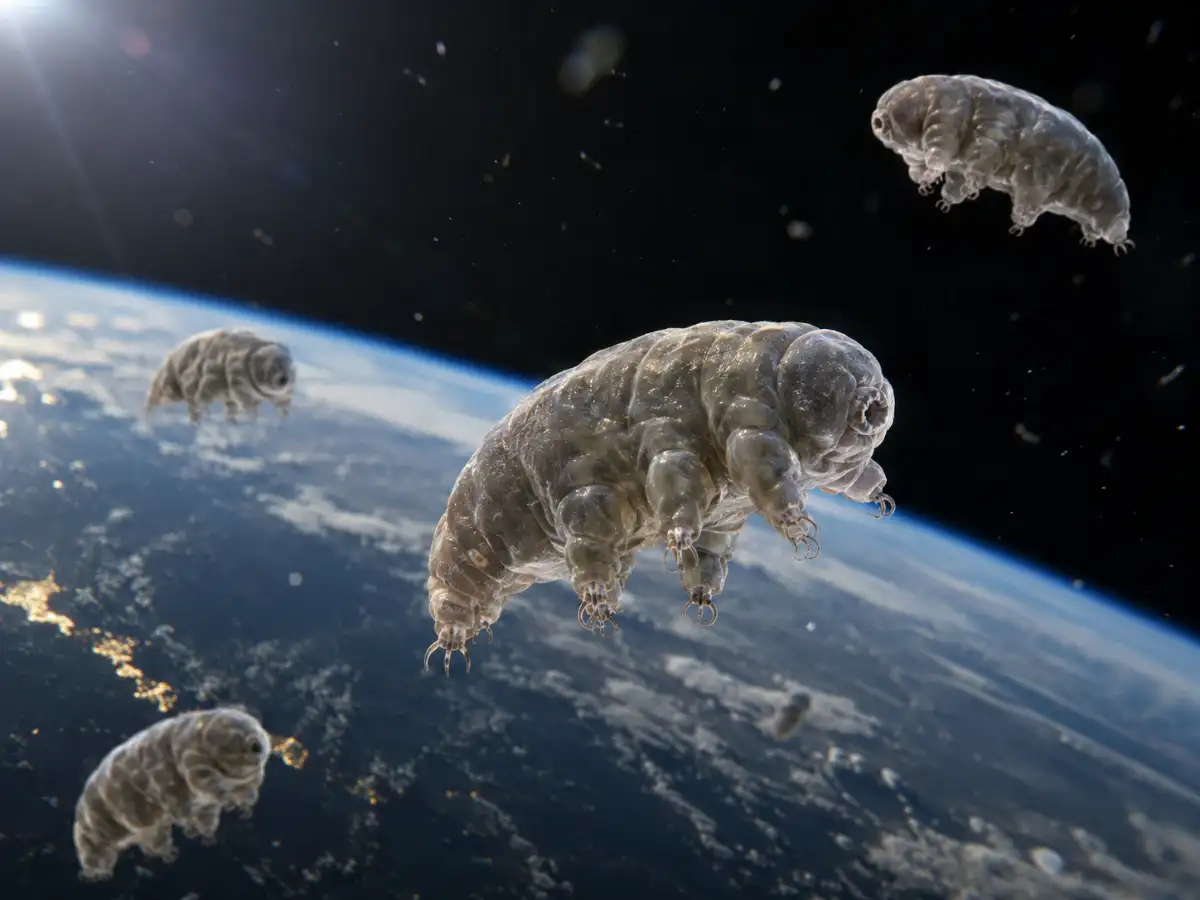
On September 14, 2007, a European Space Agency exposure platform bolted to the outside of a Russian Foton-M3 capsule opened its trays in low Earth orbit and left some 3,000 tiny animals unprotected there for the next 10 consecutive days, until the capsule landed back in Kazakhstan on September 26. No spacesuit. No pressurized cabin. Exposure to the cosmic radiation and virtually "zero" pressure that would kill a human in about 15 seconds. Upon the return of the tray, and with a few drops of water added on, a large share of those animals had revived and were moving again, within about half an hour.
That's not a science fiction story. The animals were called “water bears” or “tardigrades,” and the mission was dubbed TARDIS. ESA describes it as the first time these creatures were directly exposed to the space environment, and the mission helped confirm that the eight-legged, half-a-millimeter-long invertebrates can survive that exposure, not the very first evidence of tardigrade hardiness in general, since their resilience to extreme drying and cold on Earth was already well documented.












