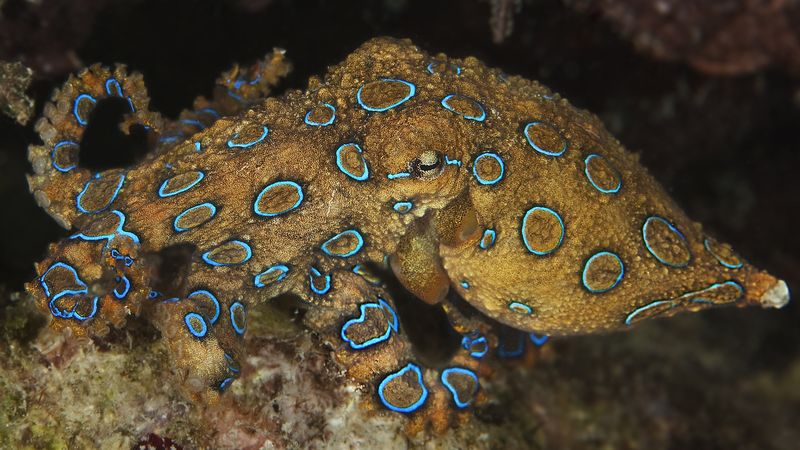
Why is the blue-ringed octopus so deadly? The blue-ringed octopus is by far the most venomous octopus. LiveScience · Jul 12, 2025
Who were the Huns, the nomadic horse warriors who invaded ancient Europe? The Huns were nomadic horse warriors, originally from Asia, who invaded Europe in the late fourth century A.D. and carved out an empire that stretched from Asia to Europe. LiveScience · Jul 12, 2025
'Epigenetic memory' may help explain why PCOS tends to run in families New research suggests how PCOS may be partly inherited through "epigenetic memory," offering insight into why the condition tends to run in families. LiveScience · Jul 11, 2025
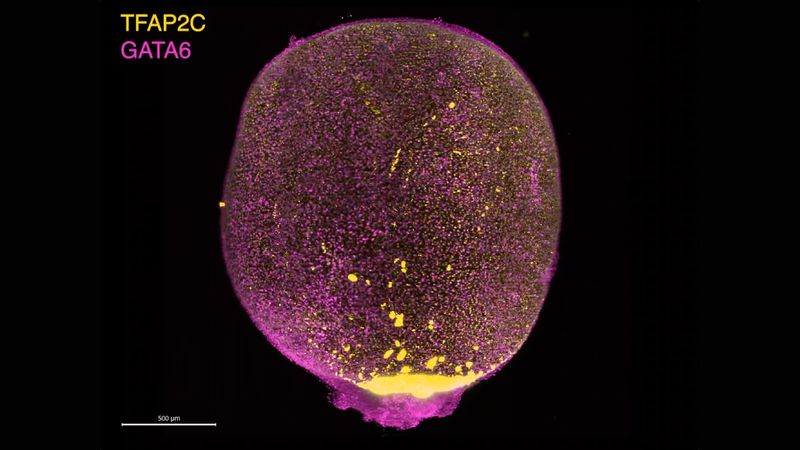
Scientists grow mini amniotic sacs in the lab using stem cells A newly created cell model of the amniotic sac could reveal new insights into early pregnancy, as well as generate helpful products for medical use. LiveScience · Jul 11, 2025
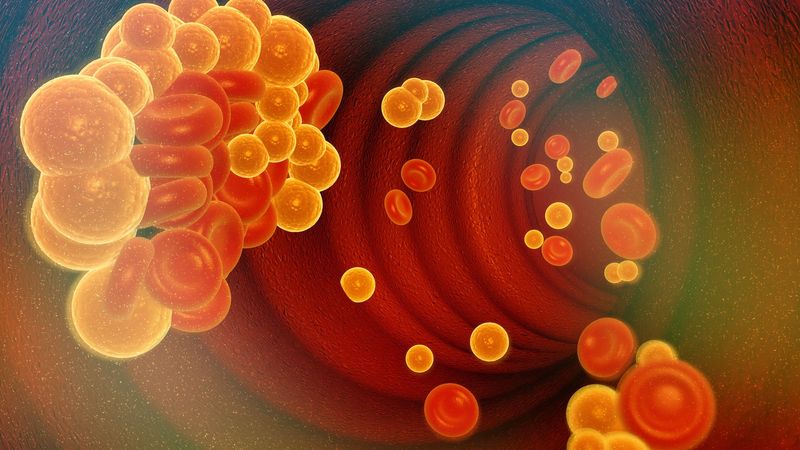
Experimental treatment for high cholesterol edits DNA in the body to reduce LDL An experimental treatment called VERVE-102 lowers the amount of "bad" cholesterol in the blood of people with specific cholesterol-raising conditions. LiveScience · Jul 11, 2025
Man in Australia dies of rare, rabies-like disease A man in New South Wales was exposed to a rare relative of the rabies virus and died of the resulting infection. His was only the fourth case of the disease ever documented. LiveScience · Jul 11, 2025
Earliest evidence of humans catching disease from animals dates to 6,500 years ago By analyzing ancient DNA, scientists determined when, where and how our ancestors got sick from infectious diseases. LiveScience · Jul 11, 2025
Astronomers are racing to study our solar system's newest 'interstellar visitor.' Here's why. Astronomers have been given the rare opportunity to study an extrasolar object after the recent discovery of the interstellar comet 3I/ATLAS. Experts tell Live Science how they are planning to observe the cosmic visitor. LiveScience · Jul 11, 2025
Antarctic sea ice collapse linked to a mysterious spike in ocean salt Satellite imagery has revealed a yet-to-be-explained rise in the Southern Ocean's salinity. It could be a key factor in the decline of the region's sea ice. LiveScience · Jul 11, 2025
Collapse of key Atlantic currents may be held off by newly-discovered back-up system, study finds Rising temperatures in the North Atlantic are slowing vital currents, but a new process in the Arctic could save the day, scientists say. LiveScience · Jul 11, 2025
Parker Solar Probe captures closest-ever photos of the sun during record-breaking flight During a record-smashing flight through the sun’s corona in Dec. 2024, NASA’s Parker Solar Probe captured the closest-ever images of our home star. Now, NASA has finally revealed what the daredevil probe saw. LiveScience · Jul 11, 2025
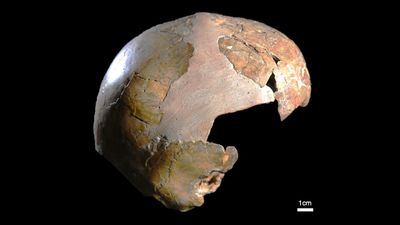
140,000-year-old child's skull may have been part modern human, part Neanderthal — but not everyone is convinced A child buried in the world's oldest human cemetery had both modern human (Homo sapiens) and Neanderthal characteristics, suggesting she was a hybrid, according to a new study. However, not everyone is convinced the study's findings are definitive. LiveScience · Jul 11, 2025
LiveScience · Jul 11, 2025 A dangerous condition that can cause seizures, coma and death could rise dramatically as the climate warms Researchers are uncovering a link between rising temperatures and hyponatremia, a condition caused by a dangerous decline in sodium in the body.
LiveScience · Jul 11, 2025 Texas flood devastation revealed in before-and-after satellite images Satellites have captured before-and-after images of the devastating floods in Texas, highlighting a trail of devastation on the Guadalupe River.
LiveScience · Jul 10, 2025 1,600-year-old tomb of Maya city's first ruler unearthed in Belize Archaeologists have discovered the tomb of the Maya king who founded the city of Caracol in what is now Belize.
LiveScience · Jul 10, 2025 Scientists discover that mysterious giant structures beneath the North Sea seemingly defy what we know about geology Giant mounds of sand discovered beneath the North Sea off Norway may scramble what we know about a key geological process.
LiveScience · Jul 10, 2025 Earth just had a freakishly short day, but the fastest day of the year is yet to come July 9 was unusually short thanks to changes in how fast the Earth is spinning. But two other days this summer are expected to be even shorter.
LiveScience · Jul 10, 2025 Severed bow of US warship blown off by Japanese torpedo finally found in South Pacific More than 180 lives were lost in the WWII attack, but the U.S. ship stayed afloat.
LiveScience · Jul 10, 2025 Scientist's cat helps discover a rare virus — yet again Pepper the cat, whose owner works at the University of Florida, gathered a specimen containing a never-before-seen virus for the second time.
LiveScience · Jul 10, 2025 Stunning facial reconstructions of 'hobbit,' Neanderthal and Homo erectus bring human relatives to life A new documentary brings early human history to life with a "scientifically accurate" collection of hyper-real 3D models.
LiveScience · Jul 10, 2025 Mystery of Mars' missing water could be solved by the planet's tipsy tilt Mars has lost immense amounts of water over it lifetime, and scientists aren't sure exactly how. New research hints that the planet's violently varying tilt may be a key factor.
LiveScience · Jul 10, 2025 3I/ATLAS: Everything you need to know about the new 'interstellar visitor' shooting through the solar system Astronomers have spotted a new interstellar object — the third of its kind ever seen — shooting towards us through the solar system. Here's everything you need to know about 3I/ATLAS.
LiveScience · Jul 10, 2025 'Alpha male' primates are rare, with females about as likely to dominate the opposite sex, study finds Researchers have found that clear-cut male dominance is rare in primates, with both sexes capable of reigning supreme depending on the circumstances.