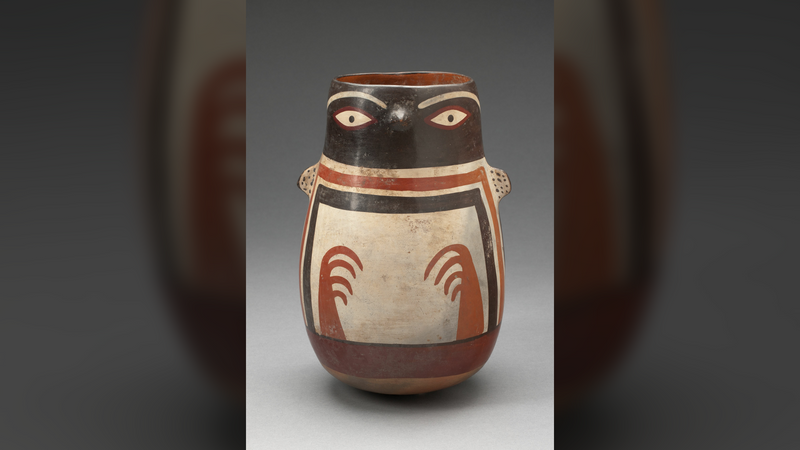
Penguin Vessel: 1,600-year-old Nazca depiction of a cold-water Humboldt penguin that lives in tropical Peru A rare penguin-shaped pot reveals the Nazca's interest in depicting the wildlife around them. LiveScience · Jul 7, 2025
What color is moonlight? What color is moonlight typically, and what other colors can moonlight look like from our perspective on Earth? LiveScience · Jul 7, 2025
Buck Moon 2025: How to spot the year's farthest full moon from the sun July's full "Buck Moon" will be at its fullest on Thursday, July 10, and will be best seen at moonrise. It is the farthest full moon from the sun all year and one of the lowest in the sky. LiveScience · Jul 6, 2025
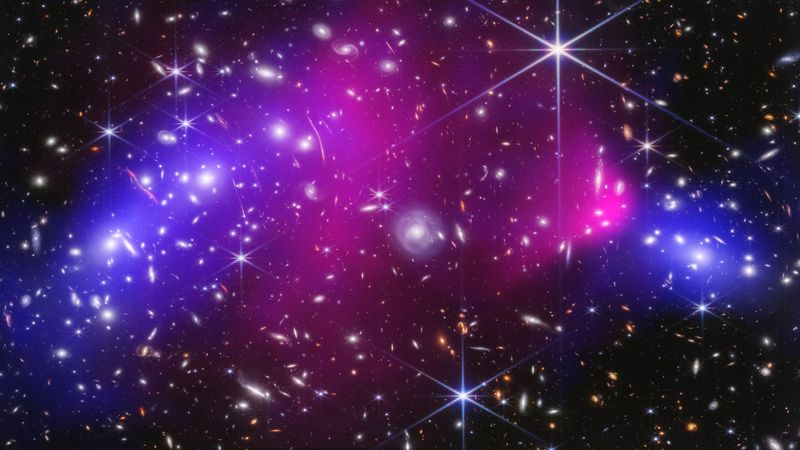
BANG! James Webb telescope catches stray galaxies in the Bullet Cluster: Space photo of the week This unprecedented view of the Bullet Cluster provided by the James Webb Space Telescope and the Chandra X-ray Observatory reveals how the dark matter is distributed. LiveScience · Jul 6, 2025
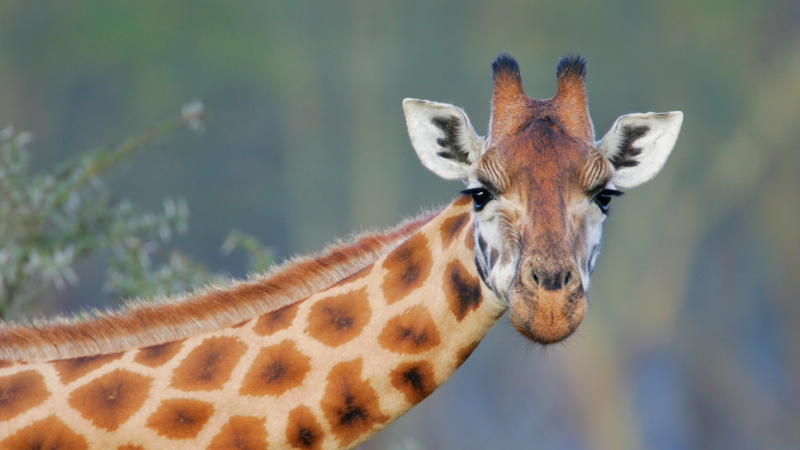
Why do giraffes have spots? Giraffes' distinctive spots are more than just for show. So why do these tall animals have them? LiveScience · Jul 6, 2025
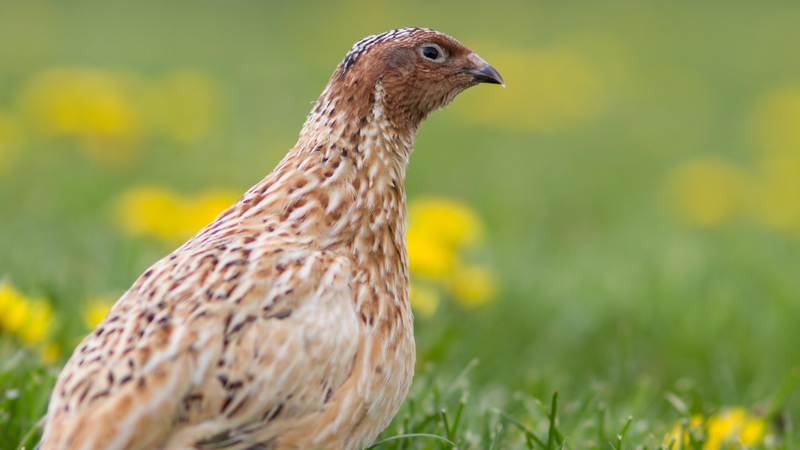
Japanese quail: The bird with weird sperm foam, a post-sex strut and a spot in space history Male Japanese quails produce a strange seminal foam that appears to enhance the chances of successfully fertilizing an egg. LiveScience · Jul 5, 2025
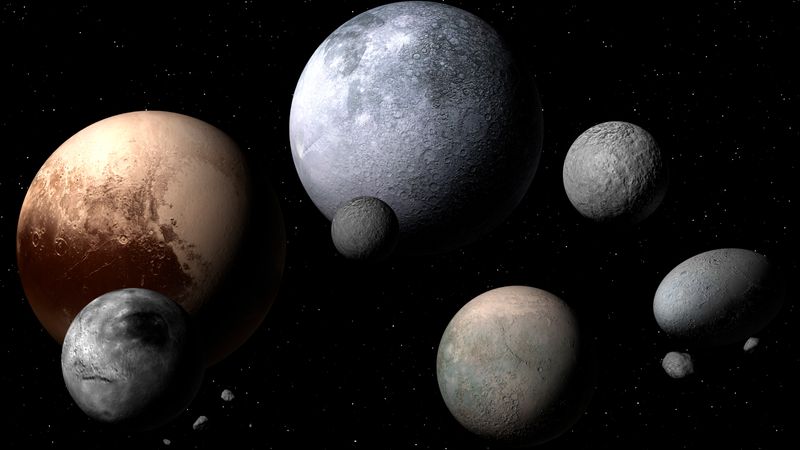
What are dwarf planets — and how many are there? How many dwarf planets are there in our solar system? The recent discovery of 2017 OF201 makes the tally anywhere between five and 18, plus hundreds of potentially undiscovered ones, depending on whom you ask. LiveScience · Jul 5, 2025
AI chatbots oversimplify scientific studies and gloss over critical details — the newest models are especially guilty More advanced AI chatbots are more likely to oversimplify complex scientific findings based on the way they interpret the data they are trained on, a new study suggests. LiveScience · Jul 5, 2025
Why are men taller than women, on average? We don't know exactly why men are taller than women on average, but we have some genetic clues. LiveScience · Jul 5, 2025
Scientists transform pee into material fit for medical implants A new method for chemically altering human urine could be used for producing medical implants and construction materials, scientists claim. LiveScience · Jul 4, 2025
Oldest wooden tools unearthed in East Asia show that ancient humans made planned trips to dig up edible plants The 300,000 year-old tools show that hominins in East Asia made planned foraging trips to lakeshores and designed instruments for specific purposes. LiveScience · Jul 4, 2025
Astronaut snaps giant red 'jellyfish' sprite over North America during upward-shooting lightning event NASA astronaut Nichole Ayers captured an electrifying image of a giant lightning "sprite" shooting up over Mexico and southern U.S. states. The red "jellyfish" could help researchers learn more about this rare phenomenon. LiveScience · Jul 4, 2025
Tiwanaku: A little-known pre-Incan civilization that built temples and cities high in the Andes This ancient city in modern-day Bolivia is almost 13,000 feet above sea level. Only a small portion of the ruins have been excavated. LiveScience · Jul 4, 2025
Giant radio telescope in the Utah desert could reveal hidden corners of the cosmos — and brand-new physics Scientists say that the construction of a vast new radio telescope array in the Utah desert — known as the Deep Synoptic Array 2000 — could uncover some of the biggest outstanding mysteries in astronomy. LiveScience · Jul 4, 2025
LiveScience · Jul 4, 2025 Whale Valley: The whale graveyard in the Sahara desert that shows they once had feet and toes Egypt's Whale Valley, or "Wadi Al-Hitan" in Arabic, holds more than 400 primitive whale skeletons that offer a snapshot of the evolution of these creatures from land-based to marine animals.
LiveScience · Jul 4, 2025 Small, room-temperature quantum computers that use light on the horizon after breakthrough, scientists say Scientists say they’ve cracked a key challenge in scalable quantum hardware after generating an error-correcting, light-based qubit on a chip for the first time.
LiveScience · Jul 3, 2025 Can adults make new brain cells? New study may finally settle one of neuroscience's greatest debates Scientists say they have very strong evidence that the adult human brain is capable of making new neurons, a point of ongoing controversy in neuroscience.
LiveScience · Jul 3, 2025 RFK's proposal to let bird flu spread through poultry could set us up for a pandemic, experts warn HHS Secretary Robert F. Kennedy Jr. and Secretary of Agriculture Brooke Rollins have expressed interest in letting H5N1 outbreaks spread unchecked through U.S. poultry farms. Health experts warn it could lead to a new pandemic.
LiveScience · Jul 3, 2025 Neanderthal DNA may refute 65,000-year-old date for human occupation in Australia, but not all experts are convinced A new DNA model suggests humans didn't reach Australia until 50,000 years ago, but archaeological data disagrees.
LiveScience · Jul 3, 2025 1,400-year-old temple ruins the size of a city block unearthed in Bolivia Ruins of the Palaspata temple complex from the millennia-old Tiwanaku civilization are unraveling some mysteries about the relatively unstudied society.
LiveScience · Jul 3, 2025 Our gut bacteria can absorb and remove toxic 'forever chemicals' — at least in lab mice An experiment in lab mice found that certain human gut bacteria can absorb PFAS, commonly called "forever chemicals," until they are excreted, new study finds.
LiveScience · Jul 3, 2025 Astrophotographer snaps 'once-in-a-lifetime' shot of solar flare photobombing the ISS An astrophotographer has captured an extremely rare and "difficult" photo of a solar flare exploding from the sun at the exact moment the International Space Station passed directly in front of our home star.
LiveScience · Jul 3, 2025 Watch newly discovered 'interstellar visitor' 3I/ATLAS shoot toward us in first livestream You can see the recently identified "interstellar object" 3I/ATLAS shooting towards us through the solar system in a livestream from the Virtual Telescope Project.
LiveScience · Jul 3, 2025 300-year-old pirate-plundered shipwreck that once held 'eyewatering treasure' discovered off Madagascar Researchers think a shipwreck off Madagascar was a Portuguese treasure ship captured by pirates in 1721.
LiveScience · Jul 3, 2025 NASA confirms that mysterious object shooting through the solar system is an 'interstellar visitor' — and it has a new name Experts have confirmed that the mysterious object hurtling towards us, previously dubbed A11pl3Z, is an "interstellar object." The cosmic interloper, officially named 3I/ATLAS, is only the third of its kind ever seen — and will shoot past Earth later this year.