
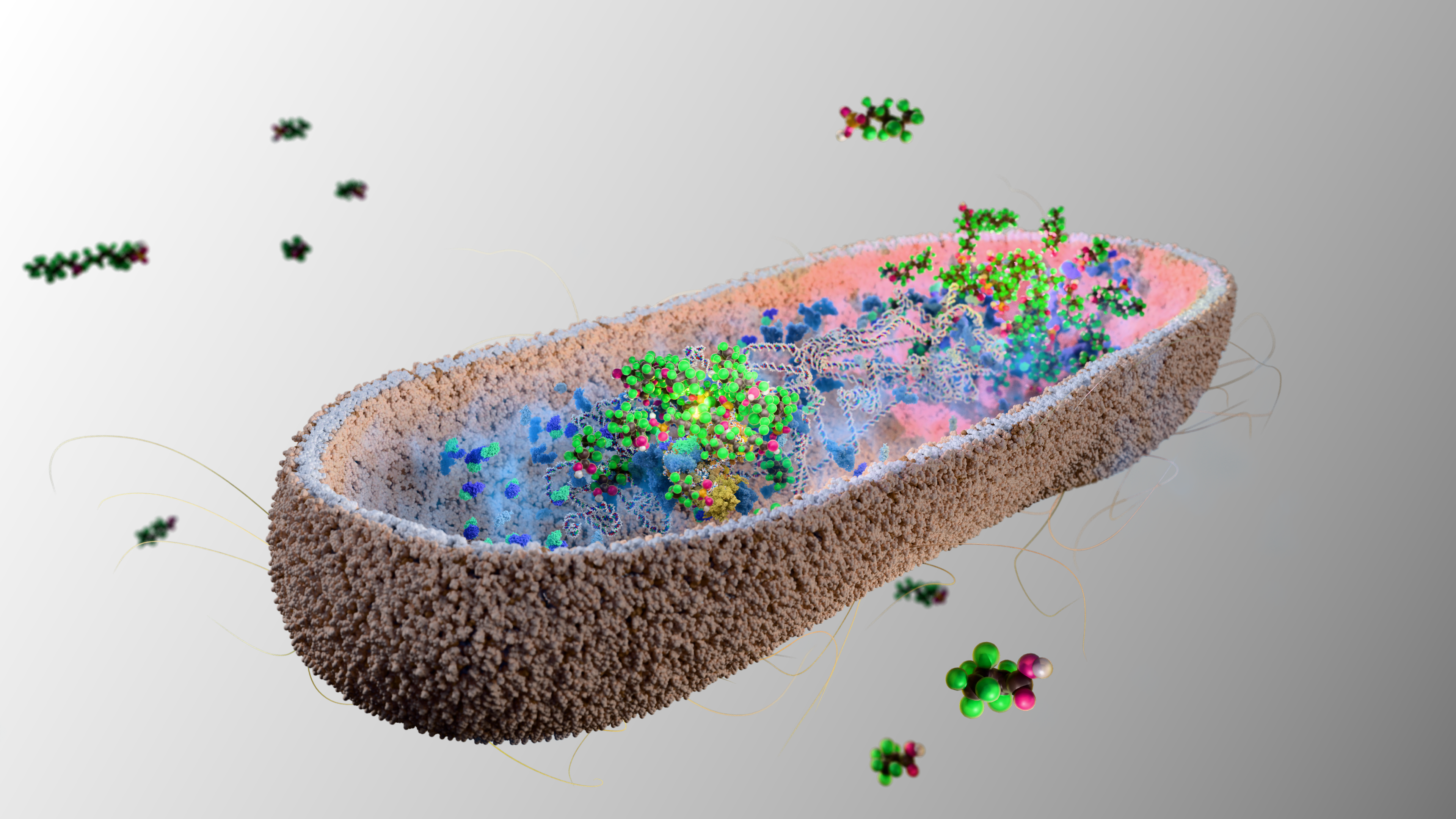
Researchers have identified gut bacteria that can absorb toxic "forever chemicals" in lab mice, according to a new study, potentially offering up a way to control PFAS levels in humans.
PFAS, or perfluoroalkyl and polyfluoroalkyl substances, are synthetic chemicals used in a variety of products, from non-stick cooking pans to cosmetics. These substances are often nicknamed "forever chemicals" because they have strong chemical bonds that don't easily break down in nature and, in some cases, stick around for thousands of years. As a result, these chemicals pose a major pollution concern, both in our environment and in our own bodies.