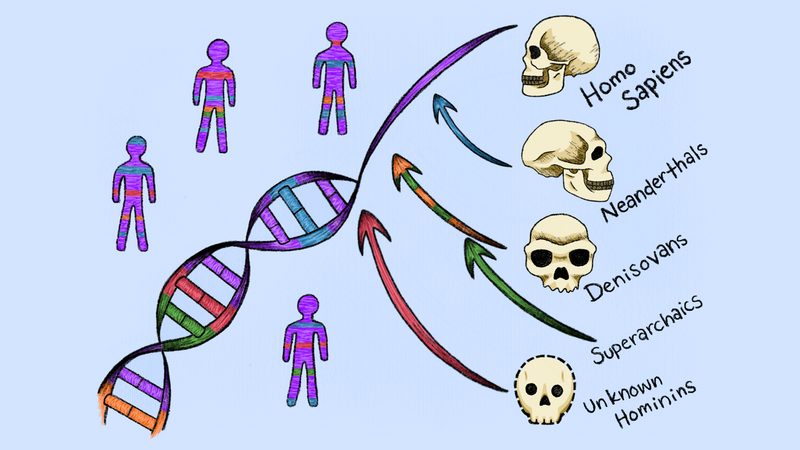
Scientists discover 2 new 'ghost' lineages that contributed DNA to modern humans A new method of analyzing modern humans' DNA is revealing secrets about our extinct ancestors. LiveScience · Jul 30
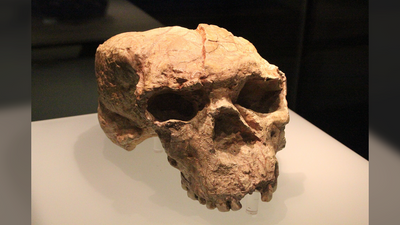
'Absolute surprise': Homo erectus skulls found in China are almost 1.8 million years old — the oldest evidence of the ancient human relatives in East Asia A new date for Homo erectus skulls found in central China provides new insight into how and when ancient human relatives reached eastern Asia. LiveScience · Feb 18
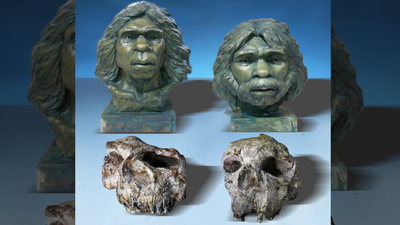
Homo erectus wasn't the first human species to leave Africa 1.8 million years ago, fossils suggest A new analysis of enigmatic skulls from the Republic of Georgia suggest that Homo erectus wasn't the only human species to leave Africa 1.8 million years ago. LiveScience · Jan 9
Humans made fire 350,000 years earlier than we thought, scientists discover Fire-cracked flint and heated sediments have been found at a disused clay pit in Suffolk The Independent UK · Dec 10, 2025
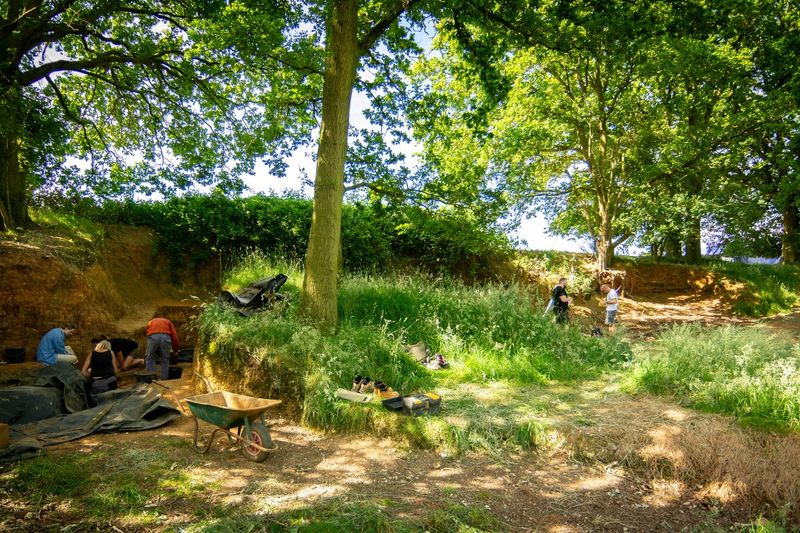
'It is the most exciting discovery in my 40-year career': Archaeologists uncover evidence that Neanderthals made fire 400,000 years ago in England Archaeologists have found the earliest evidence yet of fire technology — and it was created by Neanderthals in England more than 400,000 years ago. LiveScience · Dec 10, 2025
Earliest known evidence of human fire-making discovered in the UK The material, found at at disused clay pit in Suffolk, was described by experts as the most exciting find of their careers. Evening Standard · Dec 10, 2025
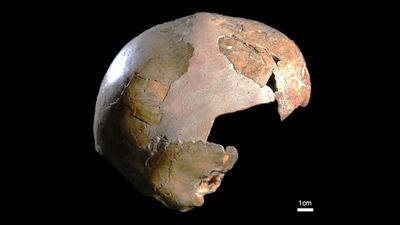
Million-year-old Skull Could Change Human Evolution Timeline A digital reconstruction of a million-year-old skull suggests humans may have diverged from our ancient ancestors 400,000 years earlier than thought and in Asia not Africa, a study said Friday. International Business Times · Sep 26, 2025
Study of 1m-year-old skull points to earlier origins of modern humans Skull found in China may be Homo longi, potentially revising understanding of human evolution The Guardian - UK · Sep 25, 2025
1 million-year-old skull from China holds clues to the origins of Neanderthals, Denisovans and humans Reconstruction of a 1 million-year-old skull shows that early human groups split and diversified quickly. LiveScience · Sep 25, 2025
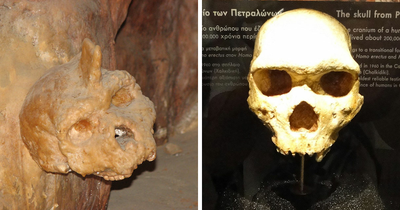
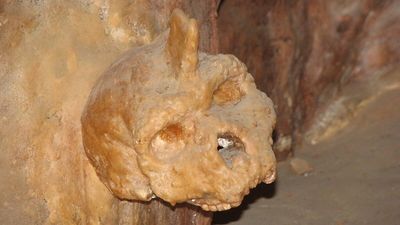
Mysterious ‘Petralona Man’ Skull Found In Cave 60 Years Ago Baffles Experts After New Study "Conspiracy TikTokers will have a field day with this." Bored Panda · Sep 1, 2025
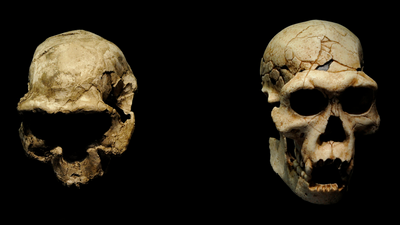
Mysterious 300,000-year-old Greek cave skull was neither human nor Neanderthal, study finds Researchers have dated the mysterious skull from Petralona Cave in Greece to 300,000 years ago and concluded that the fossil belonged to an ancient human group that lived alongside Neanderthals. LiveScience · Aug 22, 2025
140,000-year-old child's skull may have been part modern human, part Neanderthal — but not everyone is convinced A child buried in the world's oldest human cemetery had both modern human (Homo sapiens) and Neanderthal characteristics, suggesting she was a hybrid, according to a new study. However, not everyone is convinced the study's findings are definitive. LiveScience · Jul 11, 2025
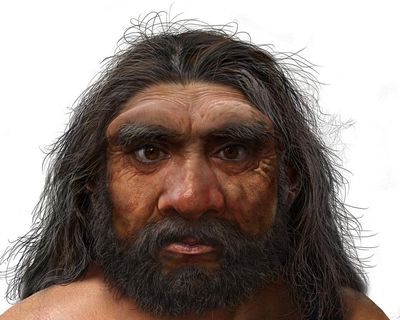
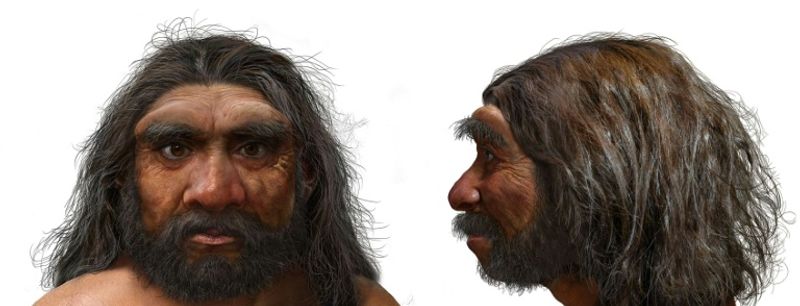
Ancient 'Dragon Man' skull from China isn't what we thought Scientists have determined that a giant skull from an ancient human relative named the "Dragon Man" is actually Denisovan. LiveScience · Jun 18, 2025
Neanderthals, modern humans and a mysterious human lineage mingled in caves in ancient Israel, study finds A newly excavated cave in Israel holds burials and artifacts suggesting that multiple human species commingled and shared ideas there during the Paleolithic. LiveScience · Mar 13, 2025
The Guardian - UK · Mar 12, 2025 Bone fragments of oldest known human face in western Europe found in Spain Remains are of an adult member of an extinct species who lived up to 1.4m years ago, researchers say
The Guardian - UK · Aug 6, 2024 ‘Hobbit’ bone from tiny species of ancient humans found on Indonesian island Arm bone suggests Homo floresiensis was forced to undergo dramatic reduction in body size after being marooned on Flores
Al Jazeera · Jul 4, 2024 World’s oldest artwork discovered in Indonesian cave The painting was dated using a new technique and suggests Europe was not where cave art first emerged.
International Business Times · Jul 3, 2024 World's Oldest Artwork Discovered In Indonesian Cave It may not look like much -- just a flaking image of three people around a big red pig.
The Guardian - UK · Jun 30, 2024 Fifty years on, how Lucy, the mother of humanity, changed our understanding of evolution In 1974, the fossilised bones of Lucy, a 3.2 million-year-old hominin, were discovered in Ethiopia. How has this remarkable skeleton disproved a Darwinian theory – and what links her to the Beatles?
The Guardian - UK · Jun 22, 2024 Does a cave beneath Pembroke Castle hold key to fate of early Britons? Scientists hope wealth of prehistoric material in Wogan Cavern in Wales is well preserved enough to reveal what really happened to our most ancient ancestors
LiveScience · Jun 7, 2024 Neanderthals and humans interbred 47,000 years ago for nearly 7,000 years, research suggests DNA from prehistoric and modern-day people suggests that humans interbred with Neanderthals 47,000 years ago for a period lasting 6,800 years.
LiveScience · May 17, 2024 What's the difference between Neanderthals and Homo sapiens? Neanderthals are our closest relatives who went extinct around 40,000 years ago. Here's how they differed to us.
The Guardian - UK · Mar 30, 2024 Scientists link elusive human group to 150,000-year-old Chinese ‘dragon man’ Researchers have found fresh evidence that may connect the mysterious Denisovans to the early human species Homo longi
Inverse · Dec 23, 2023 Creative Structures Built By Neanderthals Is Upending How We View the Species No other structures of this kind have been discovered. But there have been other hints that Neanderthal minds were more complex than we thought.
LiveScience · Dec 11, 2023 When did Homo sapiens first appear? What's the oldest fossil evidence humans have for our species?











 LiveScience
 The Guardian - UK
 The Independent UK
 Bored Panda
 International Business Times
 Al Jazeera
 Evening Standard
 France 24
 Inverse
 The Hindu
