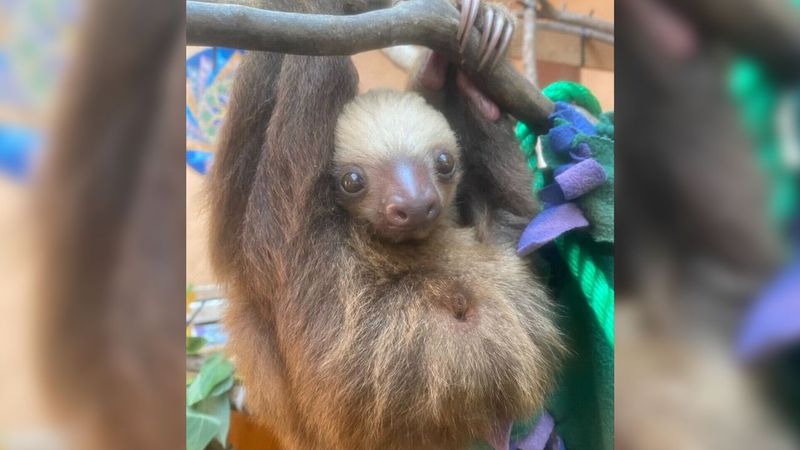
Do sloths fart? Cute new video finally settles age old question For years, it's been assumed that sloths don't fart. But new footage has thrown this theory into question. LiveScience · Jul 16, 2025
Scientists discover long-lost giant rivers that flowed across Antarctica up to 80 million years ago Large flat surfaces carved by ancient rivers deep beneath East Antarctica are influencing how ice flows across the continent today, according to a new study. LiveScience · Jul 16, 2025
Lava erupts from gigantic fissure in Iceland following earthquake swarm — and the photos are epic A lava-spewing fissure has opened up along Iceland's Sundhnúkur crater row as the Reykjanes peninsula experiences another volcanic eruption. LiveScience · Jul 16, 2025
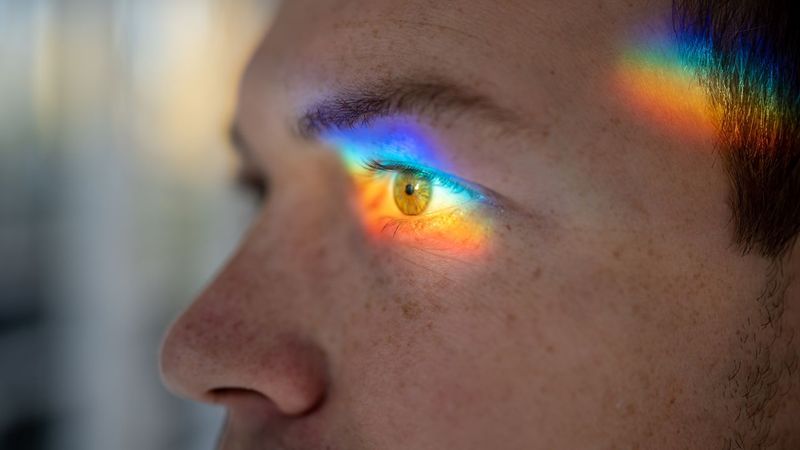
Why is color blindness so much more common in men than in women? About 1 in 12 men is color-blind. Why doesn't this condition affect women as often? LiveScience · Jul 16, 2025
Meet Skydweller: A solar-powered drone that can fly for 90 days straight — it's wider and 160 times lighter than a Boeing 747 Skydweller is a solar-powered drone that can fly for up to three months without landing, with researchers hoping to one day achieve much longer flight times. LiveScience · Jul 16, 2025
A single MRI can reveal how quickly you're aging, scientists claim A study suggests that a single brain MRI can be used to predict a person's rate of aging across their whole body, which researchers say could change how we predict and prevent chronic disease. LiveScience · Jul 16, 2025
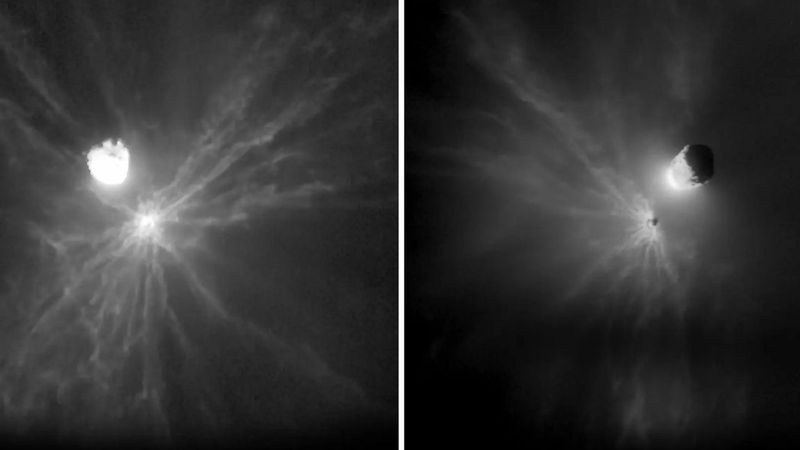
Giant space 'boulders' unleashed by NASA's DART mission aren't behaving as expected, revealing hidden risks of deflecting asteroids Debris released from the asteroid Dimorphos during NASA's DART mission has a higher momentum and less random distribution than expected, which "changes the physics we need to consider when planning these types of missions," researchers say. LiveScience · Jul 15, 2025
'Interstellar visitor' 3I/ATLAS could be the oldest comet ever seen — and could grow a spectacular tail later this year New simulations have narrowed down where the newly discovered interstellar comet 3I/ATLAS likely came from, revealing it could be more than 3 billion years older than the solar system. LiveScience · Jul 15, 2025
The choice of sperm is 'entirely up to the egg' — so why does the myth of 'racing sperm' persist? In her new book "The Stronger Sex," science journalist Starre Vartan dispels myths and misconceptions about the female body. LiveScience · Jul 15, 2025
'I was floored by the data': Psilocybin shows anti-aging properties in early study The psychedelic psilocybin, found in magic mushrooms, slows certain hallmarks of aging in human cells and older mice, a lab study suggests. LiveScience · Jul 15, 2025
Penny-sized laser could help driverless cars see the world so much clearer Researchers have created an ultrasensitive laser the size of a penny that could improve lidar technology, boosting autonomous vehicles in the process. LiveScience · Jul 15, 2025
4,000-year-old human rib discovered high in the Pyrenees still has an arrowhead from a brutal attack A human rib discovered high in the Pyrenees suggests that someone survived a shot in the back several millennia ago. LiveScience · Jul 15, 2025
Russian volcano grows 'devil horns' and spits out 1,000-mile-long river of smoke — Earth from space A false-color satellite photo from 2023 shows a devilish pair of lava flows and an enormous plume of smoke spewing from Klyuchevskoy, the tallest volcano in Europe and Asia. LiveScience · Jul 15, 2025
Scientists detect most massive black hole merger ever — and it birthed a monster 225 times as massive as the sun New gravitational wave findings from the LIGO-Virgo-KAGRA Collaboration report the discovery of the largest black hole merger ever. It could lead to evidence of an extremely rare type of black hole. LiveScience · Jul 14, 2025
LiveScience · Jul 14, 2025 100 undiscovered galaxies may be orbiting the Milky Way, supercomputer simulations hint Our Milky Way could have many more satellite galaxies than we've detected so far. They're just too faint to be seen.
LiveScience · Jul 14, 2025 Grand Canyon Dragon wildfire burns down historic lodge and triggers toxic gas leak Firefighters are battling a lightning-caused wildfire on the North Rim of the Grand Canyon. The Dragon Bravo Fire has burned down the Grand Canyon Lodge and triggered a chlorine gas leak.
LiveScience · Jul 14, 2025 Roman dodecahedron: A mysterious 12-sided object that has baffled archaeologists for centuries There are more than 50 theories for the function of this 12-sided, pentagonal-faced bronze object — but archaeologists have never quite figured it out.
LiveScience · Jul 14, 2025 Japan sets new internet speed record — it's 4 million times faster than average US broadband speeds A team of scientists in Japan shattered the record for the fastest internet speed by developing new fiber optics.
LiveScience · Jul 14, 2025 Can your brain run out of memory? Your memory relies on reusing, overlapping and adapting rather than on a fixed number of storage spots.
LiveScience · Jul 13, 2025 The Perseids are about to peak — here's how to watch the glorious meteor shower without the full moon ruining the show As many as 100 "shooting stars" per hour can be seen during the peak of the Perseids on Aug. 12 and 13, but a bright full moon means evasive action is required.
LiveScience · Jul 13, 2025 James Webb and Hubble telescopes join forces to explore a cosmic nursery: Space photo of the week The mighty James Webb and Hubble space telescopes united to reveal stars being born inside the Small Magellanic Cloud, which orbits the Milky Way.
LiveScience · Jul 13, 2025 What's Earth's lowest point on land? What's Earth's lowest spot on dry land — and how did it get to be that way?
LiveScience · Jul 12, 2025 How is DNA used to identify victims of mass disasters? DNA analysis is considered the gold standard for identifying victims of mass fatalities. But how does it work?
LiveScience · Jul 12, 2025 Kākāpō: The chonky parrot that can live almost 100 years This flightless nocturnal parrot is only found in New Zealand.
LiveScience · Jul 12, 2025 Ancient Egyptian rock art discovered near Aswan may be from the dawn of the first dynasty Newfound rock art from ancient Egypt may shed light on the time just before the first dynasty.