First video of an earthquake fault cracking has revealed another surprise A stunning video of the ground cracking during a magnitude 7.7 earthquake in Myanmar is revealing new surprises. LiveScience · Jul 18, 2025
Scientists discover changes to the polar vortex that are plunging parts of US into deep freeze When the polar vortex stretches, North America feels the chill. New research reveals some of the stratospheric patterns controlling these cold snaps. LiveScience · Jul 18, 2025
Tuvalu residents prepare for world’s first planned migration of an entire nation — and climate change is to blame A first-of-its-kind lottery for residents of Tuvalu who want to move to Australia due to climate change threats is closing today, with more than 5,000 applications received. LiveScience · Jul 18, 2025
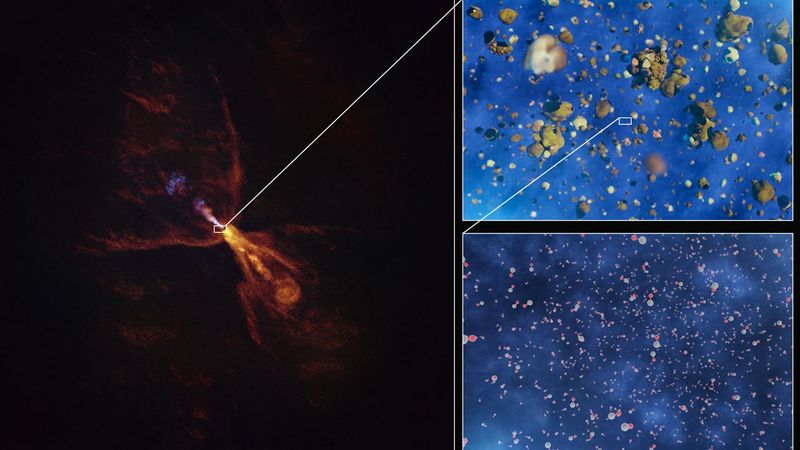
In a cosmic first, astronomers spot a new planet system being born around an alien star Astronomers spotted a baby star displaying the very first signs of planet formation in the zone surrounding it, similar to how our own solar system was born. LiveScience · Jul 18, 2025
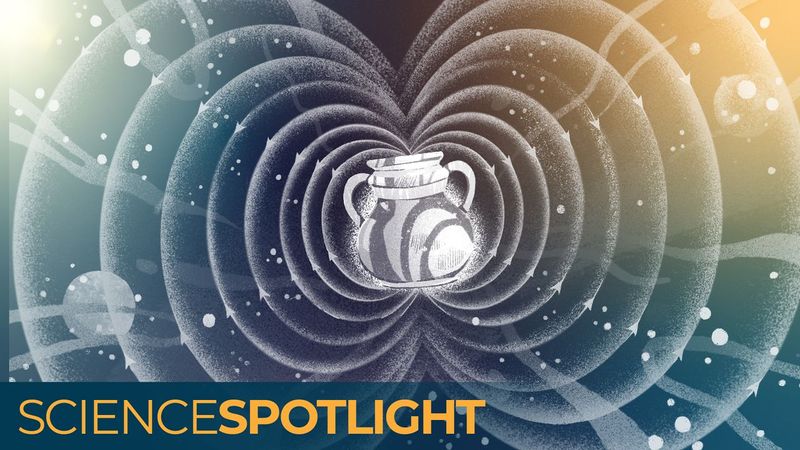
Earth's magnetic field is weakening — magnetic crystals from lost civilizations could hold the key to understanding why Artifacts from the Iron Age have revealed an intense historical magnetic anomaly in the Middle East. Could using a similar approach elsewhere help us unravel the mysteries of Earth's magnetic field? LiveScience · Jul 18, 2025
Endurance athletes that carry Neanderthal genes could be held back from reaching their peak A Neanderthal variant in an enzyme involved in energy production has been linked to a 50% lower probability of achieving elite athletic performance. LiveScience · Jul 18, 2025
Mysterious migraines after heart surgery may finally be explained Short-lived lesions sometimes appear in the brain following heart surgery — and now, a new trial hints that they might be linked to migraines and visual auras. More work is needed to know if they signal more serious risks, like stroke. LiveScience · Jul 18, 2025
Watch first-of-its-kind robot elephant go bowling Researchers have unveiled a miniature robot elephant with special 3D-printed "tissues" that allow for more complex and natural movements. A video shows the elephant grasp a flower with its trunk and kick a bowling ball. LiveScience · Jul 18, 2025
Mount Thor: The mountain with Earth's longest vertical drop Mount Thor, also known as Thor Peak, is a mountain in Nunavut, Canada with the largest vertical drop in the world — a terrifying escarpment with an average overhang of 15 degrees from vertical. LiveScience · Jul 18, 2025
MIT's new AI can teach itself to control robots by watching the world through their eyes — it only needs a single camera The new training method doesn't use sensors or onboard control tweaks, but a single camera that watches the robot's movements and uses visual data. LiveScience · Jul 18, 2025
2,200-year-old Celtic settlement discovered in Czech Republic — and it's awash in gold and silver coins A 2,200-year-old Celtic settlement containing coins and jewelry has been discovered in the Czech Republic. LiveScience · Jul 18, 2025
Thousands of leather shoes, bags and sword scabbards discovered during dig in medieval harbor in Norway Thousands of pieces of leather discovered in an Oslo harbor are giving archaeologists insight into everyday life in medieval Norway. LiveScience · Jul 18, 2025
Giant meteor impact may have triggered massive Grand Canyon landslide 56,000 years ago Researchers have found a link between two geological events in iconic locations of the U.S. Southwest that scientists previously didn't think had anything to do with each other. LiveScience · Jul 17, 2025
Nor'easters have become 20% more destructive in the last 80 years, scientists warn Nor'easters are becoming more destructive as the climate warms, a new study finds, with a 20% increase in storm intensity recorded from 1940 to now. LiveScience · Jul 17, 2025
LiveScience · Jul 17, 2025 Why giant moa — a bird that once towered over humans — are even harder to de-extinct than dire wolves Colossal Biosciences has announced a partnership to resurrect giant flightless birds called moa. But the company's recent dire wolf project was controversial, and moa are an even more ambitious target for de-extinction.
LiveScience · Jul 17, 2025 600-year-old amethyst 'worthy of a duke' found in medieval castle moat in Poland The amethyst was set in high-quality silver and probably once formed part of a brooch.
LiveScience · Jul 17, 2025 Interstellar comet 3I/ATLAS transforms into a giant 'cosmic rainbow' in trippy new telescope image New photos, including a striking technicolor timelapse, show off the newly discovered interstellar object 3I/ATLAS as it shoots toward us through the solar system.
LiveScience · Jul 17, 2025 The 'gender gap' in math is not innate — something about school drives it A new study of schoolchildren in France suggests that boys are not innately better at math. Some aspect of schooling appears to drive the "gender gap."
LiveScience · Jul 17, 2025 Scientists make 'magic state' breakthrough after 20 years — without it, quantum computers can never be truly useful Scientists demonstrate a process called "magic state distillation" in logical qubits for the first time, meaning we can now build quantum computers that are both error-free and more powerful than supercomputers.
LiveScience · Jul 17, 2025 New bionic knee connects directly with muscles and bone to feel more like the user's body A bionic knee that directly attaches to the thigh bone and uses implanted electrodes can make a prosthetic leg feel more like a part of the body, a new study finds.
LiveScience · Jul 16, 2025 8 babies spared from potentially deadly inherited diseases through new IVF 'mitochondrial donation' trial A groundbreaking trial in the U.K. has released data on eight babies born through a special IVF procedure to lower their risk of mitochondrial DNA disease.
LiveScience · Jul 16, 2025 'Ice cube' clouds discovered at the galaxy's center shouldn't exist — and they hint at a recent black hole explosion Twin orbs of superhot plasma at the Milky Way's center known as the "Fermi bubbles" contain inexplicable clouds of cold hydrogen, new research reveals. They could help scientists figure out when our galaxy's black hole last erupted.
LiveScience · Jul 16, 2025 Why do cats like concrete slabs? Cat owners have noticed their pets seem to go crazy for concrete blocks. Why?
LiveScience · Jul 16, 2025 Largest known Martian meteorite on Earth sells for $5.3 million at auction The largest known Martian meteorite, NWA 16788, has been sold at auction for $5.3 million. The hefty chunk of the Red Planet, which weighs 54 pounds, could help unravel new secrets about Mars — if it's allowed to be studied.
LiveScience · Jul 16, 2025 Behold, 'The Beast': Gigantic animal-like plasma plume 13 times wider than Earth hovers over the sun Astrophotographers have snapped stunning shots of a giant shapeshifting solar prominence, dubbed "The Beast," which appeared over the sun's northeastern limb on July 12 and rained impossibly fast fire over our home star.