
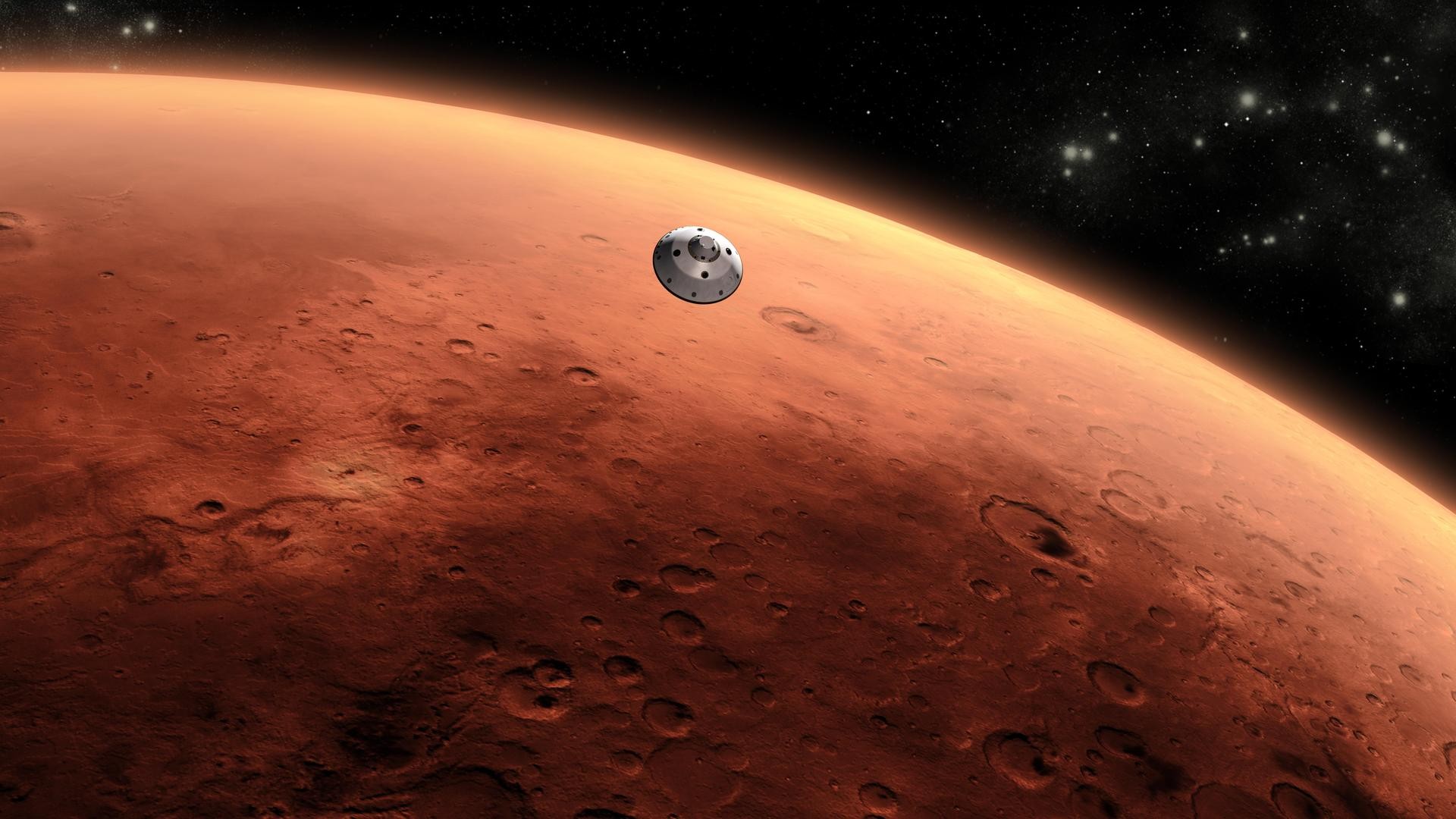
Tremendous tilts of Mars' rotational axis during the past 20 million years may have dried out the planet, according to a new study. The findings may help solve the mystery of how Mars, which once contained lakes, rivers and possibly oceans, lost its water.
Dry, dust-filled deserts cover much of Mars' surface today. Astronomers think most of the planet's scant water reserves are frozen within fine-grained surface dirt, with above-surface ice confined to the polar regions.












