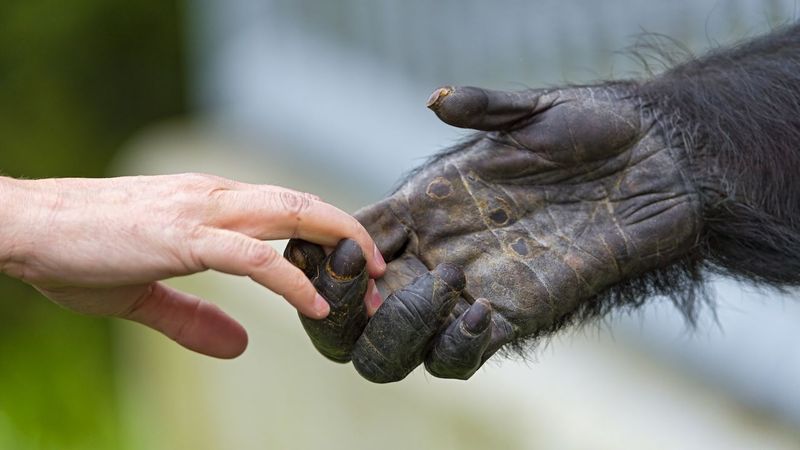
Do humans and chimps really share nearly 99% of their DNA? The frequently cited 99% similarity between human and chimp DNA overlooks key differences in the genomes. LiveScience · Sep 7, 2025
Extreme thinness: Scientists are investigating why some people struggle to gain weight Researchers are exploring why some individuals are naturally super-lean and may struggle to gain weight. The causes of such constitutional thinness offer clues to the physiology of weight control. LiveScience · Sep 6, 2025
Scientists find 'something extraordinary' in famous supernova's troubled heart Scientists using the Chandra X-ray telescope have uncovered new details about the famous supernova remnant Cassiopeia A. LiveScience · Sep 6, 2025
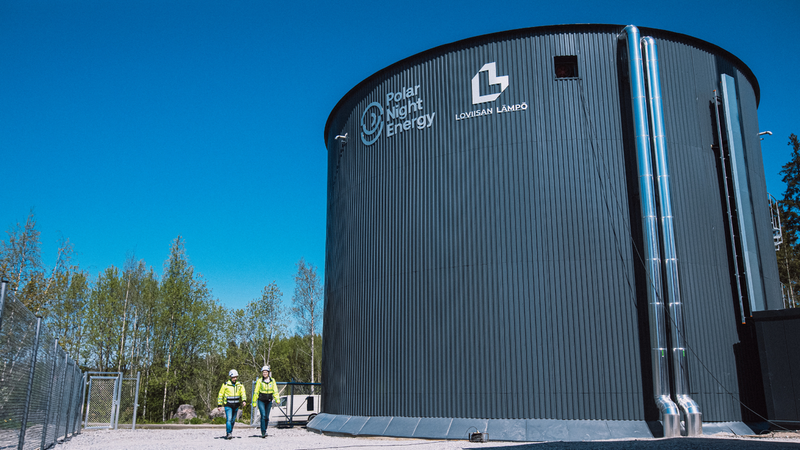
A scalding hot 'sand battery' is now heating a small Finnish town Engineers create a sand battery that they say will slash the carbon emissions in Pornainen, Finland, by 70% — it uses renewables to heat the sand to more than 1,000 degrees Fahrenheit. LiveScience · Sep 6, 2025
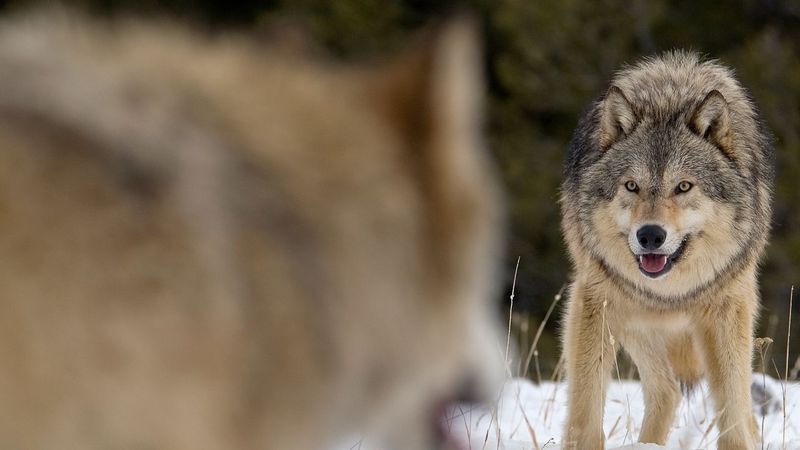
Are alpha males real? The term "alpha male" was coined in 1970 to describe wolves. But what does science think about the term now? LiveScience · Sep 6, 2025
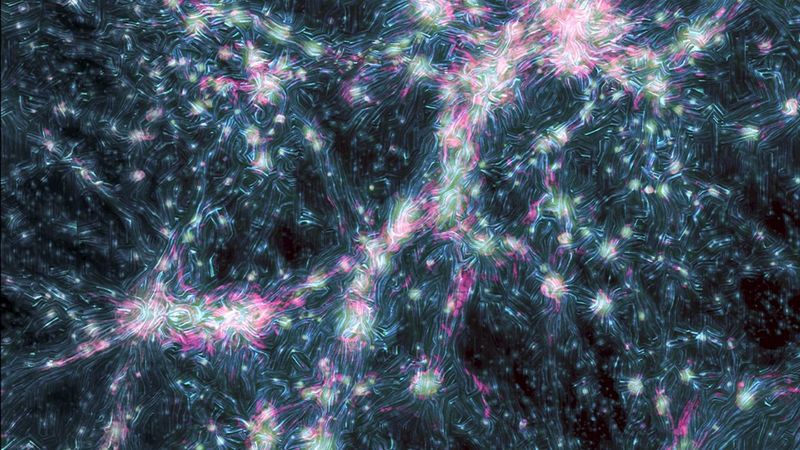
The universe's first magnetic fields were 'comparable' to the human brain — and still linger within the 'cosmic web' New computer simulations suggest the first magnetic fields that emerged after the Big Bang were much weaker than expected — containing the equivalent magnetic energy of a human brain. LiveScience · Sep 6, 2025
'I trust AI the way a sailor trusts the sea. It can carry you far, or it can drown you': Poll results reveal majority do not trust AI Do you trust AI? Live Science readers share their thoughts. LiveScience · Sep 5, 2025
Just 1 dose of LSD could relieve anxiety for months, trial finds An early trial with about 200 people tested the effects of LSD on generalized anxiety disorder and found promising results. LiveScience · Sep 5, 2025
Scientists invented 'sperm bots' that they piloted through a fake cervix and uterus Newly unveiled sperm microbots have the potential to improve reproductive health with magnetic controls and real-time X-ray tracking, according to a study. LiveScience · Sep 5, 2025
Homo erectus: Facts about the first human lineage to leave Africa Homo erectus is associated with a number of firsts in its 2 million years of existence, including being the first hominin to travel out of Africa. LiveScience · Sep 5, 2025
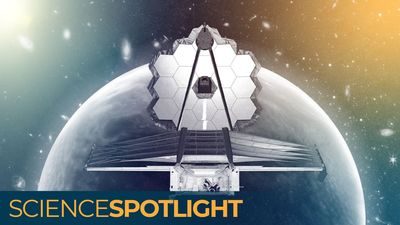
Will the James Webb telescope lead us to alien life? Scientists say we're getting closer than ever. Three years into its mission, the James Webb Space Telescope has advanced the search for alien life more than any machine before it. What will it find next? LiveScience · Sep 5, 2025
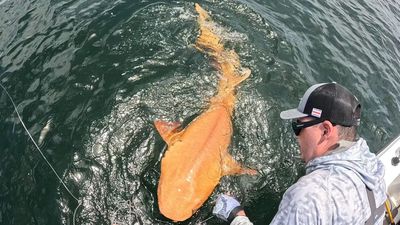
Fishers discover first-of-its-kind bright orange shark with two rare conditions in Caribbean Fishers caught a bright orange shark off Costa Rica that had albinism, alongside the species' first scientifically documented case of an extremely rare condition called xanthism. LiveScience · Sep 5, 2025
Scientists develop 'glue gun' that 3D prints bone grafts directly onto fractures Researchers created a special glue gun that can 3D print a bone-like substance for fracture repair during surgery and have tested it in early experiments. LiveScience · Sep 5, 2025
Category 4 Hurricane Kiko is heading for Hawaii — but it will weaken before it gets there, forecasters say Weather predictions show that Hurricane Kiko could hit Hawaii next week, but forecasters say the Category 4 storm will weaken to a tropical storm or low-category hurricane this weekend. LiveScience · Sep 5, 2025
LiveScience · Sep 5, 2025 Narusawa Ice Cave: The lava tube brimming with 10-foot-high ice pillars at the base of Mount Fuji The Narusawa Ice Cave is a natural lava tunnel that formed during a violent eruption of Mount Fuji in A.D. 864. Every winter, the cave grows giant ice pillars due to its freezing temperatures.
LiveScience · Sep 4, 2025 Gene that human ancestors lost millions of years ago could help treat gout Researchers used evolutionary genetics and CRISPR gene editing tech to develop an innovative treatment for gout. The approach has yet to be tested in humans.
LiveScience · Sep 4, 2025 Chinese submersible explores previously unknown giant craters at the bottom of the Pacific — and they're teeming with life Scientists have discovered and explored a giant hydrothermal system at the bottom of the Pacific, which could provide a window into the origins of life on Earth.
LiveScience · Sep 4, 2025 James Webb telescope spots odd disk around star that could shatter planet formation theories Astronomers using the James Webb Space Telescope have discovered a planet-forming disk that almost entirely lacks water, challenging prevailing theories.
LiveScience · Sep 4, 2025 Skull of bear held captive to fight Roman gladiators discovered near ancient amphitheater in Serbia Archaeologists determined that the bear had an infected injury and had been held captive for a significant amount of time.
LiveScience · Sep 4, 2025 Map of 600,000 brain cells rewrites the textbook on how the brain makes decisions A new study shows that the brain activity behind decision-making is far more widespread across the organ than first thought.
LiveScience · Sep 4, 2025 Key Atlantic current could start collapsing as early as 2055, new study finds The Atlantic Meridional Overturning Circulation brings heat to the Northern Hemisphere and regulates the climate globally, but research suggests it could weaken significantly in the coming decades.
LiveScience · Sep 4, 2025 40-year-old 'queen of icebergs' A23a is no longer world's biggest after losing several 'very large chunks' since May A giant iceberg called A23a that broke off Antarctica in 1986 is now disintegrating near South Georgia Island in the South Atlantic Ocean, scientists say.
LiveScience · Sep 3, 2025 Iconic winged lion statue in Venice may actually be from China's Tang dynasty, study finds A new study of the trace amounts of lead in Venice's famous winged lion statue suggests that its metal originated in China — and Marco Polo's family may have brought it over.
LiveScience · Sep 3, 2025 James Webb telescope discovers 'exceptionally rare' 5-galaxy crash in the early universe Near-infrared images from the James Webb Space Telescope revealed five early universe galaxies merging within a large halo.
LiveScience · Sep 3, 2025 Who will see the 'blood moon' total lunar eclipse this weekend? The full moon on Sept. 7, 2025 will be a "blood moon" total lunar eclipse. Here's who will see the longest total lunar eclipse since 2022.