
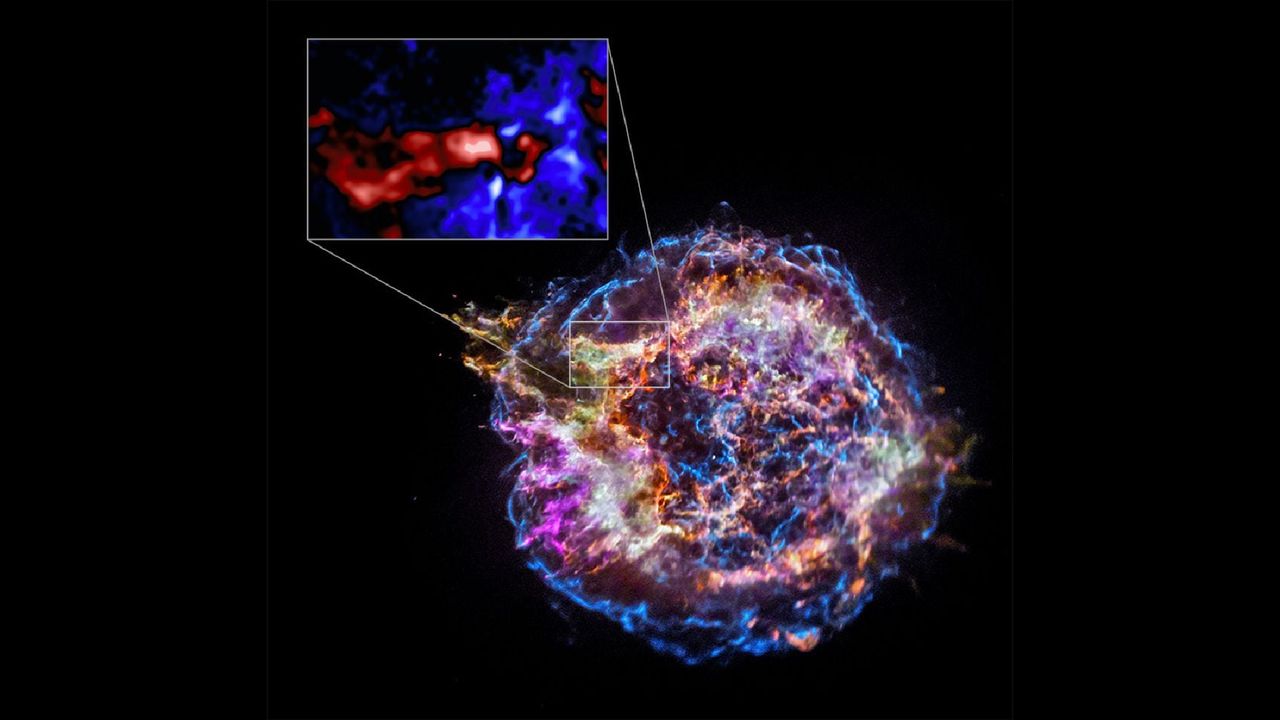
Around 11,300 years ago, a massive star teetered on the precipice of annihilation. It pulsed with energy as it expelled its outer layers, shedding the material into space. Eventually it exploded as a supernova, and its remnant is one of the most studied supernova remnants (SNR). It's called Cassiopeia A (Cas A) and new observations with the Chandra X-ray telescope are revealing more details about its demise.
Cas A's progenitor star had between about 15 to 20 solar masses, though some estimates range as high as 30 solar masses. It was likely a red supergiant, though there's debate about its nature and the path it followed to exploding as a supernova. Some astrophysicists think it may have been a Wolf-Rayet star.














