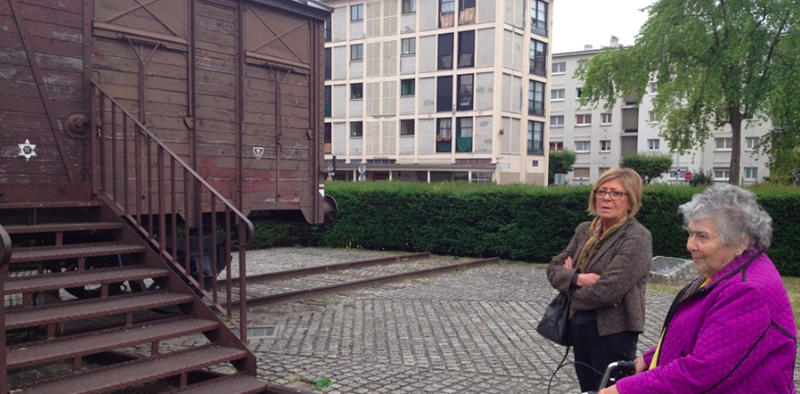
Railways were essential to carrying out the Holocaust – decades later, corporate reckoning continues The Holocaust could not have happened without the railways. The Conversation · Apr 16, 2025
Why does Putin insist Ukranians and Russians are ‘one people’? The answer spans centuries of colonisation and resistance Russian president Vladimir Putin does not seem interested in peace: Sunday’s missile strike on Sumy, the worst civilian attack this year, proves he is determined to expand into Ukraine at any cost. The Conversation · Apr 15, 2025
A Roman governor ordered Jesus’ crucifixion – so why did many Christians blame Jews for centuries? It’s a straightforward part of the Easter story: The Roman governor Pontius Pilate had Jesus of Nazareth killed by his soldiers. He imposed a sentence that Roman judges often inflicted on social subversives – crucifixion. The Conversation · Apr 11, 2025
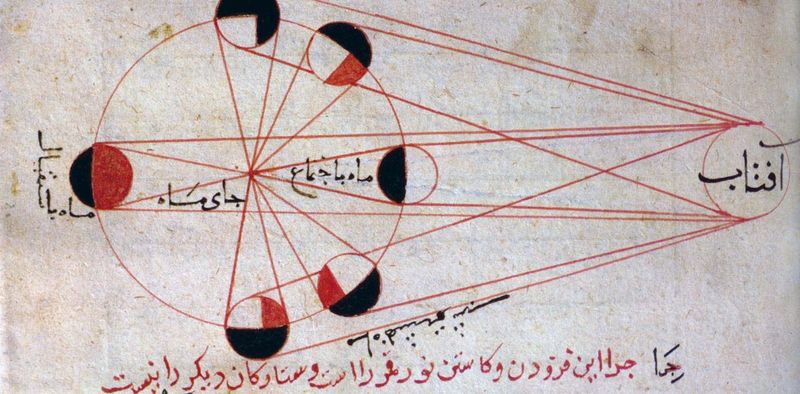
Changing the Eurocentric narrative about the history of science – why multiculturalism matters In the 11th century in Cairo, the foundations for modern science were laid through the detention of an innocent man. The Conversation · Apr 9, 2025
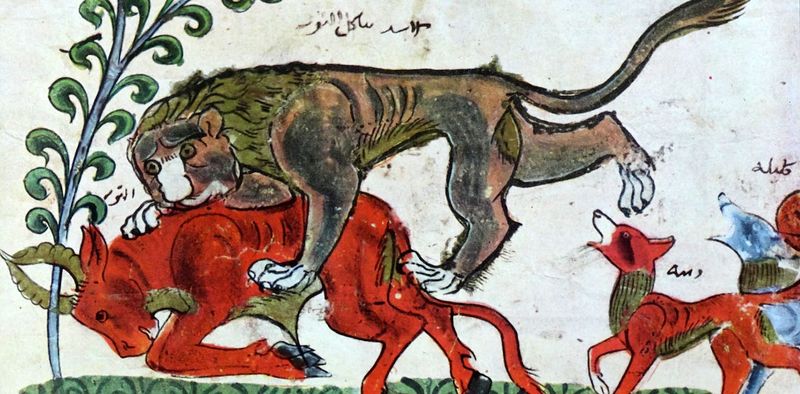
What ancient animal fables from India teach about political wisdom In today’s volatile world, where wars can be fought over territory, commerce can be abruptly subjected to tariffs, and friendly nations can turn hostile after a single election, political leadership is more consequential than ever. So, one must ask, what makes a leader effective, and how should we choose who… The Conversation · Apr 7, 2025
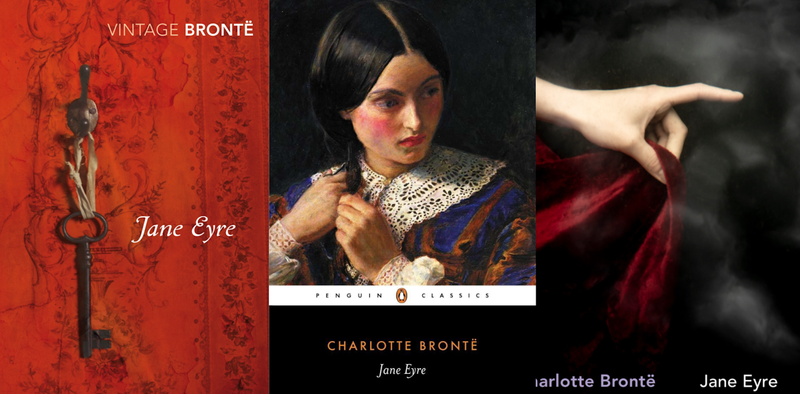
Passion, integrity and self-reliance: why Charlotte Brontë’s Jane Eyre is a heroine for our times In our guides to the classics, experts explain key literary works. The Conversation · Mar 26, 2025
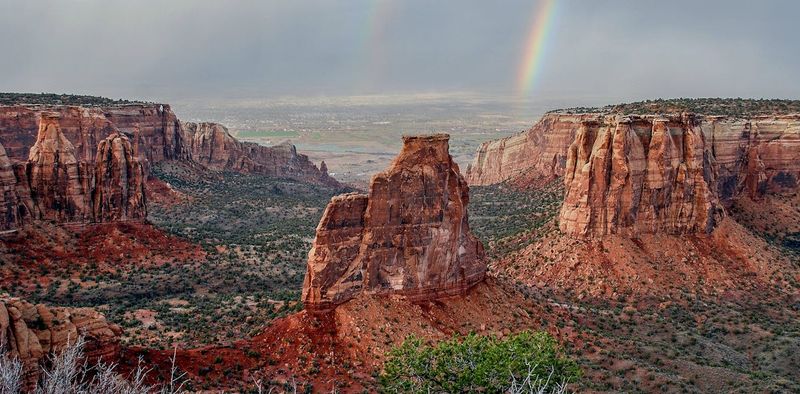
National monuments have grown and shrunk under US presidents for over a century thanks to one law: The Antiquities Act America’s public lands, from its majestic national parks to its vast national forests, are at the heart of the country’s identity. The Conversation · Mar 24, 2025
Taking a leap of faith into imaginary numbers opens new doors in the real world through complex analysis To a nonmathematician, having the letter “i” represent a number that does not quite exist and is “imaginary” can be hard to wrap your head around. If you open your mind to this way of thinking, however, a whole new world becomes possible. The Conversation · Mar 10, 2025
Butterflies declined by 22% in just 2 decades across the US – there are ways you can help save them If the joy of seeing butterflies seems increasingly rare these days, it isn’t your imagination. The Conversation · Mar 6, 2025
‘A miracle of Western tenacity’: how 10 million refugees found homes after World War II A disaster. That was the fitting word for the Europe that emerged immediately after 1945, covered in soot from cities turned to ashes. Life had collapsed. The Conversation · Mar 5, 2025
How ‘muscular Christianity’ strove to bring men back to religion – and what it can teach us today Most people recognise organisations such as the YMCA and the Boy Scouts, or events such as the Modern Olympic Games, summer camps and wilderness retreats. The Conversation · Feb 28, 2025
Butchers, bakers, candlestick-makers − and prostitutes: The women working behind the scenes in papal Avignon In the medieval church, women’s roles were limited – usually some form of enclosure and celibacy, such as becoming an anchoress walled up alone for life, or a nun in a classic convent. On the other extreme were a few dramatic examples of women who made history for the church… The Conversation · Feb 25, 2025
500 years ago, German peasants revolted – but their faith that the Protestant Reformation stood for freedom was dashed by Martin Luther and the nobility Five hundred years ago, in the winter of 1524-1525, bands of peasants roamed the German countryside seeking recruits. It was the start of the German Peasants’ War, the largest uprising in Europe before the French Revolution. The peasants’ goal was to overturn serfdom and create a fairer society grounded on… The Conversation · Feb 25, 2025
Making sex deadly for insects could control pests that carry disease and harm crops Insects do a lot more harm than ruining picnics. Some insects spread devastating diseases, while others cause staggering economic losses in agriculture. To control some of these pests, scientists are developing males that make sex a deadly event. The Conversation · Feb 21, 2025
The Conversation · Feb 20, 2025 Friday essay: as the legacy media have dumbed down, The New Yorker has dumbed up Like many, I entered The New Yorker through the cartoon door. The first cartoon I loved, and remember to this day, featured a New Yorker staple – two guys sitting in a bar – with one saying to the other: “I wish just once someone would say to me, ‘I…
The Conversation · Feb 18, 2025 Loss of forests brought new birds to NZ during the last Ice Age – we’re witnessing a similar process now When people arrived on the shores of Aotearoa New Zealand and began to turn the land to their needs, they set in motion great changes.
The Conversation · Feb 10, 2025 Gut-wrenching love: What a fresh look at the ‘Good Samaritan’ story says for ethics today The Bible story of the Good Samaritan is more than a mainstay of Sunday school courses. “Good samaritan” is the catch-all way to describe a do-gooder – someone who stops to change the tire of a stranded motorist, helps a lost child find their parents in a store and gives…
The Conversation · Feb 6, 2025 Friday essay: a reinvention of self – the pleasure of literary journeys In the hiatus that was COVID lockdown, the novelty of “staying put” had a peculiar grace and delight. To limit one’s trajectory to five kilometres meant homing in on the small and the local: the seasonal repetitions of a plant blossoming in a neighbour’s garden, new pale green leaves on…
The Conversation · Feb 4, 2025 Why are rubies red and emeralds green? Their colors come from the same metal in their atomic structure The colors of rubies and emeralds are so striking that they define shades of red and green – ruby red and emerald green. But have you ever wondered how they get those colors?
The Conversation · Feb 4, 2025 Activists are warning of a return to the Jim Crow era in America. But who or what was Jim Crow? Since becoming president, Donald Trump has issued a record number of executive orders. Several aim to dismantle federally funded initiatives based on the idea that “diversity, equity, and inclusion” (DEI) are goals worth achieving.
The Conversation · Feb 3, 2025 Unwritten rules: why claims of a missing ‘fourth article’ of the Treaty don’t stack up I sign this Treaty with my hand, but with the mana of my ancestors.
LiveScience · Feb 3, 2025 12 pivotal moments in the history of robotics, from Isaac Asimov to self-driving cars From Isaac Asimov's Three Laws of Robotics to bipedal machines you can buy today, here are 12 important milestones in the development of robots.
The Conversation · Feb 3, 2025 Supersonic jets are making a comeback – but despite the hype, don’t expect to book yet Late last week, American company Boom Supersonic flew faster than the speed of sound with its XB-1 supersonic demonstrator aircraft. It’s now the first piloted non-military aircraft to break the sound barrier since the Concorde was retired from service in 2003.
The Conversation · Jan 30, 2025 Bauhaus and The Brutalist: the revolutionary immigrant architects whose stories inspired the film László Toth, a Hungarian Jewish architect and Holocaust survivor, emigrates to the United States after World War II in search of a new life. After a rough start, a wealthy businessman recognises his talent and offers him a job that will change his life.
The Conversation · Jan 30, 2025 Women have finally achieved parity on VCE English reading lists, but there are fewer classics What makes something worthy of study and inclusion on a school’s text list? Is it right to remove or add a literary work based on the attributes of the person who wrote it?





 International Business Times UK
 The Conversation
 Bored Panda
 The Independent UK
 Euronews
 LiveScience
 Radio France Internationale
 Salon
 Space
