The NIH Plan To Strengthen 'Replication and Reproducibility' Will Not Check Anything The world’s largest research funder asked its grantees whether it should audit them. Guess what they said. Reason · 5h ago
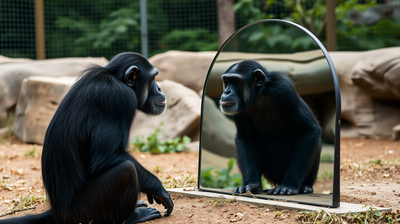
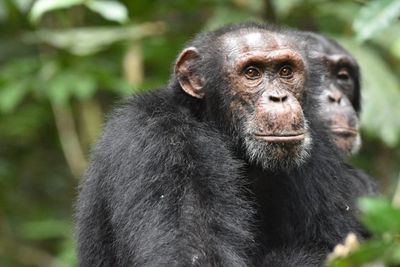
The Mirror Test: Which Animals Pass, Which Fail, and What It Reveals About Animal Intelligence and Consciousness What the Mirror Test Actually IsGordon Gallup Jr. put a chimpanzee in front of a mirror in 1970 and watched it do something no researcher had documented before: the chimp used the reflection to inspect parts of its own body it could not otherwise see, the inside of its mouth,… Times Life · Sep 27
Bumblebee Social Learning: How Insects Solved a Puzzle and Taught Other Bees Without Any Instruction What the experiment actually testedA bumblebee given a two-step puzzle box, one that required rotating a red tab before a second disc could be pushed aside to reach a sugar reward, had no prior experience with either step. Given enough time alone, most bees failed. Bees that watched a trained… Times Life · Aug 16
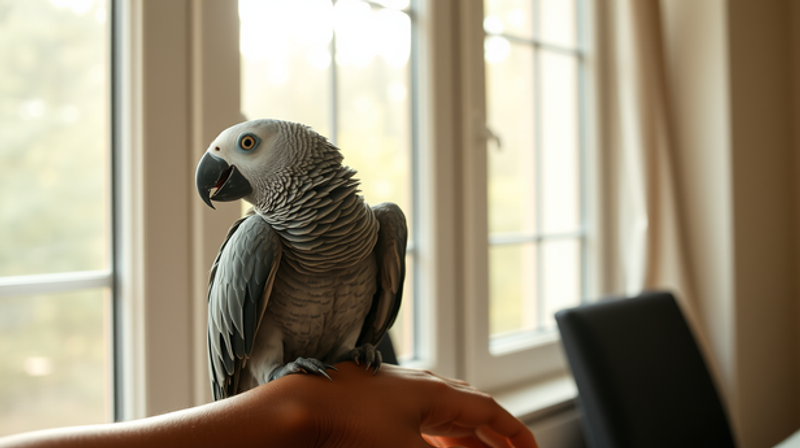
Why Parrots Can Mimic Human Speech So Perfectly but Cannot Understand Language Like We Do The organ that makes it possibleParrots are the only birds whose vocal anatomy allows them to approximate human consonants and vowels with any real precision. The key is the syrinx, the avian equivalent of a larynx, located at the base of the trachea where it forks into the two bronchi.… Times Life · Jul 1
Scientists just cracked a mystery that's puzzled researchers for centuries; why are 90% of humans right-handed? Why are 90% of humans right-handed? A new study published in PLOS Biology suggests that human right-handedness may have evolved because of two major evolutionary changes: upright walking and larger brains. Researchers from the University of Oxford analyzed data from over 2,000 primates across 41 species and tested multiple theories… The Economic Times · May 19
Why are human penises so large? New evolutionary study finds two main reasons “Size matters” sounds like a tabloid cliché, but for evolutionary biologists the size of the human penis is truly a puzzle. The Conversation · Jan 22
Could electric brain stimulation lead to better maths skills? A painless, non-invasive brain stimulation technique can significantly improve how young adults learn maths, my colleagues and I found in a recent study. In a paper in PLOS Biology, we describe how this might be most helpful for those who are likely to struggle with mathematical learning because of how… The Conversation · Jul 1, 2025
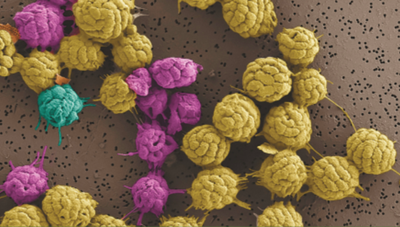
This strange bacteria aligns to Earth's magnetic field and needs friends to survive A unique type of bacteria appears to have social groups — left alone, they'd die. Space · May 2, 2025
New drug target to prevent Ebola found Scientists have found a new way in which Ebola reproduces in the human body, how it interacts with a human protein called ubiquitin and have thus identified a potential target for drugs to prevent the viral disease. The deadly virus affects people mostly in sub-Saharan Africa. "We used a combination… The Times of India · Mar 18, 2024
Watch the world through different animals' eyes in this stunning high-tech footage Cameras recorded footage in red, blue, green and UV channels simultaneously, with openly available software processing the raw footage and converting it into different kinds of "animal vision," showing us how bees, birds, mice and dogs might see the world. LiveScience · Jan 23, 2024
Research shows sniffing women's tears lessens aggressive behaviour in men According to new research published in the open-access journal PLOS Biology, tears from women contain molecules that reduce violence in men. Read further on Dynamite News: Dynamite News · Dec 23, 2023
Crafty Chimps Use Hilltops For Reconnaissance In Rival Territory Chimpanzees Display Strategic Military Tactics in New Research Zenger · Nov 2, 2023
Listen to Pink Floyd's 'Another Brick in the Wall,' as decoded from human brain waves Researchers reconstructed recognizable snippets of the classic Pink Floyd song "Another Brick in the Wall" using listeners' recorded brain activity. LiveScience · Aug 16, 2023
Non-native English speaking scientists work much harder just to keep up, global research reveals These days it’s necessary to have at least a basic level of English proficiency in most research contexts. But at the same time, our collective emphasis on English places a significant burden on scientists who speak a different first language. The Conversation · Jul 18, 2023
Dynamite News · Apr 19, 2023 Large animals travel more slowly since they can't keep cool: Study According to a new study led by Alexander Dyer from the German Centre for Integrative Biodiversity Research (iDiv) and the Friedrich Schiller University Jena, Germany, published in the open-access journal PLOS Biology, an animal's travelling speed is limited by how effectively it sheds the excess heat generated by its muscles.…
WEKU · Mar 7, 2023 Can insects have culture? Puzzle-solving bumblebees show it's possible A new study in PLOS Biology finds that bumblebees can learn to solve puzzles from each other — suggesting that even invertebrate animals may have a capacity for culture.
Dynamite News · Nov 28, 2022 Health: US Researchers Find Gut-Brain Connection For Social Behavior According to recent University of Oregon zebrafish research, gut microbes encourage specialized cells to remove extra connections from brain circuits that regulate social behaviour. Read on for details:
Inverse · Mar 31, 2022 For better sleep, scientists now say to keep track of this kind of light A group of experts on circadian rhythms has released a new set of guidelines for lighting in indoor environments.






















 Dynamite News
 The Conversation
 Times Life
 LiveScience
 Inverse
 Reason
 Space
Space
 The Economic Times
 The Times of India
 WEKU
WEKU
 Zenger
