The AI second brain: The future of knowledge work The knowledge work is where AI matters most TechRadar · Jun 22
A Houston drowning tests whether Texas law gives the right to deny brain death testing State leaders and pro-life groups are siding with 2-year-old Annelise Camp’s family, who are suing to stop Texas Children’s Hospital from testing her for brain death. The Texas Tribune · Jun 22
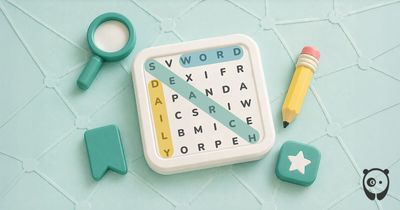
Daily Word Search Game #035 (Jun 22, 2026) Expand your vocabulary with today's Daily Word Search puzzle. Choose from Easy, Medium, or Hard difficulty levels and challenge yourself to find every hidden word in this fun and addictive word search game. New themed puzzles are added daily for word game and brain teaser fans alike. Entertainment Bored Panda · Jun 22
Psychology says the reason you carry an object into another room and then stand there confused has a surprising scientific explanation Ever walk into a room and forget why? It's not forgetfulness, but the 'Doorway Effect.' Psychologists explain our brains treat doorways as scene changes, filing away previous thoughts. This mental reset, common in our busy lives, can even happen with digital transitions. Remembering your goal before moving or returning to… The Economic Times · Jun 22
‘Truly horrific’: the stories of five people affected by the NHS maternity scandal Some see publication of the Nottingham report as a landmark moment, others as bittersweet and traumatic The Guardian - UK · Jun 22
Psychology says if you keep craving sweets even after a full meal, your brain may not be asking for sugar at all, it may be crying out for relief Sweet cravings often signal more than just hunger, according to psychology. Stress, tiredness, and emotional pressure can trigger these urges as the brain seeks comfort and relief, not necessarily sugar. Research indicates that sugar activates the brain's reward system, providing a temporary emotional reset. Understanding this link between mental strain… The Economic Times · Jun 22
Weight-loss drugs like Ozempic could work for addiction too – and we finally know how For many people, the thought of a tasty burger or a cold pint of beer conjures up a vivid mental image and drives behaviour. The Conversation · Jun 22
Psychology says young adults who put posters of their favorite show characters or superstars in their rooms are not childish: Why the brain uses role models to build identity, comfort and motivation Psychology suggests that young adults who decorate their rooms with favorite show characters or superstars are rarely being childish. More often, they are shaping and expressing their identities. Humans naturally seek inspiration, and surrounding themselves with admired figures can serve as a reminder of their interests, values, aspirations, and sense… The Economic Times · Jun 21
Psychology says people who keep fidgeting with something in their hands are not distracted: Why the brain uses small movements to think, focus and calm itself Psychology suggests that people who constantly fidget with objects in their hands are rarely being rude, distracted, or impatient. More often, they are engaging in a natural form of self-regulation that helps the brain stay focused, manage emotions, and release excess mental energy. The Economic Times · Jun 21
Psychology says adults who get anxious when their phone battery drops below 50% are not overreacting: Why people treat smartphones like a safety blanket Psychology suggests that adults who become anxious when their phone battery drops below 50% are rarely overreacting. More often, they are responding to how deeply smartphones have become integrated into everyday life. For many people, a phone is no longer just a device for communication. The Economic Times · Jun 21
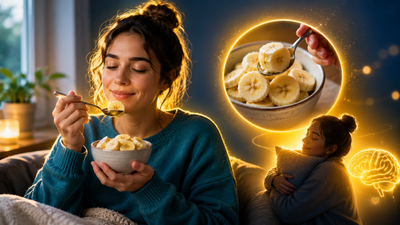
Psychology says adults who eat bananas with a spoon are not weird: Why some people turn everyday eating into a comfort ritual Psychology suggests that adults who eat bananas with a spoon are rarely being strange or childish. More often, they are responding to fundamental human needs for comfort, familiarity, and a sense of control. Small personal rituals can make everyday life feel more predictable, enjoyable, and reassuring in an increasingly busy… The Economic Times · Jun 21
Psychology says adults who save money in jars or piggy banks are not old-fashioned: Why physically seeing money grow gives the brain a sense of control and security Psychology suggests that adults who save money in jars or piggy banks are rarely being old-fashioned. More often, they are responding to a fundamental human need for tangible progress. People are naturally motivated when they can see their efforts accumulating over time, making visible savings a powerful source of encouragement… The Economic Times · Jun 21
Psychology says some kids are not interested in studying: Should parents really be worried? Why curiosity, motivation and learning styles matter more than grades Psychology suggests that some children are not uninterested in learning itself. More often, they may be disconnected from the way information is being presented to them. The most important insight is that children are naturally curious and eager to explore, but their engagement often depends on whether learning feels meaningful,… The Economic Times · Jun 21
Psychology says waiting until the last minute to work is not laziness: How deadlines and time pressure trick the brain into finally taking action Psychology suggests that people who only become productive when deadlines are approaching are rarely lazy. More often, they are relying on a brain that has learned to respond to urgency and external pressure. The key insight is that procrastination is often rooted in emotional regulation rather than a lack of… The Economic Times · Jun 21
The Economic Times · Jun 21 Psychology says fathers who often insist on arriving hours early for flights or trains are not being overdramatic, they are trying to protect the family against uncertainty Psychology rarely deals in absolutes, but this habit often reflects a deeply rooted human instinct. Responsibility can reshape the way people think, causing them to anticipate problems before they happen. The more someone feels responsible for the well-being of others, the more they naturally begin planning ahead.
Bored Panda · Jun 21 Daily Word Search Game #034 (Jun 21, 2026) Expand your vocabulary with today's Daily Word Search puzzle. Choose from Easy, Medium, or Hard difficulty levels and challenge yourself to find every hidden word in this fun and addictive word search game. New themed puzzles are added daily for word game and brain teaser fans alike. Entertainment
The Economic Times · Jun 21 People obsessed with diet coke aren’t just chasing taste as studies show your brain may be playing a trick Diet coke obsession: People obsessed with Diet Coke are not just driven by taste, but also by how the brain responds to it. Even though the drink has sweetness with no calories, research suggests this mismatch may still activate the brain’s reward system, creating a sense of satisfaction and reinforcing…
MyLifeXP · Jun 21 When Love Feels Like Coming Home: The Soul Recognition Theory Have you ever met someone and felt strangely calm around them? Not excited. Not nervous. Not overwhelmed. Just. at peace. Almost as if you had known them forever. Many people expect love to begin with butterflies, racing hearts, and dramatic moments. But according to the Soul Recognition Theory, the deepest…
The Economic Times · Jun 20 Your deep sleep may contain a brain switch that controls muscle growth, fat burn and focus. Here's what surprising research shows New research reveals deep sleep isn't just for rest; it actively regulates growth hormone, crucial for muscle repair, bone strength, and fat metabolism. Scientists have identified a brain circuit controlling this hormone's release, highlighting sleep's vital role in rebuilding the body and maintaining metabolic health. This discovery underscores sleep's function…
The Economic Times · Jun 20 Psychology says people who can't sleep without a blanket even when it's hot are not strange: Why the brain associates it with safety, comfort and emotional regulation Psychology suggests that adults who cannot sleep without a blanket, even in warm weather, are rarely being irrational. More often, they are responding to years of learned associations that connect blankets with comfort and security. For many people, a blanket is more than a physical object. It symbolizes familiarity, consistency,…
TechRadar · Jun 20 'This might actually force some actual brain cells to fire': Norway is banning younger school kids from using generative AI Norway is taking steps to limit how generative AI can be used in schools from the start of the next school year.
The Economic Times · Jun 20 Psychology says fathers who forget birthdays but remember their daughter's favorite food aren’t emotionally unavailable, they express love through action Psychology suggests that fathers who forget birthdays but never forget their daughter’s favorite food are rarely uncaring. More often, they express love through familiarity, everyday routines, and acts of service. The key insight is that affection does not always look the same from one person to another.
The Independent UK · Jun 20 Technology can have detrimental impacts on the brain — enter ‘friction-maxxing’ ‘When life is too frictionless, your brain goes on autopilot,’ one clinical psychologist noted
The Economic Times · Jun 20 Psychology says women who keep tying and untying their hair unconsciously while working are often trying to regulate their brains Psychology suggests this habit is usually not about looks at all. In many cases, it is the brain’s way of creating small moments of balance during mentally demanding tasks. Humans naturally use simple physical actions to regulate attention, energy and comfort levels throughout the day.
The Economic Times · Jun 20 Psychology says people who start the TV while having a meal but can't decide what to watch are not looking for entertainment, they want comfort and familiarity Psychology suggests that people are rarely just struggling to pick a television show. More often, they are trying to decompress after navigating a mentally exhausting world. The endless scrolling is often less about finding something to watch and more about searching for a moment of comfort, calm, and mental relief.






















 Medical Daily
 The Independent UK
 Times Life
 Bored Panda
 The Conversation
 International Business Times UK
 The Economic Times
 The Guardian - UK
 MyLifeXP
 The Times of India
 Evening Standard
 The Guardian - US
