I don't think I'm alone when I say that there's something about this time of year that feels heavy. The festive buzz fades, the evenings are still dark, and suddenly life snaps back into a work-oriented routine.
On the flip side, the pressure to overhaul our health and fitness routines can feel overwhelming. I've learned the hard way that trying to make huge changes at this time of year can cause more harm than good, which is why this January, I'm leaning into small but powerful habits that simply make me feel good.

That's the context behind my decision to try gratitude meditation every day for the past three weeks. Instead of trying to bring more in to my life, I wanted to focus on what was already there, and why I'm so grateful for it. I can be a bit of a negative Nancy at this time of year, so if a simple gratitude meditation could swing the pendulum in the opposite direction, then I was all for it.
Gratitude meditation is one of those practices that sounds almost too simple at first - a gentle pause to reflect on what’s good, even when things feel hard. But there's actually some pretty interesting science that suggests it can help shift our mindset, ease stress, and improve emotional wellbeing over time. More on that later.
After making a promise to myself to really give this a go, I'm proud to say that I've practised gratitude meditation consistently for three weeks now. What I didn’t expect was just how comforting the process would feel - or how those few quiet minutes would start to ripple out into the rest of my day.
Keep scrolling to find out all the juicy details of my new favourite wellness habit. And if you're keen for more meditation content, check out MC UK's other Health Writers giving it a go, from trying a five-minute meditation every day, to trying TikTok's guided meditations. We've also rounded up the best five-minute meditations for boosting calm, too.
I Tried Gratitude Meditation Every Day For 3 Weeks - and It's Been a Transformative Act Of Self-Care
What is gratitude meditation?
Gratitude meditation is pretty much what it says on the tin: a meditation practice focused on feelings of gratitude and appreciation. I asked Ciara McGinley, meditation teacher at Finding Quiet, to share a little more detail.
"Gratitude meditation is simply about cultivating a sense of gratitude and appreciation within - for the good things in your life, no matter how big or small," she explains.
"You might focus on something specific - e.g. your morning coffee, or a person who has supported you through a difficult situation - or you might keep things more open and instead let feelings of gratitude arise naturally without any specific focus."
If you've been stuck in a negative mindset lately - which, let's be honest, is only too easy at this time of year - gratitude meditation can be a powerful way to shift your perspective.
What are the benefits of gratitude meditation?
The benefits of gratitude meditation pretty much speak for themselves. Who wouldn't want to focus on the things that make them feel good about their life after all?
But I wanted to get into the nitty-gritty of this and find out what (if any) the proven benefits of gratitude meditation are. Turns out, there are quite a few.
1. It can increase positive emotions
Experiencing "negative" feelings (think: sadness, anger, frustration, anxiety) is a part of life. But of course, the desire to dial these emotions down - and amp up the emotions that make us feel good - is only natural.
A study back in 2004 explored the impact of heartfelt positive emotions, with a specific focus on appreciation. The authors found that gratitude-focused techniques can help people sustain states of appreciation and other positive emotions over time.
In short, gratitude meditations help us feel good in a healthy, sustainable way. I'm sold.
2. It helps reduce anxiety and depression
If you're looking for ways to combat feelings of anxiety or depression, meditation can be a powerful addition to your toolkit. And there's concrete evidence that gratitude meditation can be particularly effective in this area.
This systematic review of 64 randomised clinical trials found that gratitude interventions (including meditative and reflective practices) were associated with fewer symptoms of anxiety and depression. The conclusion? Gratitude meditation can and should be used as a therapeutic complement for treating these symptoms.
Nicci Roscoe, holistic health and wellbeing practitioner, and author of Micro Meditation, summarises this nicely: "If life is overwhelming, a simple, short and meaningful two-minute gratitude meditation can seriously help. You'll shift your perspective and refresh your outlook on life."
3. It can increase life satisfaction
As our sense of gratitude goes up, so too does our life satisfaction. And who doesn't want that, really?
The proof is in the pudding: this study from 2015 reports that higher levels of gratitude were associated with increased self-esteem and stronger social support networks, both of which contributed to greater life satisfaction.
"This kind of research suggests that regular gratitude meditation can support emotional balance and resilience," Veena Ugargol, Psychotherapist & Yoga Therapist at MoreYoga, concludes. "It literally reinforces neural pathways in the brain linked to wellbeing."
My review of trying gratitude meditation every day for three weeks
Week one
Armed with all this knowledge on the benefits of gratitude meditation, I'm only too eager to start practising. I turn to Headspace - a paid subscription app I’ve had for almost a year now, and genuinely one of the best investments I’ve made for my wellbeing. There’s no shortage of choice when it comes to gratitude practices on the app, either: everything from a gratitude body scan and everyday gratitude sessions to a holiday-themed gratitude meditation, which felt particularly apt for the time of year. I decide to kick things off with the 10-day appreciation course.
As a side note, there are plenty of other ways to try gratitude meditation - Calm, YouTube, and Spotify all have solid options - but Headspace works for me.
I've done a lot of first-person health experiments now, and it's rare that I start to feel the benefits instantly. And yet, after my first gratitude meditation practice, I notice a shift. Each session leaves me feeling lighter, calmer, and oddly comforted. There’s a warm, fuzzy feeling that lingers even after the meditation ends - exactly the emotional response I was hoping for after reading the research.
That said, it’s not always seamless. Some days, the gratitude feels effortless; on others, it feels a little forced. McGinley’s advice helped here: "notice what happens as you think about the people, experiences, or things you’re grateful for - any warmth, softening, or sense of ease in the body. And if you don’t feel anything? That’s okay. The practice isn’t about mentally listing gratitudes like a to-do list, but gently shifting towards experiencing them."
That reassurance helped me take the pressure off and focus more on the feeling of gratitude rather than the thoughts around it. It's a little hard to explain, but you'll understand what I mean if you give it a go yourself.
Weeks two and three
By weeks two and three, something subtle but important starts to change. I'm still feeling the benefits immediately after each session, but the sense of appreciation is beginning to spill over into the rest of my day.
For instance, as the festive period draws to a close, I’d usually fixate on the sadness of it being over, paired with the familiar resistance to slipping back into work mode. This time, I noticed myself choosing a different focus. Instead of dwelling on what was ending, I felt genuinely grateful that I’d had such a lovely break and the chance to spend time with people I love.
That’s not to say the practice suddenly becomes perfect. My mind still wanders - a lot - and it feels as though I'm constantly guiding myself back to the gratitude focus. This is where Headspace really shines for me: the teachers offer just enough reminders to keep you anchored without pulling you out of the experience.
By the end of the three weeks, gratitude meditation hasn’t turned me into a relentlessly positive person - but it has helped me meet everyday moments with a little more softness, perspective, and appreciation.
Beyond that, I'm proud of myself for sitting to meditate every day for three weeks - carving time out for ourselves is no easy feat, especially at this time of year. That in itself feels like a pretty meaningful win.
Shop gratitude meditation essentials here:
A pretty journal is one of the best ways to start practising gratitude consistently. This one from Papier has my name on it.
With a pair of noise-cancelling headphones, you can practice gratitude meditation any time, any place. This sleek pair from Sony comes in four neutral colourways.
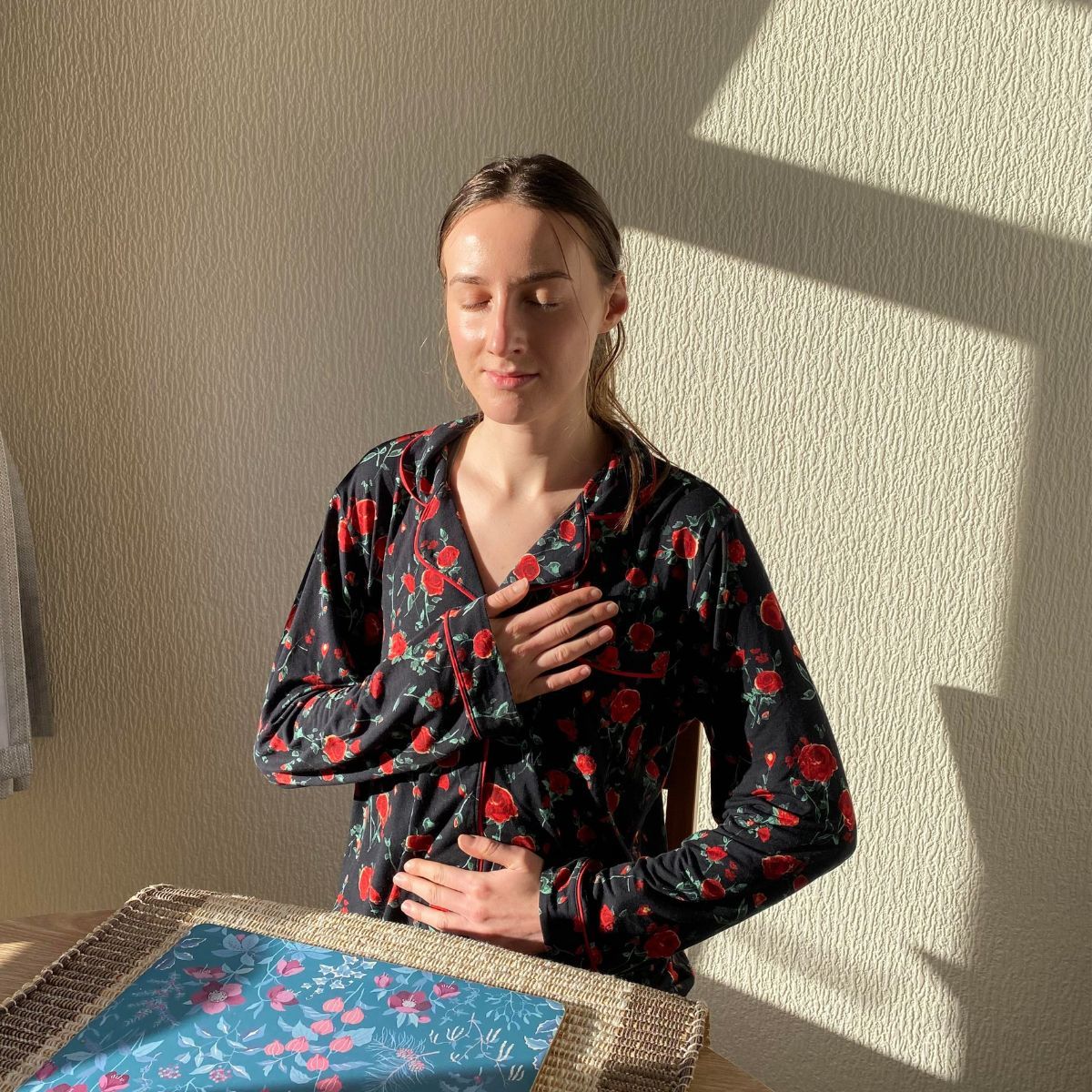
As I practice gratitude meditation in the morning, a comfy set of PJs is key. This pair from Stripe & Stare has quickly become one of my favourites - wearing them is like switching on the "relax" button in my brain.
How to do gratitude meditation at home?
According to psychotherapist Ugargol, trying gratitude meditation at home can take many forms, and there isn't really a "right" way.
"It may be a quiet, reflective practice, a written exercise using a journal, or something more relational, such as expressing appreciation directly to others," she said to MC UK. "The key is finding an approach that feels natural and sustainable for you."
If you're struggling to get started, try journaling prompts. Ask yourself questions like, What's the kindest thing someone said to me recently? What's one thing about your body or health that you appreciate today?
The aim here is to experience more feelings of gratitude on a daily basis, and that can look a little different from person to person.