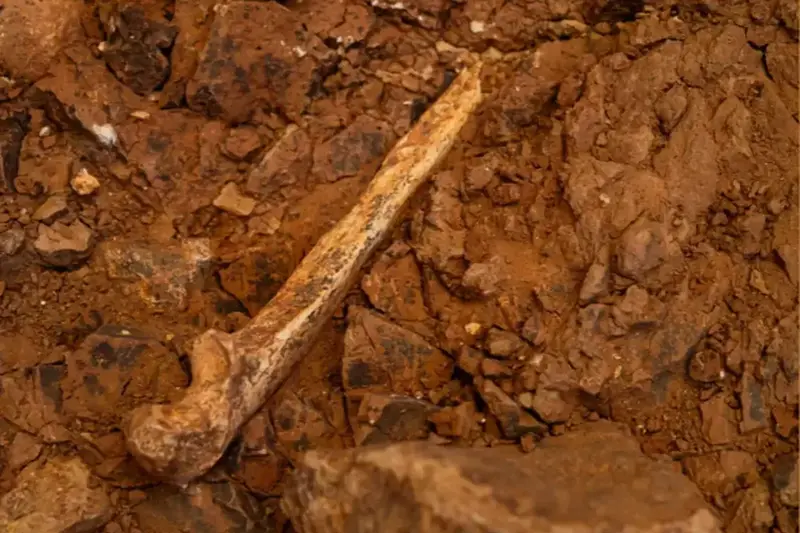
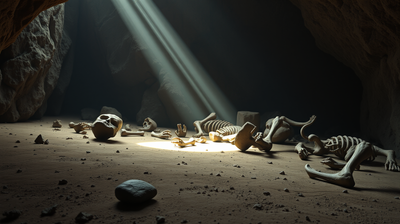
Human ancestor fossils unearthed in Spain point to grim secret of first Europeans Findings shed light on the biology, social relationships, and behaviour of Homo antecessor The Independent UK · Aug 6
Dinosaur fossils unearthed More than 100 dinosaur fossil fragments estimated to be over 130 million years old have been found in Chaiyaphum, raising hopes of identifying one of Thailand's oldest known carnivorous dinosaurs. Bangkok Post · Aug 5
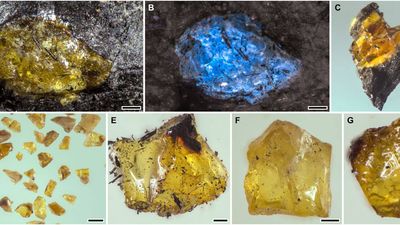
World's oldest amber has been found in China, and it is 65 million years older than expected In a remarkable discovery, scientists uncovered ancient amber specimens in China that are approximately 385 million years old. This significant find pushes the amber fossil record back by an impressive sixty-five million years. It indicates that early vascular plants may have developed advanced resin-producing capabilities, which could have provided a… The Times of India · Aug 4
Dinosaur-killing asteroid may have caused firestorms 17 times hotter than the thermal limit lethal to humans The dinosaurs may not have starved through a years-long winter. New evidence suggests a blanket of ultrafine impact dust set the planet on fire within hours. Space · Aug 1
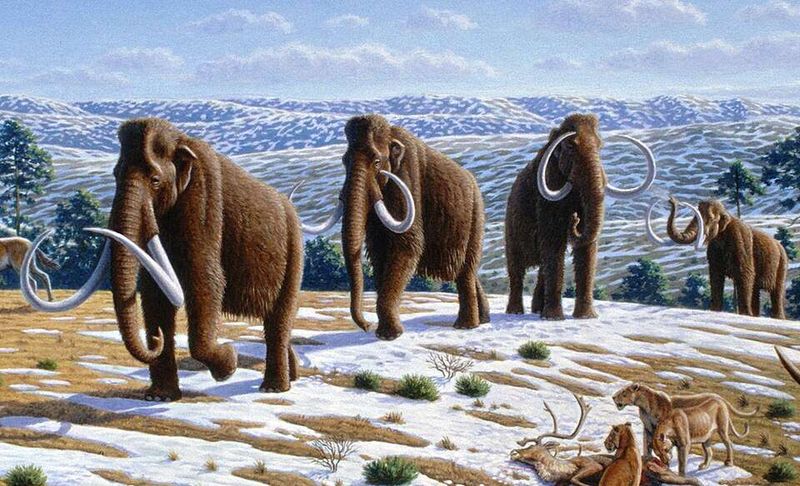
Bulgaria's Danube fell to record lows after heat and rain shortages: Its exposed bed revealed the jaw, tusks and femur of a young mammoth Extreme drought along Europe's Danube River revealed fossilized remains of a young woolly mammoth. Low water levels exposed parts of the riverbed, allowing a local resident to spot the bones. Scientists identified the jawbone, tusk, shoulder blade, and femur from the Ice Age creature. This significant find offers insights into… The Times of India · Aug 1
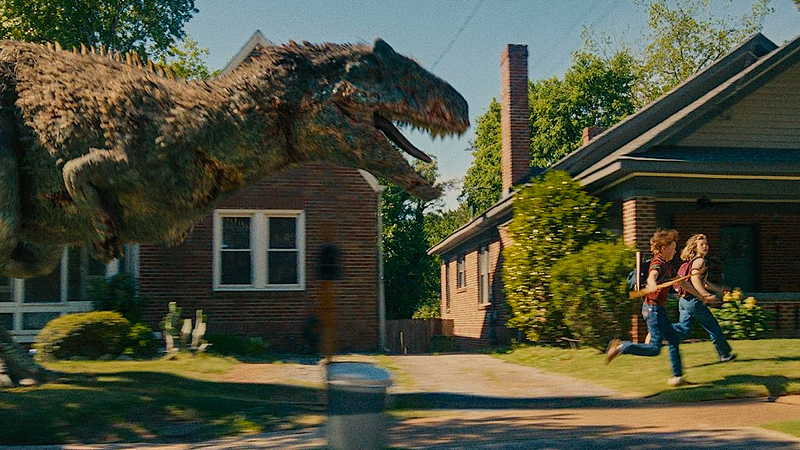
'The End of Oak Street: Could JJ Abrams' new 'Twilight Zone meets Jurassic Park' movie be the sleeper hit of the summer? JJ Abrams' new film "The End of Oak Street looks like "The Twilight Zone" meets "Jurassic Park" with a dash of "A Quiet Place." Could it be the perfect summer movie? Space · Jul 31
A 245-million-year-old marine reptile fossil in China preserves a rare digestive tract, possible liver traces and remains of its last fish meal A 245-million-year-old marine reptile fossil shows an intact digestive tract. This ancient Austronaga minuta fossil offers rare insights into early reptile digestion. Its simple stomach suggests complex digestive systems evolved later in archosaur history. The reptile's body showed adaptations for aquatic life, unlike prior beliefs. This discovery enhances understanding of… The Times of India · Jul 31
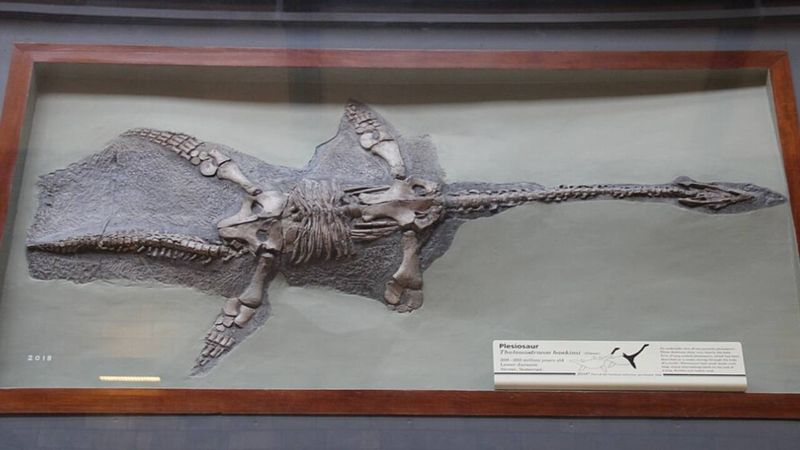
Meet Matthew Myerscough: The man who survived a 20-minute avalanche and discovered a 201-million-year-old sea dragon In 2014, Matthew Myerscough’s life changed during a mountain accident that nearly cost him his life. While climbing Yr Wyddfa, also known as Snowdon, he was caught in an avalanche and buried beneath snow for around 20 minutes before being rescued. The experience altered his relationship with the mountains and… The Times of India · Jul 30
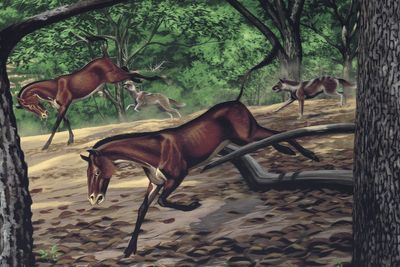
Unique and nearly-complete fossil from 30 million years ago found to be of early dog Prehistoric canids were shorter and stockier than modern dogs and not built for running The Independent UK · Jul 30
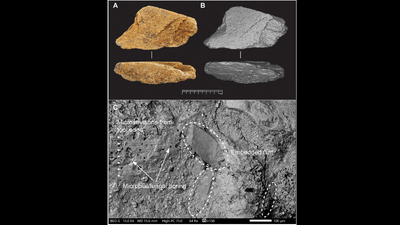
500,000-year-old elephant bone tool found in England reveals advanced early human technology An ancient elephant bone tool found in southern England reveals early human sophistication. This five-hundred-thousand-year-old implement was used for shaping stone tools precisely. Researchers found microscopic evidence of repeated use on the bone fragment. The discovery shows early humans planned and curated their technology carefully. This find offers new insights… The Times of India · Jul 29
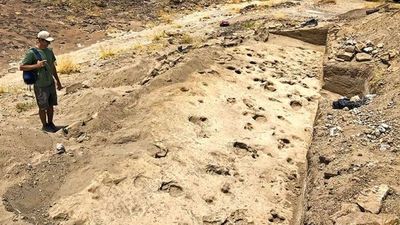
Ancient footprints found in Kenya reveal how early human relatives may have travelled and lived together 1.43 million years ago Ancient footprints found in Kenya offer rare glimpses into early human relatives. These impressions date back approximately 1.43 million years to a lakeshore environment. The tracks suggest several large-bodied individuals moved together across muddy ground. This discovery provides new evidence about hominin body size and social organization. The findings reshape… The Times of India · Jul 29
Inside Spain's 'cannibal cave': Scientists thought only children were victims. New fossils reveal adults were also eaten by Homo antecessor New fossil discoveries at Gran Dolina cave in northern Spain show that cannibalism practised by an ancient human relative called Homo antecessor was not limited to children, as earlier evidence had suggested. Researchers recovered two dozen bones and teeth belonging to this now extinct species, which lived in Europe between… The Times of India · Jul 29
How one man’s near-death experience led to the discovery of the first Jurassic sea dragon in Wales Matthew Myerscough’s remarkable find is one of many detailed in his new book. But his journey into fossil hunting began years earlier, when he was caught in an avalanche The Guardian - UK · Jul 28
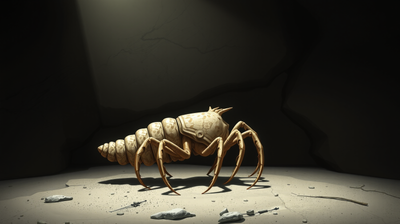
518 million years ago, one tiny sea creature may have started the evolution of the fangs seen in spiders today Scientists have identified the earliest known evidence of spider fangs in a 518 million-year-old fossil recovered from southern China, tracing the origin of one of the animal kingdom's most feared biological tools back to a small marine creature that lived long before spiders existed. The fossil belongs to a species… The Times of India · Jul 27
The Guardian - UK · Jul 25 Why are lollipops called lollipops and why does beetroot stain? The kids’ quiz Five multiple-choice questions – set by children – to test your knowledge, and a chance to submit your own junior brainteasers for future quizzes
Inverse · Jul 24 'Star Trek: Strange New Worlds' Just Changed How The Dinosaurs Went Extinct — But What Really Happened? Let's go back to the distant past... of 1980.
Space · Jul 23 The James Webb Space Telescope's disappearing 'Little Red Dots' may lead to another cosmic puzzle Just as the dinosaurs didn't disappear but rather evolved into birds, cosmic dinosaurs in the form of the JWST's Little Red Dots may fade away completely.
The Independent UK · Jul 22 Unique Indian fossil transforms our understanding of one of most popular dinosaur groups Dinosaur likely swung its tail forcefully to deter predators, scientists say
The Independent UK · Jul 22 2,000 volunteers join a painstaking effort to restore massive skeleton of prehistoric predator More than 2,000 volunteers are helping Polish scientists restore a Mastodonsaurus skeleton
The Times of India · Jul 20 Australia's Finke River is often called the oldest river on Earth, but the science behind the claim is far more complicated Somewhere in the dry heart of Central Australia runs a river with a reputation far bigger than its size. The Finke, also known by its Arrernte name Lhere Pirnte and commonly called Larapinta, is often described as the oldest river system on earth, older than the dinosaurs and already flowing…
The Times of India · Jul 18 Meet Anderson Taylor, the 9-year-old dinosaur lover who turned his fossil collection into a museum and became the world’s youngest curator Anderson Taylor, aged nine, became the world's youngest male museum curator. He opened the Cambridge Natural History Museum in Illinois in August 2024. The museum showcases fossils, minerals, and natural history specimens collected over years. A visit to Scotland inspired Anderson to pursue his lifelong passion for dinosaurs. He now…
The Independent UK · Jul 17 Researchers just uncovered more about the asteroid that killed the dinosaurs 66 million years ago Findings really underscore ‘how unlucky the dinosaurs were,’ researcher says
AAP · Jul 17 Bone fingerprints unlock hidden underwater stories Bones preserved in underwater caves offer a rare window into the past, but until now researchers have had limited tools to understand how they got there.
The Times of India · Jul 16 A 67-million-year-old T. rex discovered on a South Dakota ranch has sold for $50.1 million, becoming the most expensive dinosaur fossil ever auctioned For decades, the Tyrannosaurus rex has occupied a unique place in popular culture, appearing as both a scientific subject and a symbol of prehistoric power. Now, one exceptionally preserved specimen has made history for a different reason: its price. A T. rex fossil known as Gus has sold for $50.1m…
The Times of India · Jul 16 Around 2 billion years ago, Oklo became a natural nuclear reactor beneath Africa, and its radioactive remains are still there Long before forests spread across the continents, before the first animals walked on land and even before the age of dinosaurs, a remarkable process was unfolding beneath Earth's surface. Deep underground, a series of natural nuclear reactions began inside unusually rich uranium deposits, releasing energy in cycles over an immense…