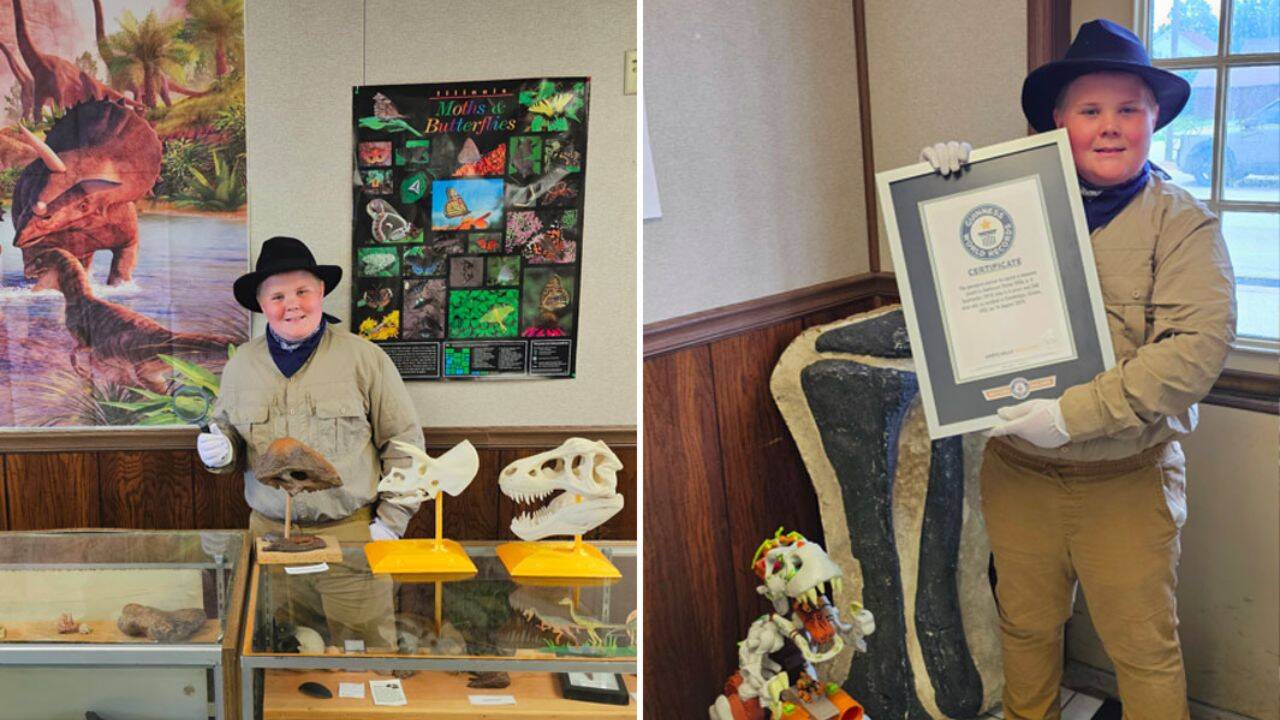
For many children, a fascination with dinosaurs begins with toy skeletons, illustrated books or museum visits. For Anderson Taylor, it gradually turned into something much larger. While still in primary school, he set out to create a space where visitors could explore fossils, minerals and natural history through his own growing collection. That ambition has now earned international recognition.
According to Guinness World Records , Anderson has officially become the youngest male museum curator in the world after opening the Cambridge Natural History Museum in Illinois at the age of just nine years and 340 days. The achievement reflects several years of determination, community support and an enthusiasm for prehistoric life that began long before the museum itself existed.

Get breaking news anytime, anywhere. Download the TOI app now!
How Anderson Taylor opened the Cambridge Natural History Museum at the age of 9
Anderson, from Cambridge, Illinois, officially opened the Cambridge Natural History Museum on 10 August 2024. Guinness World Records states that he was both the museum's owner and its sole curator when it opened, making him the youngest male to hold such a role.
The museum houses a wide range of exhibits, including fossils, minerals, gemstones, artefacts, taxidermy specimens and other natural history displays. Rather than assembling the collection in a short period, Anderson spent years building it piece by piece. Some of the fossils displayed today were even collected when he was only three years old.
His interest stretches well beyond collecting objects. Anderson regularly shares information with visitors, explaining the history behind specimens and encouraging hands-on learning through interactive displays. He has also said that many visitors leave with a small souvenir after exploring the museum.
How a visit to Scotland inspired Anderson Taylor to open his own museum
The inspiration for the museum came during a family visit to Scotland in 2022. Anderson has said that visiting the Staffin Dinosaur Museum convinced him that creating a museum of his own was possible. His lifelong interest in dinosaurs and fossils suddenly had a clear direction.
Turning that idea into reality took persistence. According to Euronews, Anderson first searched for a suitable building before speaking at meetings organised by his local village office to explain his plans. Community members gradually began donating display cases, fossils and other specimens, while financial support also started to arrive.
The building itself has served different purposes over the years, previously functioning as a fire station and village hall before becoming the museum's home.
How Anderson Taylor is expanding his Natural History Museum
The museum has continued developing since opening. According to Euronews, Anderson is now leading a fundraising campaign to purchase the building where the museum operates. Around $20,000 has already been raised towards that goal.
His collection also continues to expand through donations from visitors and local supporters. When unusual rocks or fossils arrive, Anderson has explained that he consults specialists to help identify them. If one expert cannot determine exactly what a specimen is, it may be examined by others before being classified.
His parents say they have watched his enthusiasm remain unchanged since the Scotland trip. His father described Anderson as someone who never lost sight of opening the museum, while his mother said she regularly learns new scientific facts from him and was delighted to see him become a Guinness World Records title holder.
What's next for Anderson Taylor after becoming the world's youngest museum curator
Although becoming the world's youngest museum curator has brought Anderson international attention, he already has ambitions that extend beyond the record itself.
According to Guinness World Records, he hopes to become a palaeontologist in the future and has spoken about studying subjects including biology, geology, archaeology, palaeontology and astrobiology. At the same time, he has no intention of leaving the museum behind, saying he wants to continue curating it because he enjoys sharing natural history with others.
For now, the Cambridge Natural History Museum remains both a personal project and a place where visitors can explore Anderson's passion for prehistoric life, an interest that has already earned him a place in the Guinness World Records books.