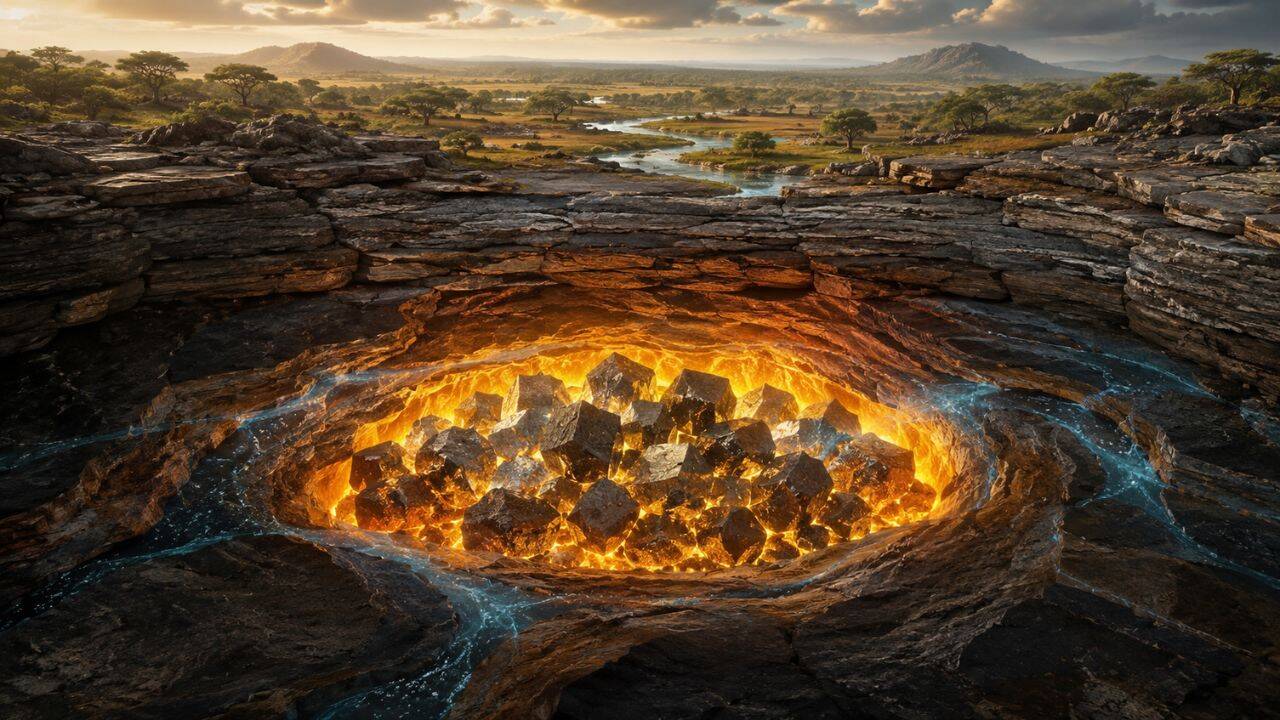
Long before forests spread across the continents, before the first animals walked on land and even before the age of dinosaurs, a remarkable process was unfolding beneath Earth's surface. Deep underground, a series of natural nuclear reactions began inside unusually rich uranium deposits, releasing energy in cycles over an immense stretch of time. Nothing had been designed or built. There were no engineers, no machinery and no human intervention of any kind. Yet the conditions were just right for nature to produce something that closely resembles a modern nuclear reactor. The traces of that ancient phenomenon still exist today in central Africa, offering an unexpected glimpse into Earth's distant geological past and raising questions that continue to interest physicists and geologists alike.
Get breaking news anytime, anywhere. Download the TOI app now!