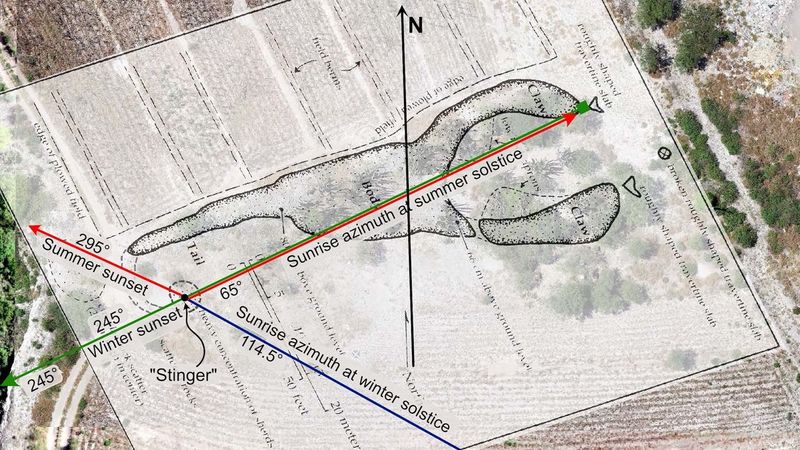
200-foot scorpion effigy mound in Mexico may align with the solstices A 205-foot-long, scorpion-shaped mound in Mexico likely helped Mesoamericans mark the summer and winter solstices, a new study finds. LiveScience · Oct 9, 2025
Comet 3I/ATLAS is losing water 'like a fire hose' on full blast, 'rewriting what we thought we knew' about alien star systems Researchers have discovered that interstellar comet 3I/ATLAS has been shedding water, providing insights into the building blocks of life outside of our solar system and the evolution of interstellar comets. LiveScience · Oct 9, 2025
Groundbreaking image shows two black holes orbiting each other for first time Observations by a system of radio telescopes have offered the first visual evidence for the existence of black hole pairs. But vital follow-up observations are needed before we know for sure. LiveScience · Oct 9, 2025
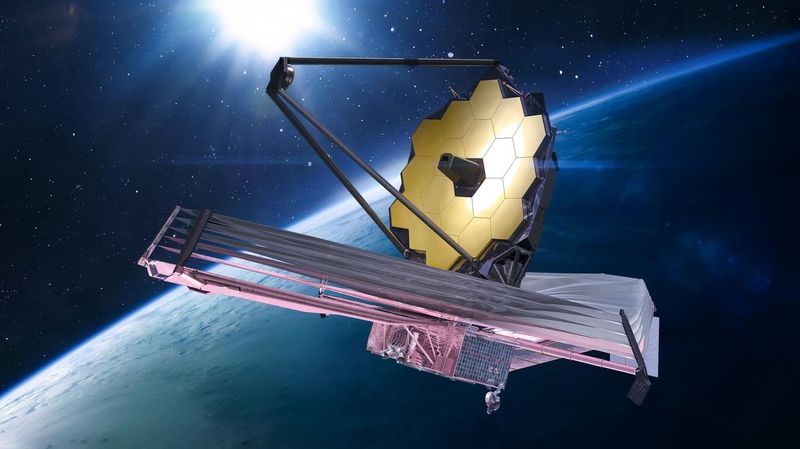
James Webb telescope may have spotted controversial 'dark stars' in the far universe Using observations from the James Webb Space Telescope, astrophysicists have spotted what they say is compelling evidence of a new type of cosmic object called a 'dark star.' LiveScience · Oct 9, 2025
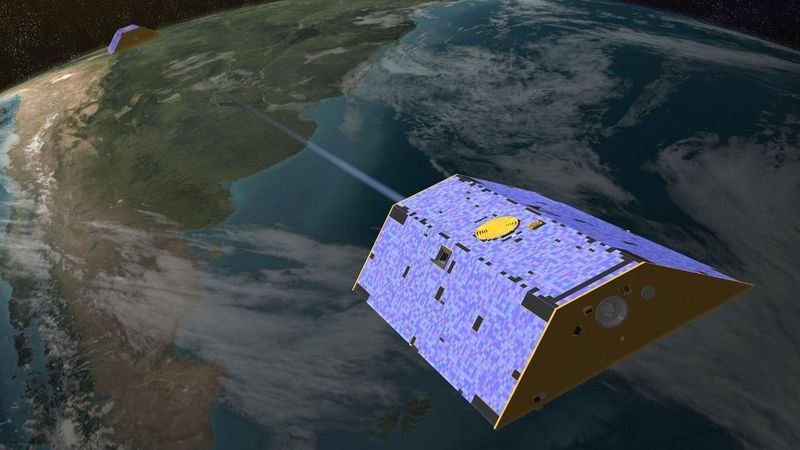
Satellites detected strange gravity signal coming from deep within Earth almost 20 years ago, study reveals Researchers have discovered there was an anomaly in Earth's gravitational field between 2006 and 2008, potentially caused by a mineral shift deep within Earth's mantle. GRACE satellites detected a strange gravity signal at the time. LiveScience · Oct 9, 2025
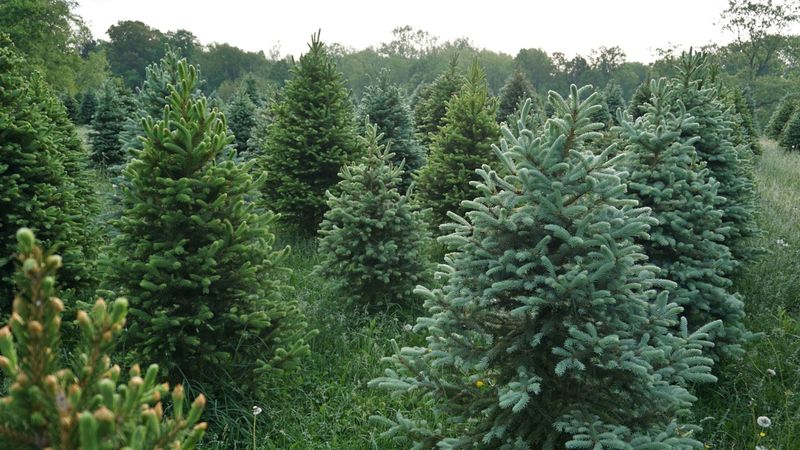
Scientists discover gold nanoparticles hidden in spruce tree needles Spruce tree needles contain tiny gold particles — and they could indicate large gold deposits beneath the surface. LiveScience · Oct 9, 2025
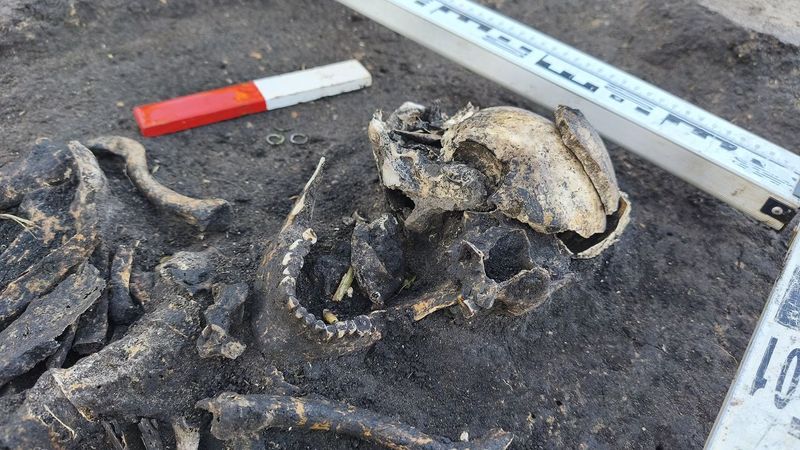
1,000-year-old burials of 'first Christians' in Poland discovered near medieval settlement Archaeologists have uncovered part of a cemetery, including 1,000-year-old human skeletons, near the remains of a fortified medieval settlement in the village of Borkowo in Poland. LiveScience · Oct 9, 2025
Science history: First two-way phone call across outdoor lines made by Alexander Graham Bell — Oct. 9, 1876 On Oct. 9, 1876, Alexander Graham Bell made a telephone call to his assistant a few miles away — the first demonstration of what would ultimately become a global telephone network. LiveScience · Oct 9, 2025
Some naked mole rats are designated toilet cleaners, study suggests Naked mole rats may have specific roles, such as cleaning the toilet chamber or transporting waste, rather than being generalist helpers. The findings suggest naked-mole-rat colonies are even more complex than we thought. LiveScience · Oct 8, 2025
James Webb telescope finds 'remarkable' evidence that a black hole plowed through a galaxy, leaving an enormous scar behind Using JWST and ALMA data, astronomers have spotted a superlong and narrow 'galactic contrail,' possibly produced by a black hole. The gas- and dust-rich tail is 20,000 light-years long but just 650 light-years wide. LiveScience · Oct 8, 2025
Scientists invent 'Pulse-Fi' prototype — a Wi-Fi heart rate monitor that's cheaper to set up than the best wearable devices Engineers are in the early stages of harnessing Wi-Fi as a way to monitor heart rates, but don't expect to use your home router anytime soon. LiveScience · Oct 8, 2025
Psychedelic beer may have helped pre-Inca empire in Peru schmooze elite outsiders and consolidate power The Wari used beer mixed with psychedelics to help build an empire in Peru around 1,200 years ago, a new study suggests. LiveScience · Oct 8, 2025
'Harry Potter' materials land three scientists Nobel Prize in chemistry Susumu Kitagawa, Richard Robson and Omar Yaghi awarded the 2025 Nobel Prize in Chemistry "for the development of metal–organic frameworks." LiveScience · Oct 8, 2025
Diagnostic dilemma: A brain lesion gave a woman a lifetime of joyless laughing fits A woman had experienced sudden bursts of uncontrolled laughter her whole life. A brain scan revealed why. LiveScience · Oct 8, 2025
LiveScience · Oct 7, 2025 'Closest view' yet of interstellar comet 3I/ATLAS captured by Mars orbiter The European Space Agency's ExoMars orbiter has captured the closest view yet of the interstellar comet 3I/ATLAS. The images reveal the comet's bright coma but show no signs of a tail.
LiveScience · Oct 7, 2025 Hundreds of ancient gold and silver coins from possible Celtic market found in Czech Republic Hundreds of gold and silver coins, along with jewelry and other artifacts, have been found in the Czech Republic at what might have been an ancient Celtic market.
LiveScience · Oct 7, 2025 'The papyrus also recommends putting a clove of garlic in your vagina before bed': The texts that reveal the baffling healthcare for women in ancient Egypt In this excerpt from "Born: A History of Childbirth," author and historian Lucy Inglis reveals records from ancient Egypt that show how female physicians treated issues of "the womb," how men reacted to periods, and how the first known pregnancy test actually worked.
LiveScience · Oct 7, 2025 Harvest supermoon photos: See the moon at its biggest and brightest in pictures from around the world This year's full 'Harvest moon' was also a supermoon. Check out some of the best images of this lunar event with our worldwide gallery.
LiveScience · Oct 7, 2025 Self-healing 'concrete batteries' now 10 times better — they could one day power cities, scientists say Called ec³, the material is made by combining cement and water with a liquid electrolyte and carbon powder — both readily available.
LiveScience · Oct 7, 2025 'The Big One' could be even worse than COVID-19. Here's what epidemiologist Michael Osterholm says we can learn from past pandemics. The new book "The Big One" describes lessons learned from past pandemics and how they might be applied to mitigate the dangers of future outbreaks.
LiveScience · Oct 7, 2025 Quantum record smashed as scientists build mammoth 6,000-qubit system — and it works at room temperature A new system, made by splitting a laser beam into 12,000 tweezers and trapping 6,100 neutral atom qubits, hit new heights for coherence times.
LiveScience · Oct 7, 2025 Nobel Prize in physics goes to three scientists who discovered bizarre quantum effect on large scales The 2025 Nobel Prize in Physics has been awarded to John Clarke, Michel H. Devoret and John M. Martinis "for the discovery of macroscopic quantum mechanical tunnelling and energy quantisation in an electric circuit."
LiveScience · Oct 7, 2025 The Red Sea experienced 'one of the most extreme environmental events on Earth' 6 million years ago The Red Sea became a desert about 6.2 million years ago, before a massive flood from the Indian Ocean turned it into a waterway again.
LiveScience · Oct 7, 2025 Soar through a 1,000-mile-long maze on Mars in this mesmerizing new satellite video A stunning new video, made from Mars Express orbiter data, allows you to soar over a gigantic maze on the Red Planet in incredible detail.
LiveScience · Oct 7, 2025 The whale-shaped island in Belize with a 'great blue blowhole' — Earth from space This 2020 astronaut photo shows the unusual cetacean-like shape of Belize's Lighthouse Reef. It's home to the famous Great Blue Hole, which doubles as the island's "blowhole" when viewed from space.