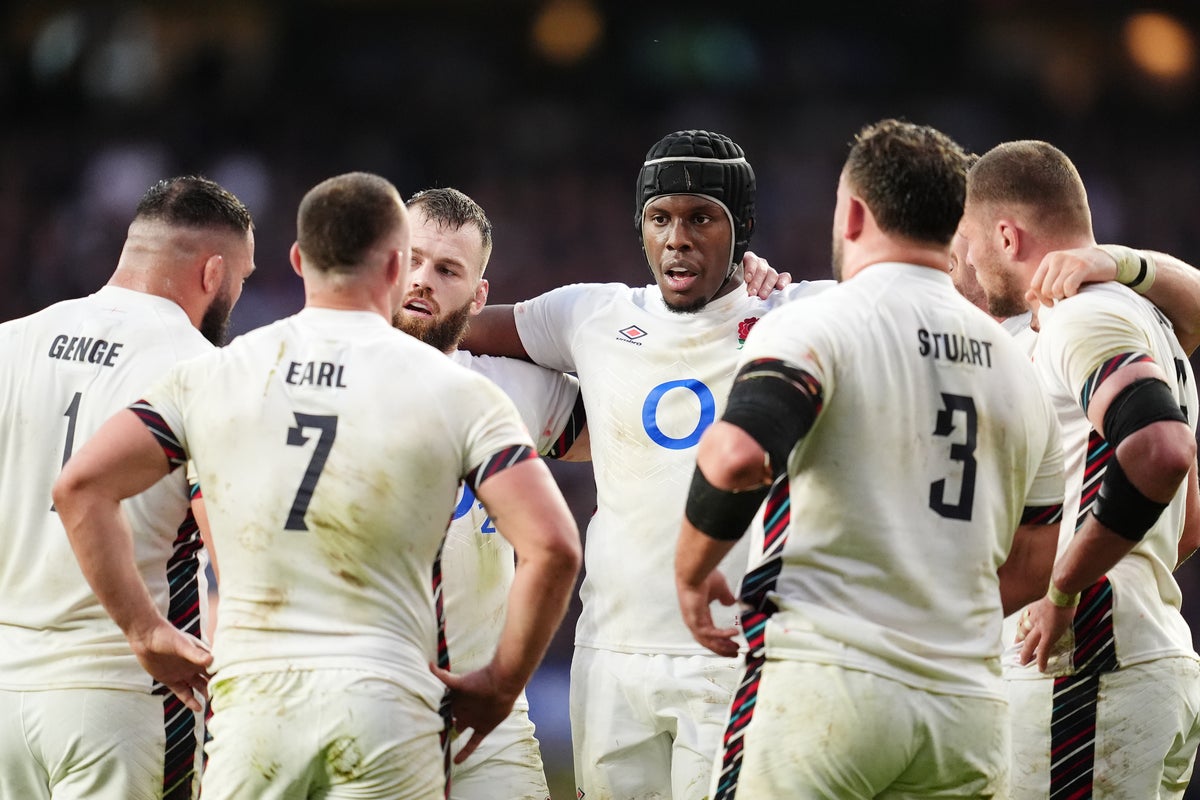
It is almost exactly a year to go until the Rugby World Cup, with England looking to fulfil their potential over the next 12 months and arrive in Australia as genuine contenders.
Steve Borthwick’s side have endured a mixed time of things during the cycle so far, with much of the positivity generated by a 12-match winning run last year dissipating during the course of a tough Six Nations.

England tend to be at their best come world cups, though, with the extended preparation time working in their favour, with huge resources and a large player pool.
While plenty will change between now and pool stage games against Tonga, Zimbabwe and Wales – be it fluctuating form or untimely injuries – Borthwick will already have a good idea of the bulk of the squad he wishes to take – with the 25 enhanced EPS contracts he has handed out a clue to the core of his group.
Still, though, there is plenty for the head coach to consider. Here’s our attempt at projecting England’s 33-man squad for the tournament a year out:
Hookers (3): Jamie George, Luke Cowan-Dickie, Kepu Tuipulotu
A position in a degree of flux, with two veterans still exercising a firm grasp on the squad shirts in George and Cowan-Dickie, and a host of younger, largely unproven options bidding to travel with them. Theo Dan may need a big season to earn Borthwick’s trust, while prominent figures within the England camp are known to like Sale’s Nathan Jibulu but feel he may be a couple of years away from Test readiness. Gabriel Oghre, Jamie Blamire and Curtis Langdon will not be far away but Tuipulotu’s elevation into camp in September is a mark of how highly he is regarded, as well as the 21-year-old’s outstanding talent.
Props (5): Ellis Genge, Joe Heyes, Fin Baxter, Will Stuart, Asher Opoku-Fordjour
Opoku-Fordjour’s capacity to play on both sides enables England to go a body light here. All of this quintet are now on enhanced EPS contracts, credit to the work in rebuilding the prop stocks over the last two years. A wretched injury saga over a foot problem has stunted Baxter’s progress and Stuart must prove himself again after a long lay-off of his own, but in theory this is now a real area of strength. Emmanuel Iyogun, George Kloska, Bevan Rodd, Trevor Davison, Beno Obano and Vilikesa Sela are next in line.
Locks (5): Maro Itoje, George Martin, Alex Coles, Ollie Chessum, Charlie Ewels
A refreshed and recharged Itoje should be re-energised to attack a World Cup year, and has a good group around him to help. Martin is perhaps his ideal partner given his heft and hitting power, though Coles has become an assured operator at Test level. Chessum feels likely to be stationed at No 6 through the autumn and perhaps beyond, which may mean taking an extra specialist to Australia. England like what Ewels offers as a lineout caller and rock-solid squad man, though back-five balance could squeeze him out.
Back rowers (6): Ben Earl, Guy Pepper, Henry Pollock, Tom Curry, Greg Fisilau, Chandler Cunningham-South
There are more questions than answers in the back row, where England have liked to keep their options open. What is Henry Pollock’s ideal role? How is Ben Earl best used? Is a bigger No 8 required? Does Courtney Lawes figure in the mix? It feels likely that all of Earl, Pepper, Pollock and Curry travel, though there is a similarity of skill set there in some ways that may leave England short elsewhere. Fisilau remains uncapped but is a squad regular, while Cunningham-South’s athletic profile and 4/6/8 versatility feels highly valuable.
Scrum halves (3): Alex Mitchell, Jack van Poortvliet, Archie McParland
The addition of Van Poortvliet to Borthwick’s core group of 25 contracts was a quietly significant mark of how he is viewed. His injury opened the door for Mitchell to seize the starting No 9 shirt at the last World Cup, though the man in possession may come under pressure from club colleague McParland if the 21-year-old continues his Northampton form. It is thought that England hoped to take the youngster on the summer tour before injury in the Prem final. Ben Spencer is working his way back from shoulder surgery.
Fly halves (3): Fin Smith, George Ford, Marcus Smith
England have underlined the value that each of this playmaking trio provide, even if three fly-halves may prove a bit of a luxury if cover is taken elsewhere in the squad. Could the elder of the Smiths be squeezed out? It feels unlikely given his ability as a sparky impact man and utility.
Centres (3): Seb Atkinson, Benhard Janse van Rensburg, Henry Slade
A slimmed down selection in the centres is enabled by those in the back three mix. All of Fraser Dingwall, Max Ojomoh and Ollie Lawrence will make a run though appear to have slipped down the pecking order in recent months, leaving a balanced group all with the capability of covering plenty of ground in the way that Borthwick likes. Slade thought his international career might be over last November but will be desperate to make another World Cup having narrowly missed out last time around, while Janse van Rensburg made a hugely positive impression in the environment in July. It could be a big year for Atkinson, thought to be out of contract at Gloucester come the summer.
Back threes (5): Tommy Freeman, Immanuel Feyi-Waboso, George Furbank, Noah Caluori, Elliot Daly
Freeman also figures in the centre equation, with England understood to still be keen to look at him at 13. There is a worry, then, that a five-man grouping might be a little light, but this is not necessarily a position with a huge attrition rate. Feyi-Waboso and Furbank have both endured more than their fair share of injury misfortune yet shape as key parts of the attack if they can stay fit; Caluori is a coming force but will have to back up his breakout season. Daly has tournament experience and versatility in his favour; Freddie Steward is mightily unlucky. Cadan Murley and Tom Roebuck won’t be far away and there may yet be room for another bolter.