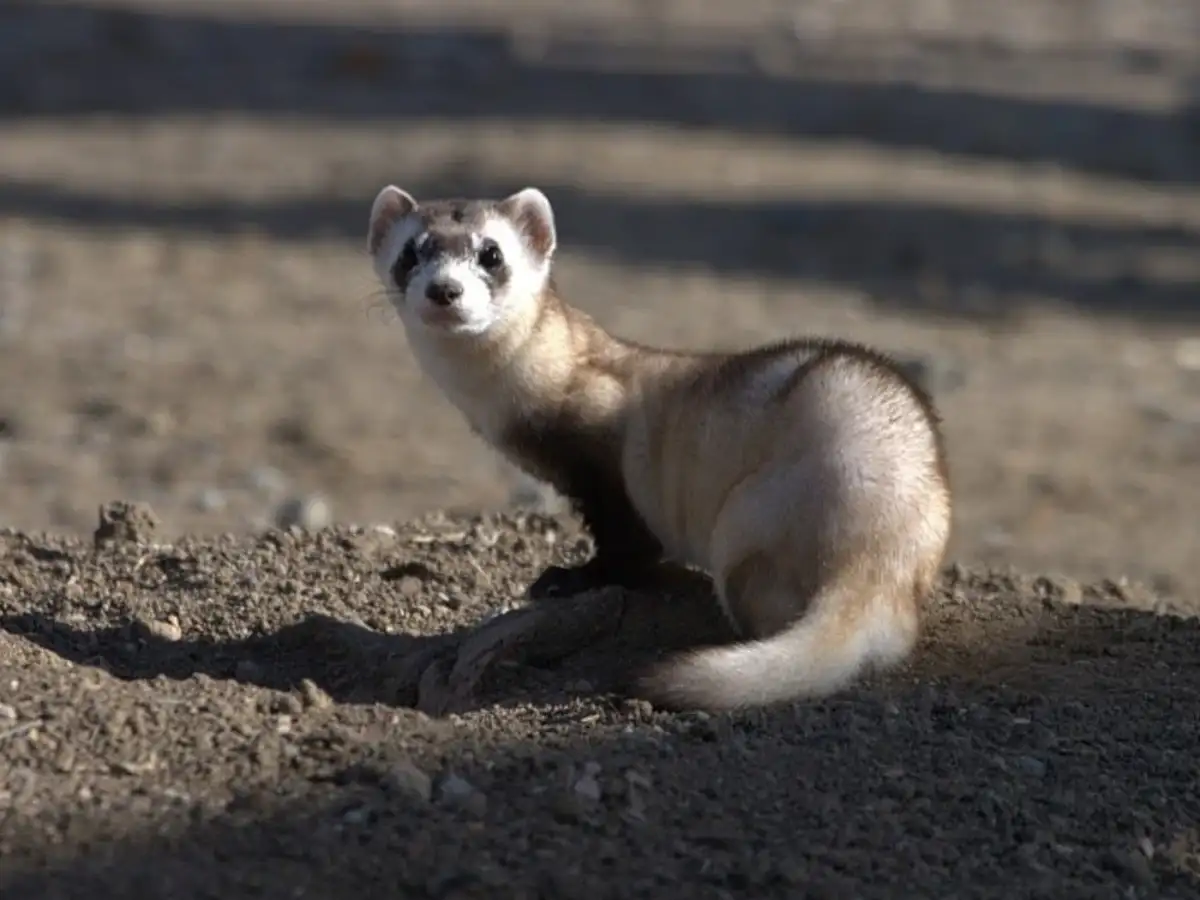
Fences are seen as something that keeps livestock from wandering away. They are usually constructed for delimiting borders, holding in animals, and securing properties. In Montana’s grasslands, scientists used fencing for the opposite purpose: to keep coyotes out and give endangered black-footed ferrets a safer place to raise their young.
The experiment took place in 2010 at UL Bend National Wildlife Refuge, where scientists were looking for ways to improve black-footed ferret survival. In a report published by the U.S. Department of Agriculture and the U.S. Fish and Wildlife Service, researchers installed 7.7 kilometers of portable electric fencing around portions of two prairie dog colonies to reduce coyote access. During the 68-day research, the number of coyotes, which were observed in the preserved zone, dropped from 42 percent before fencing started to merely 7 percent after it, and several newly born ferrets had the opportunity to grow.