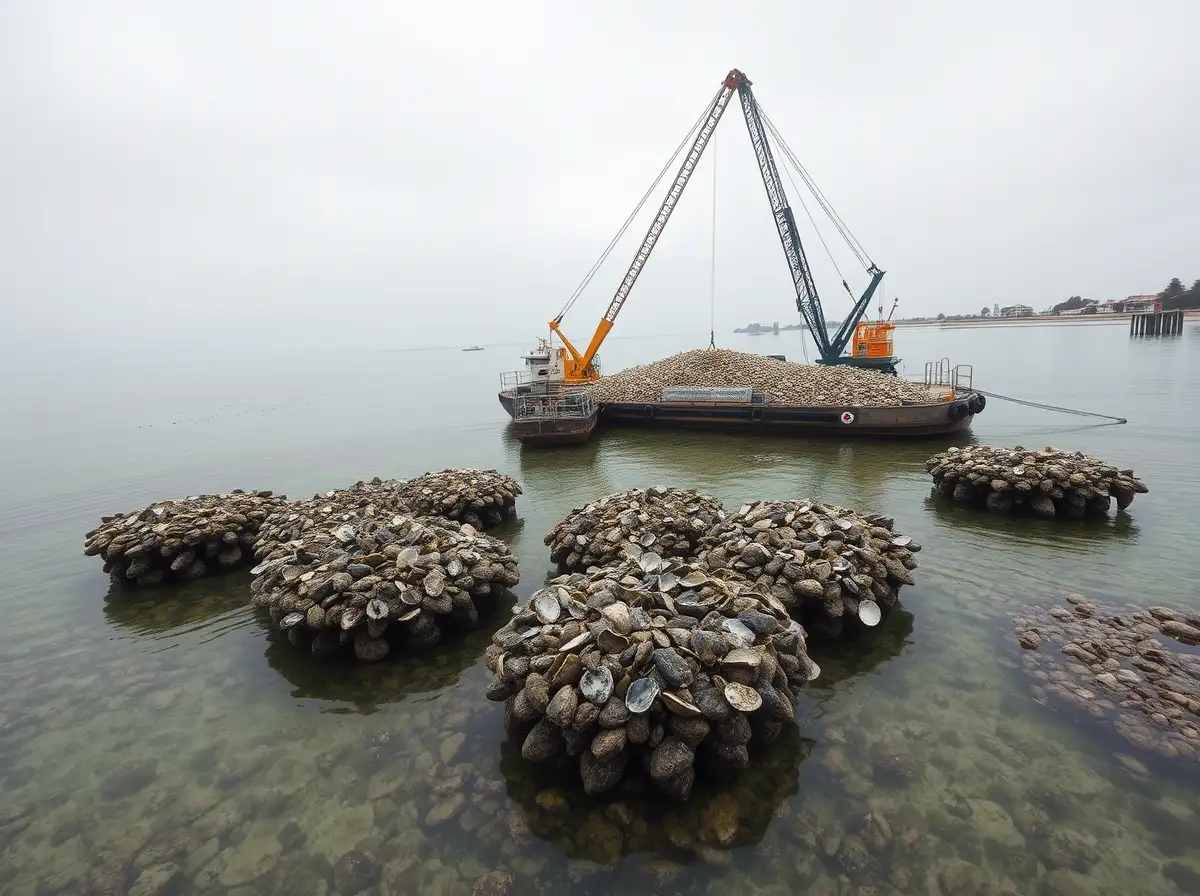
The Chesapeake Bay’s oyster population has undergone a dramatic decline, but a long-running restoration partnership in Maryland has shown how carefully planned environmental work can rebuild critical aquatic habitat. In 1997, the U.S. Army Corps of Engineers and Maryland Department of Natural Resources began working together under a formal project cooperation agreement to restore native oyster habitat. Over the following decades, the effort expanded across several Chesapeake Bay tributaries, ultimately creating approximately 600 acres of new oyster bars in Maryland. The project illustrates why oyster restoration has become an important part of efforts to improve the Bay’s ecological health.
The need for restoration was substantial. According to the U.S. Army Corps of Engineers, Chesapeake Bay oyster populations had fallen to less than 1% of their historic abundance because of factors including disease, overharvesting, declining water quality and habitat loss. That collapse affected far more than the oyster industry. Oysters are considered a keystone species in the Bay because living reefs create three-dimensional habitat used by fish, blue crabs and other aquatic organisms. Oysters are also filter feeders, meaning healthy populations can remove suspended particles and phytoplankton from the water, contributing to improved water clarity and quality.