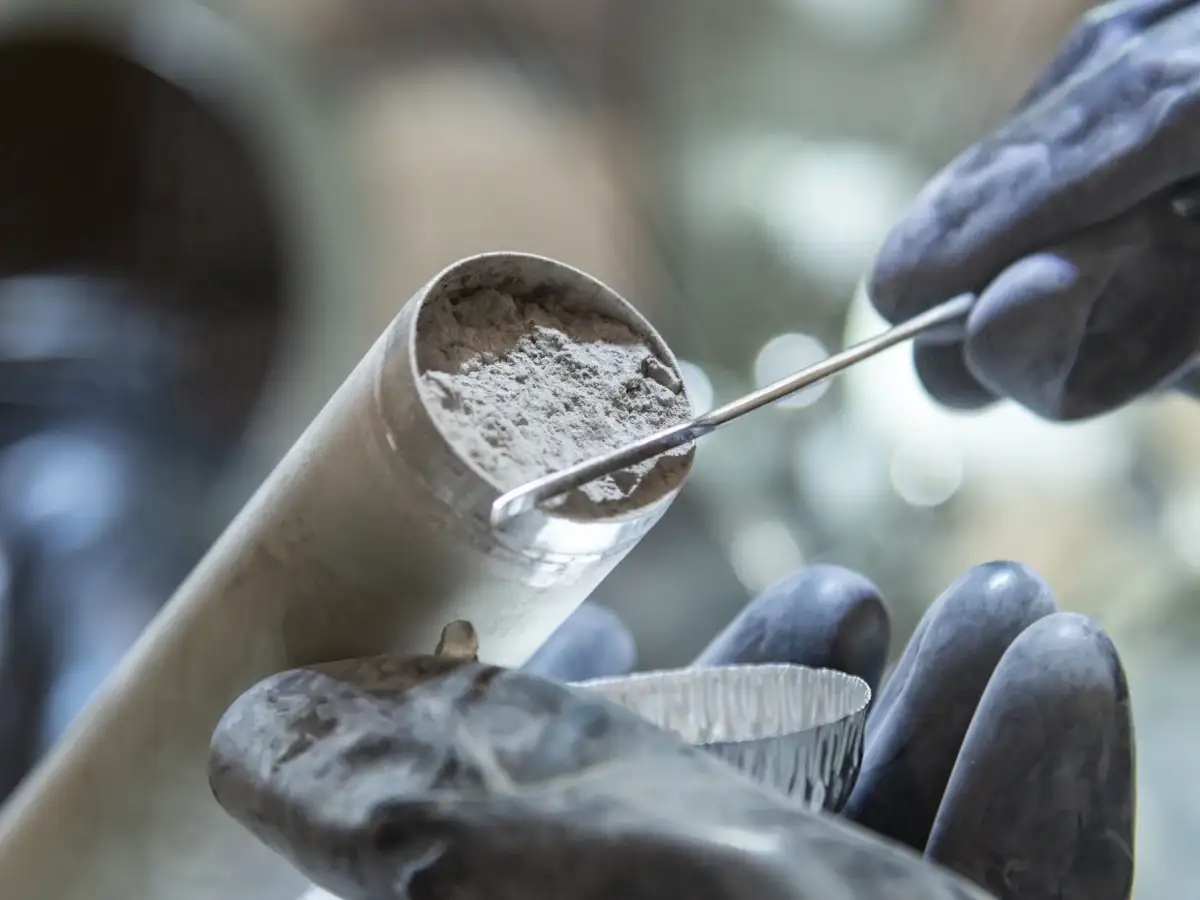
In December 1972, astronauts Eugene Cernan and Harrison Schmitt explored the Taurus-Littrow Valley on the Moon's surface and used metal tubes to gather layers of soil samples from landslide deposits. One of the tubes collected was sample 73001, the bottom half of a double-drive tube. The tube was not opened immediately after collection. It was vacuum-sealed on the Moon and placed inside a second protective seal before being stored in a nitrogen-filled cabinet at the lunar laboratory for decades. According to NASA, this was deliberate. A few samples were deliberately saved because it was believed that in the future, technology would make it possible to obtain much more information from them than was possible at that time.
A lunar sample sealed for 50 years
In 1972, astronauts Eugene Cernan and Harrison Schmitt explored the Taurus-Littrow Valley on the Moon's surface and used metal tubes to gather layers of soil samples from landslide deposits. One of the tubes collected was sample 73001, the bottom half of a double-drive tube. The tube was not opened immediately after collection. It was vacuum-sealed on the Moon and placed inside a second protective seal before being stored in a nitrogen-filled cabinet at the lunar laboratory for decades. This was deliberate. According to NASA's curators, a few samples were deliberately saved because it was believed that in the future, technology would make it possible to obtain much more information from them than was possible at that time.
That is why NASA created the Apollo Next Generation Sample Analysis project, or ANGSA, to study previously unopened Apollo-era samples using newer analytical techniques. The project was designed to make use of modern technology and scientific methods that were not available when the samples were originally collected. Before opening the tube, curators had it examined with micro-X-ray computed tomography at the University of Texas at Austin. The scanning allowed researchers to see the material inside without opening the sample, helping them plan the later extraction at NASA's Johnson Space Center in Houston.
What the researchers found after opening the tube
Even the extrusion process felt familiar, despite the unusual setting. According to Deputy Curator Juliane Gross, who related the details of the process in an interview with NASA, working the gloves in the glovebox was like assembling furniture, where every movement was constrained, and she had to be careful not to lose any screws. By the end of the process, she felt as tired as if she had just finished a workout. She also said seeing the soil for the first time felt like a child walking into a candy store.
Before the tube was extruded, the team took several steps to retrieve gas from the outer protective container and, later, from inside the tube itself. Ryan Zeigler, curator of the Apollo samples, told Ars Technica that the gas would help scientists better understand the Moon's gas signature by comparing it with the smaller amount retrieved chemically.