
In 2025, the number one and two best-selling non-pickup truck vehicles were the Toyota RAV4 and Honda CR-V, in that order. The mainstream compact crossover class is arguably the most important segment in the entire automotive industry in a what-actually-keeps-the-lights-on sense.
Call them boring if you want, but for the average person, this is what fits the bill of modern life and modern finances. Small enough to never feel bulky, big enough to fit all your stuff, often great on fuel economy, and they all start somewhere in the low-$30,000s.
Here’s a quick roundup of every main competitor in the fiercely competitive compact crossover arena, what they offer, what they don’t offer, and what they’re actually like to drive and live with.
Toyota RAV4

Base Price: $33,350 / $42,950
Fuel Economy: 44 MPG / 107 MPGE
Read Our Review
The segment default and sales king, the Toyota RAV4, is all-new this year and now comes exclusively as a hybrid—plug-in or otherwise. Up to 44 miles per gallon combined with the regular model and 52 miles of electric range with the PHEV makes it a formidable foe for the other cars on this list and a strong, economical choice for buyers.
Offered in regular core, rugged Woodland, or athletic GR Sport trim, the new RAV4 continues to feel like the default compact crossover behind the wheel, too: agreeable, easy, and competent. If you want one of these, hopefully you’re a fan of rectangles because the interior was seemingly designed with nothing but those.
Honda CR-V
Base Price: $32,370 / $37,080
Fuel Economy: 30 MPG / 40 MPG
Read Our Review
Nipping at the RAV4’s heels is its archnemesis, the also-excellent Honda CR-V. Available running on pure gas or as a Hybrid in higher trims, Honda’s super popular compact crossover may not be quite as popular as that Toyota, but it’s still arguably the nicer vehicle.
Several years into its lifecycle, this model’s design and ubiquity won’t turn any heads even if you go for that new, rugged-ish TrailSport version. But the CR-V’s above-average passenger and cargo space, upscale, minimalist cabin, and downright excellent driving manners mean it's not just one of the best crossovers you can buy, but one of the best commuter machines on the market, period.
Mazda CX-5
Base Price: $31,485
Fuel Economy: 26 MPG
Read Our Review
A perennial favorite among people who care about cars beyond transportation, the Mazda CX-5 is redesigned for 2026. This new generation fixes the old CX-5’s biggest flaw by offering way more rear seat room and cargo capacity, while class-leading twisty-road handling is slightly improved and remains very much a strength.
After the first drive, however, I wrote, "it feels a bit like two steps forward and one step back" because Mazda has chosen to ditch most of the old model’s physical knobs and buttons in favor of a massive touchscreen. There’s also no longer a Turbo model, just a regular gas, 2.5-liter that feels downright slow, even by commuter crossover standards. A Hybrid model due for 2027 will hopefully fix that second gripe at least. Even with the newfound asterisks, though, the CX-5 remains one of the stronger picks in this segment.
Hyundai Tucson
Base Price: $31,050 / $34,050 / $41,925
Fuel Economy: 28 MPG / 38 MPG / 77 MPGE
Read Our Review
Among this hyper-competitive set, the Hyundai Tucson is one of the older entries, but, par for the Korean car course, you wouldn’t know it from its tech. Now featuring two 12.3-inch screens housed in one long, curved, luxury-car-style bezel, the Tucson (and its Kia twin below) should be at the top of your list if you’re the sort of buyer for whom Apple CarPlay / Android Auto integration is unequivocally, unironically the most important thing in a new car.
Under the hood, the Tucson is available as a regular gas, hybrid, or plug-in hybrid. As a drive, it’s not as enjoyable to pilot as the Honda or the Mazda, but its comfort-focused demeanor should be appealing if you’re not too concerned with that sort of thing.
Kia Sportage
Base Price: $30,285 / $31,985 / $41,985
Fuel Economy: 28 MPG / 42 MPG / 83 MPGE
Being the Hyundai Tucson’s corporate cousin, much of the above also applies to the Kia Sportage. It also features class-leading infotainment software and can be had with gas, hybrid, or plug-in. We’d recommend the hybrid, though, as that one won our Star Award for Best SUV back in 2022, whereas the gas version lacked both oomph and efficiency.
The Sportage gets a fairly significant facelift for 2026 with a literal new face, making it look and feel newer than it is. Per Motor1 Editor-In-Chief Jeff Perez, there "isn’t a ton to write home about" dynamically, but in-car debates over whether Sportage rhymes with "garage" or "porridge" should provide many minutes of mild entertainment.
Nissan Rogue
Base Price: $31,035
Fuel Economy: 32 MPG
Read Our Review
As another compact crossover that’s serviceably decent if not class-leading, there’s the Nissan Rogue. This one drives comfortably and offers quite a lot of tech for the money, especially factoring in the more lenient financing terms associated with this brand.
One of the Rogue’s biggest flaws is that there’s no hybrid model per se unless you count the just-released Rogue Plug-In Hybrid that’s actually a rebadged Mitsubishi Outlander—oh, and there’s an all-new one coming just around the corner. If you can hold off for a bit, Nissan has already unveiled the next-generation 2027 Rogue, which will initially come as an extended-range EV called the E-Power before a regular gas version joins the lineup later.
Subaru Forester
Base Price: $31,445 / $38,015
Fuel Economy: 28 MPG / 35 MPG
Read Our Review
A crossover that is available right now in both gas and hybrid forms is the Subaru Forester. The default choice for those who live more of their lives outdoors than in, its big selling point (as it is with most Subarus) is standard symmetrical all-wheel drive and a low, horizontally-opposed boxer engine. Even with that new hybrid powertrain, the Forester indeed feels remarkably capable and eager when flung down a dirt road.
There’s a Wilderness trim, too, if the regular version isn’t outdoorsy enough, and it’s likely the most capable car on this entire list when it comes to navigating snow or the dirt road that leads to the cottage...
Ford Bronco Sport
Base Price: $33,845
Fuel Economy: 27 MPG
Read Our Review
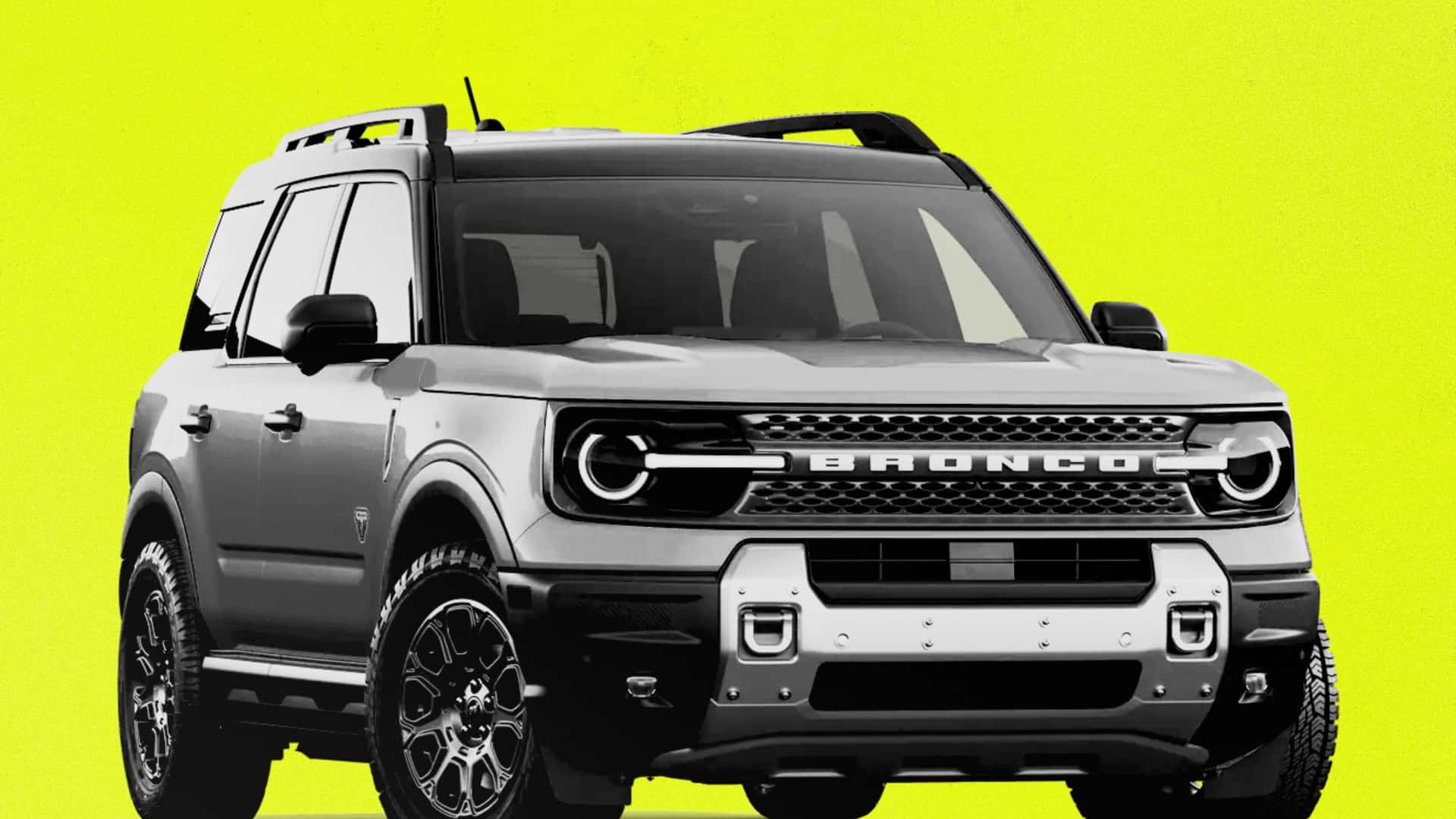
…unless the Ford Bronco Sport has anything to say about it. Now that the Escape has been discontinued, the Bronco Sport stands as Ford’s sole compact, unibody crossover. And while cynics may call it an Escape cosplaying as the off-roader from which it borrows its name, there are some true mud-ready parts for it to be had in the surprisingly capable Sasquatch trim, such as a locking rear differential and 29-inch all-terrain tires.
In non-Sasquatch form, the Bronco Sport also stands out within Ford’s portfolio as the closest thing the firm still makes to a compact, regular "car." No pickup bed like the Maverick—just an affordable, small-ish commuter machine. Call it a lifted Focus, and it probably wouldn’t even be that offended, nor should it be.
Chevrolet Equinox
Base Price: $30,795
Fuel Economy: 27 MPG
Read Our Review
The Chevy Equinox is the other domestic entry. It does the RAV4 thing of offering three flavors in the base LT, rugged Activ, and sporty RS trims, but the differences here are pretty mild. All-wheel drive is optional, but there’s no hybrid available. Chevy’s compact crossover isn’t a bad car, and when we drove it, we described it as a vehicle that simply "does enough." Read into that what you will.
The Equinox was redesigned for 2025, but we’d wait for a 2027 model if you’re going for the front-wheel drive version because Chevy is replacing that car’s continuously variable automatic transmissions (one of its biggest flaws) with a traditional eight-speed automatic.
Volkswagen Tiguan
Base Price: $32,280 / $44,560
Fuel Economy: 29 MPG / 25 MPG
Read Our Review
If you’d like a recently redesigned product that’s quite a bit more appealing, there’s the new Volkswagen Tiguan. It looks sharp, drives sharply, and delivers (partly at least) on VW’s promise to bring back physical buttons and knobs.
Tradeoffs include climate controls that are still touch-based and a decidedly firmer ride than the alternatives. Tiguan lacks a hybrid, but for the speed demons in the crowd, the SEL R-Line Turbo model makes 268 hp and sits alongside the 324-hp, plug-in hybrid RAV4 GR Sport as the only two models here with a hot version.
FAQs
What is the difference between a compact crossover and a traditional SUV?
A compact crossover is built on a car-based platform (unibody) rather than a truck-based frame. This makes it lighter, more fuel-efficient, and easier to drive daily, while still offering SUV-like space and ride height. In 2026, most popular models (like the Honda CR-V Hybrid or Nissan Rogue) follow this design for comfort and efficiency.
Are hybrid or electric compact crossovers worth it in 2026?
Yes—hybrids in particular are often considered the “sweet spot.” Many models now offer 35+ mpg combined, smoother driving, and lower long-term costs without requiring charging infrastructure. Fully electric compact crossovers are growing, but hybrids remain more practical for many buyers due to range and charging convenience.
Are compact crossovers good for families?
Yes—they’re actually the most popular family vehicle segment in the U.S., with millions sold annually. They balance enough rear-seat room for kids or adults, flexible cargo space, and easier driving and parking than larger SUVs. Some models (like the Subaru Forester or Kia Sportage Hybrid) are especially known for cargo space and rear-seat comfort.
What are the biggest trade-offs in this segment?
Even though compact crossovers are well-rounded, you’ll usually have to choose between things like fuel economy vs. power, cargo space vs. styling (sloping roofs reduce space), driving fun vs. comfort. For example, sportier models may sacrifice rear-seat space, while more practical ones may feel less engaging to drive.
How much cargo space do compact crossovers actually have?
Most 2026 compact crossovers offer around 24–28 cubic feet of cargo space behind the rear seats, expanding to roughly 60+ cubic feet with seats folded. That’s enough for everyday use—groceries, strollers, luggage—but layout matters just as much as raw numbers.