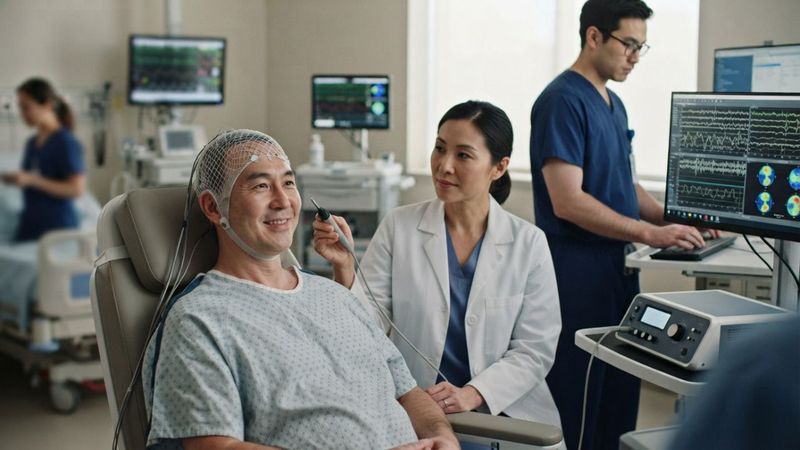
Zap One Brain Network and People Laugh Without Feeling Any Joy A 2026 review maps two laughter networks in the brain, one that brings real mirth and one that makes people laugh without any joy at all. Medical Daily · Oct 6
Does your sleep tracker get it right? A Pittsburgh neuroscientist weighs in On a typical night, I go to bed wearing a tracking watch on one wrist and another type of tracker on the other wrist. Then I compare their sleep findings while I drink my morning coffee. The Conversation · Oct 6
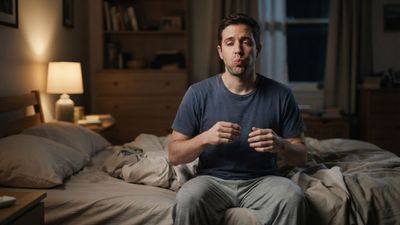
A Man Whistled a John Denver Hit While Partly Asleep, Kept the Beat, and Remembered Nothing A 30-year-old man whistled "Take Me Home, Country Roads" during a partial arousal from deep sleep, swaying in time, then forgot it all. Medical Daily · Oct 6
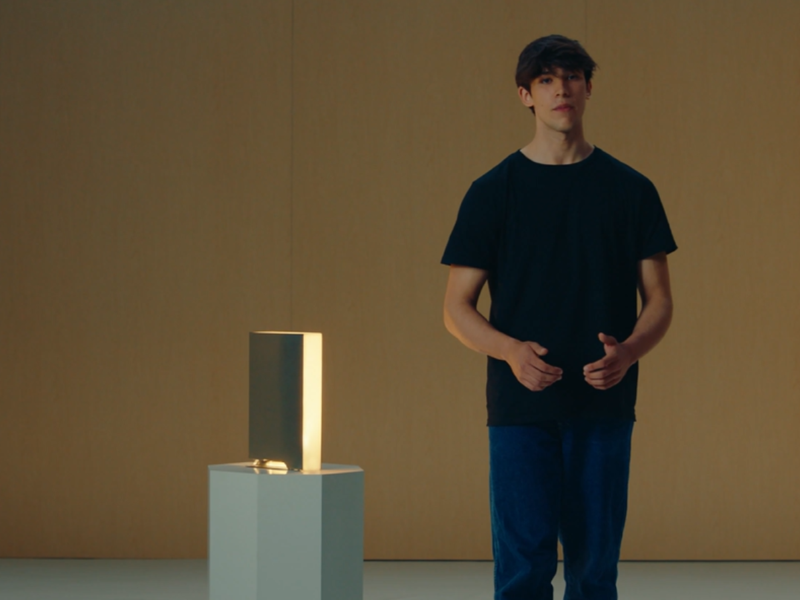
19-year-old Zain Javaid's startup called Ghost builds an AI computer without screen; the 'brain in a box' can be the next big PC idea Ghost is pioneering a revolutionary startup with its innovative screenless AI computer known as Core, co-founded by Zain Javaid. This cutting-edge device is crafted to operate AI agents that function independently, engaging users via a mobile application. With an emphasis on security, Core protects user data by keeping it stored… The Economic Times · Oct 6
Feed up: India needs to rein in Big Tech algo The newspaper gave you the world's bad news and then let you go. Your phone gives you the same news and keeps you there. Here is how that happened, what it is doing to us, and why countries are beginning to step in. The Times of India · Oct 6
Why old dogs might be able to teach Alzheimer’s researchers new tricks Most people know someone with Alzheimer’s disease. When I was growing up, my grandmother struggled with dementia, and I saw firsthand how difficult that was for our family. The Conversation · Oct 6
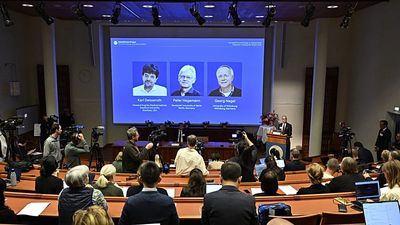
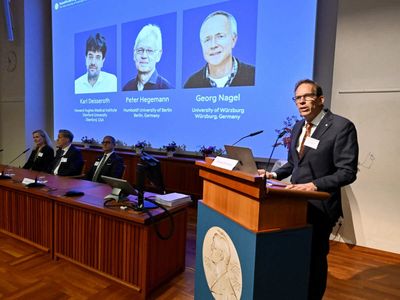
California scientist Karl Deisseroth wins a Nobel Prize, then makes school lunches for his kids Dr. Karl Deisseroth received a Nobel Prize for his contributions to optogenetics, which advances brain science. He shared the award with researchers from Germany and has made significant impacts in understanding the brain. Following the announcement, Deisseroth took a brief break to prepare school lunches for his children. His wife,… The Economic Times · Oct 6
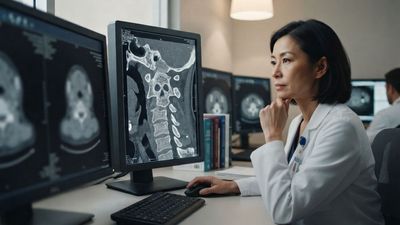
A Grim Reaper Showed Up on a Crash Patient's Neck Scan, and Bone Cysts Were to Blame A hooded Grim Reaper appeared on a crash patient's neck scan. A New Zealand doctor traced it to cysts in the C2 vertebra and a brain quirk. Medical Daily · Oct 6
Optogenetics wins the Nobel – one neuroscience breakthrough in a line of technological innovations helping scientists map and control the brain The brain is unbelievably complicated, which is both daunting and fascinating for neuroscientists like me. In the space of a cubic millimeter – about the size of a single poppy seed – there are tens of thousands of neurons and other brain support cells, all influencing each other’s function. The Conversation · Oct 5
California scientist wins a Nobel Prize, then makes school lunches for his kids Dr. Karl Deisseroth spent hours fielding congratulatory calls after learning that he had won a Nobel Prize for medicine for helping to open a new field of brain science called optogenetics The Independent UK · Oct 5
This brain gene can move through human DNA — and scientists found it inside a virus Researchers at Cornell University identified the BC200 gene, which originated from a transposon in human DNA. This gene displays unusual mobility, retaining its ability to move within the genome while functioning in brain cells. The presence of BC200 in molluscum contagiosum virus raises questions about its evolutionary history and potential… The Economic Times · Oct 5
The Nobel-winning breakthrough that turned light into a remote control for the brain, allowing scientists to switch neurons on and off Optogenetics, a groundbreaking technique, enables researchers to control specific neurons using light, providing insights into brain functions. The 2026 Nobel Prize in Physiology or Medicine was awarded to Karl Deisseroth, Peter Hegemann, and Georg Nagel for this transformative discovery. Their work originated from the study of light-sensitive proteins in green… The Economic Times · Oct 5
How light became a remote control for the brain, and won a Nobel Prize Optogenetics, the technique that lets scientists control brain cells with light, has won the 2026 Nobel Prize in Medicine. Euronews · Oct 5
Why You Feel Tired Even After Sleeping 8 Hours Sleep isn't just about the number of hours you spend in bed. Your body moves through different sleep stages during the night, including lighter sleep, deep sleep and REM sleep. If your sleep is frequently interrupted, you may not get enough uninterrupted restorative sleep—even if your smartwatch or clock says… MyLifeXP · Oct 5
The Conversation · Oct 5 How pond algae led to a Nobel prize and a new way to study the brain Scientists who worked out how to control brain cells with light have won this year’s Nobel prize in physiology or medicine. Karl Deisseroth, Peter Hegemann and Georg Nagel were honoured for their research into “light-gated ion channels and optogenetics”.
The Economic Times · Oct 5 Who is Nobel winner Karl Deisseroth? And all about optogenetics that could restore sight in visually impaired people The 2026 Nobel Prize in Physiology or Medicine has been awarded to Karl Deisseroth, Peter Hegemann, and Georg Nagel for their groundbreaking contributions to neuroscience and optogenetics. This innovative technique enables researchers to manipulate nerve cells with light, offering profound insights into brain functionality. Their work has opened doors to…
Medical Daily · Oct 5 A Selfie Sent 30 Minutes Before She Collapsed Held the Clues to a Rare Brainstem Stroke A selfie a young woman sent her mother before collapsing showed drooping eyelids and helped doctors time treatment for a rare brainstem stroke.
Medical Daily · Oct 5 A Sedentary 25-Year-Old Felt Neck Pain Playing Ring Fit Adventure, and Two Days Later She Had a Stroke A 25-year-old felt neck pain during Ring Fit Adventure overhead moves. Two days later, a torn neck artery led to a stroke that affected her vision.
Bored Panda · Oct 5 Person Realizes Company’s Strict Work-From-Office Rules Might Actually Come In Handy If you’re told to work overtime for no extra pay, you should either run for the hills or use your big brain to teach your toxic company a lesson. You can learn a lot about a company’s values, brand priorities, and management’s view of staff by looking at its overtime…
The Economic Times · Oct 5 Nobel Prize Medicine 2026: Scientists found a 'light switch' inside algae & turned it into a tool to control brain cells; what this discovery means Nobel Prize Medicine 2026: The 2026 Nobel Prize in Physiology or Medicine has been awarded to Karl Deisseroth, Peter Hegemann and Georg Nagel for their discoveries involving light-gated ion channels and optogenetics. Their work showed how light-sensitive proteins can be used to control nerve-cell activity, opening new ways to study…
The Guardian - UK · Oct 5 Nobel prize in medicine 2026 awarded for research into mysteries of brain Three scientists to share 12m Swedish kronor prize for their work on ‘light-gated ion channels and optogenetics’
Times Life · Oct 5 How Sharks Detect a Single Drop of Blood in the Ocean The Nose Knows More Than You ThinkA shark's nostrils do not breathe. They are dedicated scent organs, and nothing else. Water flows continuously through two nasal passages lined with sensory cells called olfactory lamellae, folded tissue that dramatically increases the surface area available to detect dissolved chemicals. A large shark…
International Business Times UK · Oct 4 Donald Trump's 'Stroke' Pathways Are Now 'Crossing the Brain', Psychologist Dr. John Garrison Claims Donald Trump faces renewed health speculation after psychologist John Paul Garrison raised neurological concerns over public footage.
The Guardian - UK · Oct 4 Do humans really have a ‘lizard brain’ lurking beneath our rational minds? It’s a powerful analogy that captured the popular imagination, but the biological reality is quite different
Euronews · Oct 4 Researchers discover how the brain updates memories with new information A joint study by three Spanish institutions shows how certain hippocampal neurons safeguard existing memories even as new information about events is stored.