
When You Eat Matters as Much as What You Eat
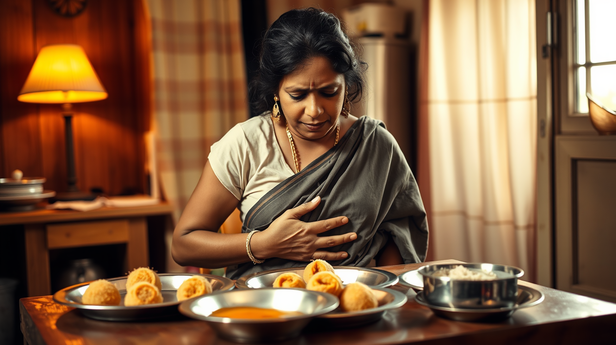
Your stomach produces acid on a roughly four-hour cycle, anticipating food at the times your body has learned to expect it. During a ten-day festival, that rhythm collapses. Breakfast gets skipped for the morning puja. Lunch is pushed to 3 pm because the procession ran long. Dinner happens at midnight after the aarti ends. Each of these delays is a small disruption. Ten days of them rewires your gut's motility pattern.Motility, the rhythmic muscular contractions that move food through your intestines, is governed partly by your enteric nervous system and partly by circadian signals. When meal timing becomes erratic, the migrating motor complex (MMC), the wave of contractions that cleans the intestine between meals, loses its regularity. Stagnant food in the small intestine ferments. That fermentation produces gas. The bloating you feel by day four is the MMC failing to do its housekeeping on schedule.The stomach acid problem compounds this. An empty stomach that expected food at 8 am and received nothing until noon is producing acid into a void. That acid sits against the lower oesophageal sphincter. Acidity and reflux during festival season are not caused by spicy food alone, they are caused by a stomach that was primed to receive food and then kept waiting.













