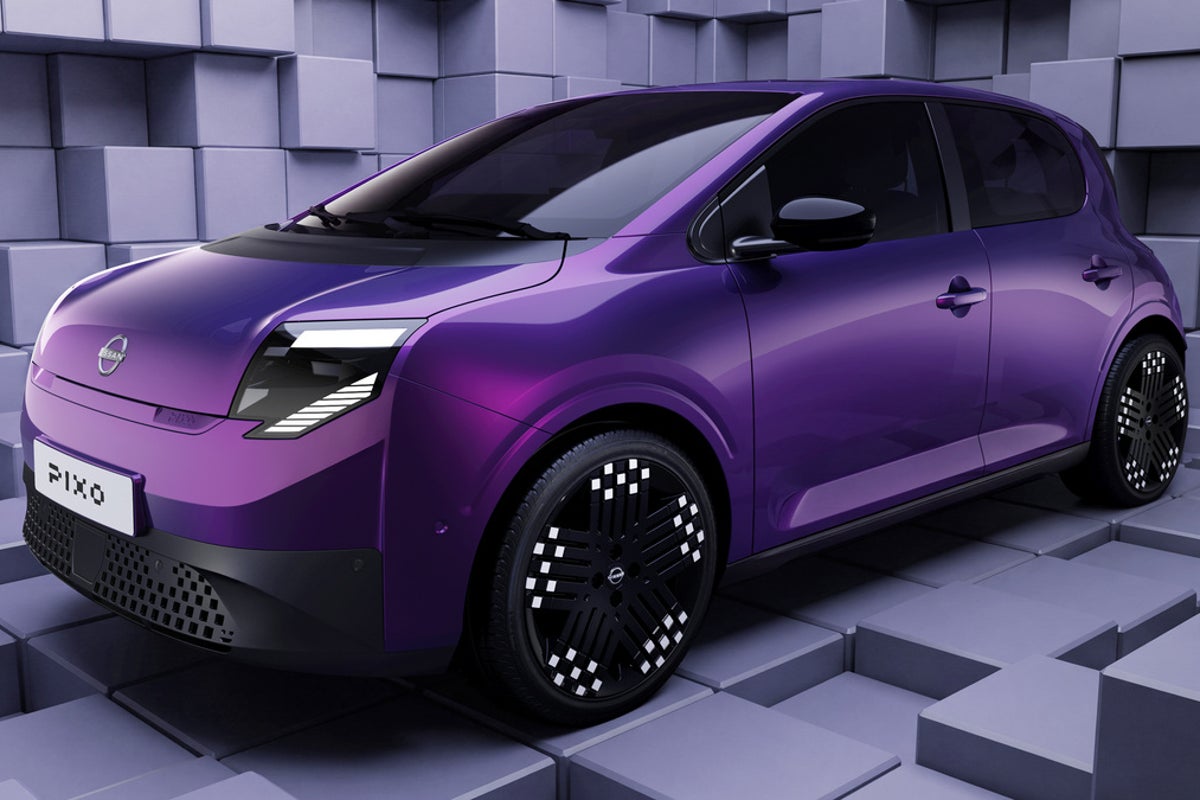
Say hello to the new Nissan Pixo, another little electric car with a rather big job: persuading buyers that going electric needn’t involve a frightening conversation with their bank manager. It’s based on the Renault Twingo, which proves the Renault Nissan Alliance can still produce something useful when it puts its mind to it.
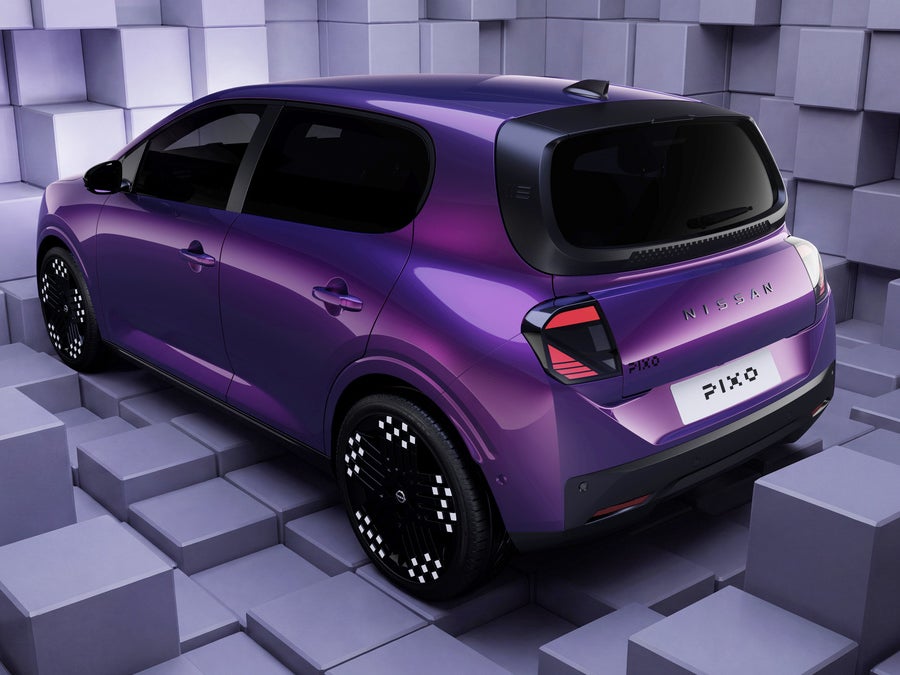
Designed in London and built by Renault in Slovenia, the Pixo has a 27.5kWh battery and a maximum claimed range of 161 miles. Rapid charging is standard, with a 15 to 80 per cent top-up taking 28 minutes. There are four seats, individually sliding rear chairs and a 356-litre boot, all squeezed into a car just 3,796mm long.
As with the Nissan Micra (which is based on the Renault 5), Nissan has made the Pixo look very different to its Renault counterpart by giving it pixel-style lights and a robot-like face, while Google built-in includes the Gemini assistant. You can even have purple paint, which is a welcome alternative to another car-park sea of grey. Deliveries start in early 2027, although UK prices haven’t been confirmed; those announcements begin in December but expect a price well under £20,000. Getting that number right will be crucial, because this particular shopping list is getting crowded.
Some rivals are already on sale, others are coming, and a few creep above £20,000 before offers. But these 12 EVs show how much choice there is around the affordable end of the EV market. Nissan’s first problem? The car it’s borrowing from.
Renault Twingo
The Renault Twingo is expected to cost less than £19,000, and it’s one of the best cars I’ve driven this year. Its maximum claimed range of 163 miles is almost identical to the Pixo’s, while sliding rear seats let you juggle legroom and luggage space. Five doors help, too. The Renault takes a cheerfully retro approach to styling rather than Nissan’s robot route, so choosing between them could come down to which face you’d rather see outside your front door.
New Dacia Spring
The new Dacia Spring joins the family with the same Renault Group foundations, but a chunkier look. Every version is expected to cost less than £18,000, although final UK prices remain unconfirmed. A 27.5kWh battery delivers a maximum claimed range of 155 miles, while the boot grows to 337-litres. One detail worth checking: rapid charging comes with an optional pack, unlike the Pixo’s standard setup. A reminder that cheap cars still need a close look at the options list.
Leapmotor T03
The Leapmotor T03 remains a serious bargain at £12,995, including its £3,000 manufacturer discount, rather than a government grant. You get a maximum claimed range of 165 miles, a panoramic sunroof and a 10.1-inch touchscreen. It’s no longer safe to call it Britain’s cheapest car, with the outgoing Spring advertised at £11,990, but the price tussle is entertaining. You do wonder how long before a successor arrives, but for now that price keeps the T03 very much in the conversation.
Fiat 500 Electric
Then there’s the Fiat 500 Electric, which has rather rudely interrupted the newcomers by becoming much cheaper. The Icon starts at £20,995 before the £3,750 government grant, bringing it down to £17,245. That includes alloy wheels, climate control and a 10.25-inch touchscreen. Maximum claimed range reaches 199 miles depending on the battery version, so don’t automatically attach that figure to the cheapest car. A familiar face, certainly, but now at a price that deserves another look.
BYD Dolphin Surf
The BYD Dolphin Surf starts at £18,675 in Active form, with a 30kWh battery and a maximum claimed range of 137 miles. Spend £21,950 on the Boost and that rises to 200 miles from a 43.2kWh battery. That’s a useful choice: pay less for local journeys or more for longer trips. I was impressed by its ride and refinement, and it’s nippy, too. Four seats and a 308-litre boot give it a straightforward, practical answer to the Pixo’s charms.
Honda Super-N
The Honda Super-N is for anyone who thinks a trip to the shops needs a warm-up lap. For £18,995, it brings pretend gear changes and a Boost mode lifting power to around 94bhp. Its maximum claimed range is 128 miles, so think local entertainment rather than continental cruiser. I enjoyed its character and Bose stereo, but the harsh ride needs checking on a test drive. Preferably one that includes your local potholes.
Geely EX2
The Geely EX2 stretches the budget to £20,990, but also stretches the amount of car you get. It’s 4,135mm long, has five seats rather than four and offers a 375-litre boot. That makes it worth investigating when a tiny city car would leave somebody behind. I found it undemanding and easy to drive, with obvious appeal for learners. Compared with the Pixo, this is the one to investigate when passenger space comes before finding the smallest parking gap.
Hyundai Inster
The Hyundai Inster also needs a little price explanation. Its £22,995 starting figure is above our notional £20,000 line, although Hyundai currently offers a £3,750 deposit contribution on qualifying finance – that isn’t a blanket cash-price reduction. Even the entry model has twin 10.25-inch screens and climate control, while the longer-range version promises up to 229 miles. Higher trims add sliding, reclining rear seats. The Inster is a reminder to compare the whole deal, rather than simply chasing the lowest number in an advert.
Volkswagen ID.Up!
Volkswagen’s upcoming ID.Up!, previewed by the ID.Every1 concept, is another reason Nissan can’t get complacent. Production is planned for 2027, with a European target price of €20,000, so the UK figure should come in under £20,000. The concept has four seats, a 305-litre boot and a maximum claimed range of at least 155 miles. It’s a very direct challenge to the Pixo on paper, although we’ll have to see how much of that promise survives the journey from motor-show stand to showroom.
Kia EV1
The Kia EV1 is another future contender, sitting below the brilliant new EV2, with distinctive styling promised but no confirmed UK price. I’d like to see the same effort put into keeping the bill down as making the car stand out. By the time it arrives, looking different will only be half the job; this lot should provide a demanding test of its value.
MG2
Finally, the expected MG2 has been previewed by the London-designed MG Go! concept, with a production model due in 2027. The styling borrows from the MGB GT, although the MG2 name, UK price and battery details aren’t yet unconfirmed. There’s something appealing about the prospect of old MG character in an affordable electric hatchback. Getting the production car’s price right will be more important than how good the concept looks under show lights, though.
That’s the challenge for the Pixo: being small and electric is no longer enough. It needs to be good, useful and keenly priced – as do all contenders is this burgeoning class. For buyers, the prospect of this many car makers trying to outdo each other on value is rather more encouraging than another misnomer about why EVs are expensive.