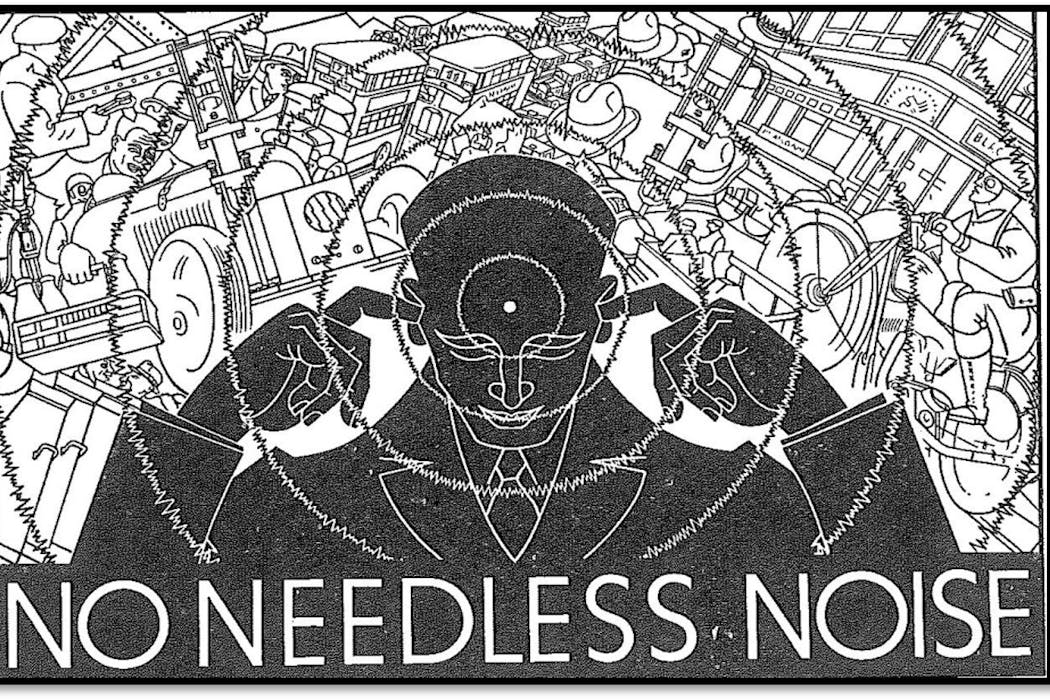
Noise was first considered a public health issue in interwar Britain – called the “age of noise” by the author and essayist Aldous Huxley. In this era, the proliferation of mechanical sounds, particularly the rumble of road and air traffic, the blare of loudspeakers and the rising decibels of industry, caused anxiety about the health of the nation’s minds and bodies.
Interwar writers, such as Virginia Woolf, George Orwell and Jean Rhys, tuned in to the din. Their fiction is not just an archive of past sound-worlds but also the place where sound became noise and vice versa. As sound historian James Mansell has argued: “Noise was not just representative of the modern; it was modernity manifested in audible form.”