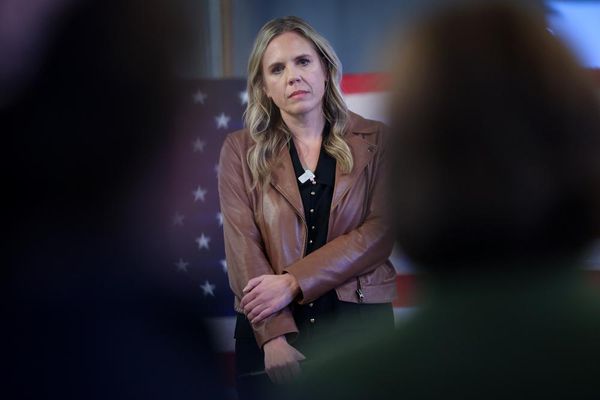
Federal Reserve Vice Chair for Supervision Michelle Bowman attended a private dinner hosted by Bank of America for a group of Wall Street clients on June 17, hours after the U.S. central bank announced it would leave interest rates unchanged, prompting scrutiny over whether the appearance complied with the Fed's communications policies.
The gathering in New York included hedge fund executives and other financial industry clients. According to The Washington Post, which cited people familiar with the event, more than 20 clients attended the closed-door dinner.

The event took place during the Federal Reserve's communications blackout period, which extended through the end of June 18. Under the policy, Fed officials are restricted from discussing monetary policy around meetings of the Federal Open Market Committee to prevent mixed signals and avoid any appearance of favored access. Information on the timing of the dinner and attendees was reported by The Wall Street Journal.
Bowman said she did not discuss interest-rate policy during the event.
"I have consistently complied with all applicable FOMC and ethics rules and remain firmly committed to doing so," Bowman said in a statement. According to accounts cited by The Wall Street Journal, BofA officials reminded guests that Bowman was prohibited from discussing monetary policy, and Fed staff accompanying the vice chair also reiterated those restrictions. Her remarks focused on bank regulation.
Former Philadelphia Fed President Patrick Harker, speaking to The Washington Post, said the rules followed during his decade leading the regional bank left little room for interpretation.
"The rules are not ambiguous here," Harker said. "It doesn't matter if you talk about monetary policy or not during that dinner, you just don't do it."
The Fed's communications guidelines instruct officials not to share personal views on monetary policy with anyone who could profit from that information unless those views have already been made public. The policy, adopted in 2011 and reaffirmed earlier this year, also directs policymakers to avoid providing a "prestige advantage" to private firms through closed-door appearances.
Richard Painter, former chief ethics lawyer in the George W. Bush White House, told The Washington Post that ethics standards are designed to prevent the appearance that a government official is endorsing a particular company.
The controversy emerged as the central bank concluded its first policy meeting under Chair Kevin Warsh. The Federal Reserve held rates steady but projections showed that nine of the 19 policymakers participating in the process anticipated at least one rate increase before the end of the year, according to Reuters. Warsh also signaled a shift away from detailed forward guidance, shortening policy statements and reducing the amount of information provided to markets. Reuters reported that the changes reflect Warsh's preference for a less interventionist communications strategy.
Warsh has launched reviews of several aspects of Federal Reserve operations and communications, as he seeks broader institutional reforms while maintaining what he described as the central bank's traditional mission.
The Fed's communications policy does not specify how potential violations would be handled. Neither the central bank nor Bank of America has announced any inquiry related to Bowman's appearance.