
Get all your news in one place.
100's of premium titles.
One app.
Start reading
T3
T3
Technology
Lucy Miller

A strength coach says every man over 50 should be able to do these six moves

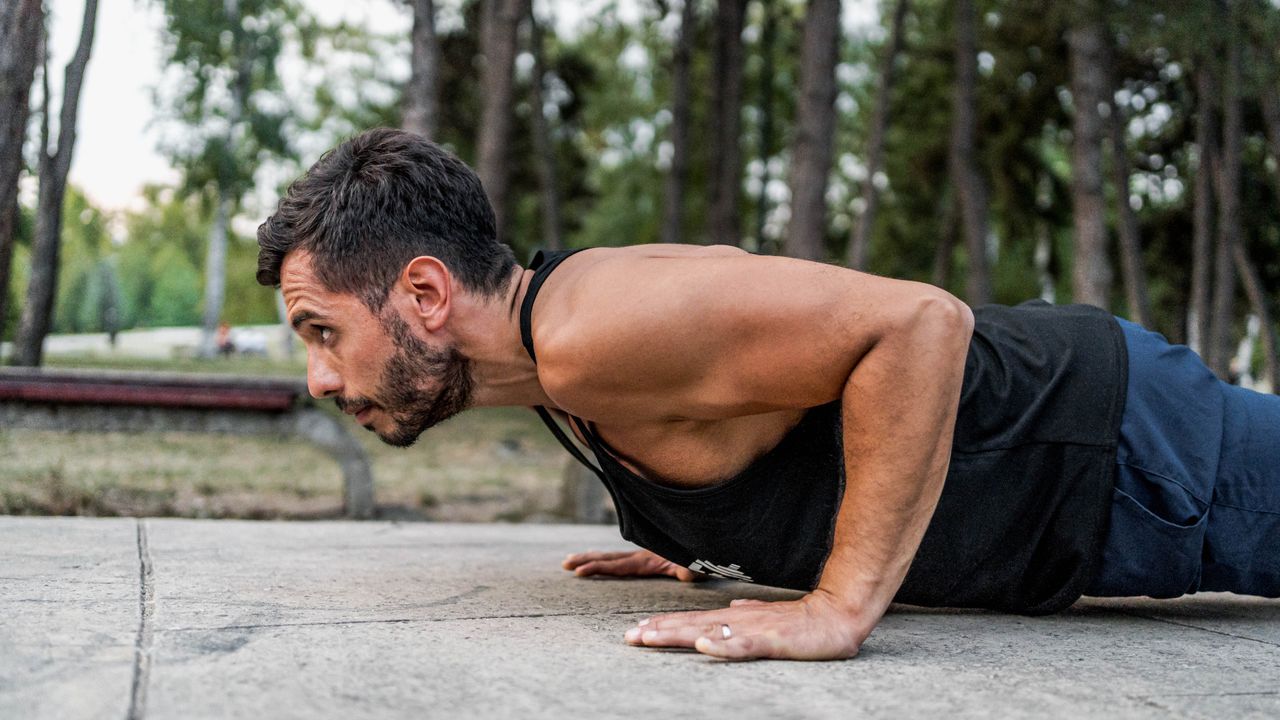
A man performing a hand release push up.

Most men over 50 don't need a fancy workout programme – what they need are strength benchmarks that offer realistic targets for them to work towards.

Because if you can't lift your own bodyweight, push yourself off the floor, or carry heavy loads comfortably, everyday life starts getting harder faster than you'd think. The stairs, the garden, and the weekly shop require a baseline of functional strength that most men should be training for.

These aren't unrealistic weights designed to impress your mates on the gym floor. Instead, we'll focus on functional strength benchmarks here, the kind that protect your joints, preserve muscle mass and keep you genuinely independent as you age.

Strength coach David Getz, known online as @fitover50man, puts it simply: “Train for strength. Train for longevity. Train so life never feels heavy.” Here are the six moves he recommends every man over 50 should be able to do - and the numbers you should be hitting.

The six moves every man over 50 should be able to do: The benchmarks

1. Deadlift (1.5x your bodyweight)

The first move you should be able to do if you’re a man over 50 is to deadlift. This compound move is the ultimate test of full-body strength, training your posterior chain, your grip and core stability in one movement. More importantly, it reflects real life: lifting luggage, moving furniture or picking something heavy up safely from the floor.

(Image credit: Getty Images)

For men over 50, the ability to hinge at the hip and bend down to pick something heavy from the floor is essential. The benchmark for a deadlift is 1.5 times your bodyweight for a single rep. If that feels tough, start lighter and focus on perfecting your form before adding weight.

2. Goblet Squat (50% of your bodyweight)

The goblet squat is one of the most joint-friendly lower-body exercises you can do, making it ideal for men over 50. Holding a dumbbell or kettlebell at chest height forces you to stay upright, protecting the lower back while building strength in your quads, hamstrings and glutes. The benchmark is to perform a goblet squat with a weight equal to 50% of your bodyweight.

(Image credit: Getty Images)

“This isn't just about leg strength, it's about quality of life in your second half, that gives mobility, balance and the kind of lower body power that’s better than your first,” says Getz. Leg strength also helps you take the stairs with more confidence and do things like help you get up from the couch more easily.

3. Push-Ups (20+ consecutive reps)

Before you reach for the bench press, ask yourself this: Can you push your own bodyweight off the floor 20 times without stopping?

Because if you can't, you have work to do. The push-up is a true measure of upper body and core strength, and 20 consecutive reps is the number every man over 50 should be working towards.

(Image credit: Getty Images)

The beauty of the push-up is that it requires nothing but floor space and commitment. Better still, the ability to push and control your own bodyweight transfers directly to real life. Opening heavy doors or getting yourself up from the floor are some of the everyday physical tasks that get harder the moment you stop training for them.

4. Pull-ups (5+ reps)

"Most men over 50 don’t realise they’re losing strength every year,” says Getz, and pull-ups are arguably the best test of relative upper body strength there is. If you can pull your full bodyweight up and over a bar five or more times, your back, biceps and grip strength are in great condition.

(Image credit: Getty Images)

For men over 50, pulling strength like this supports posture, protects the shoulders and keeps your upper body in great shape. Five reps is the benchmark, and if you're not there yet, inverted rows and assisted pull-ups are a great place to start building towards it.

5. Farmer's carry (50lb dumbbells)

Pick up two 50lb dumbbells, stand up straight and walk. It sounds simple, but the farmer's carry is one of the most brutal tests of full-body strength and conditioning you'll ever attempt. It'll work your grip, your traps, your core and your cardiovascular system all at once.

(Image credit: Getty Images)

More importantly, it directly mirrors real life: carrying shopping, luggage, or anything else that life requires, you can do so with greater ease. If you can farmer's carry 50lb dumbbells with control and composure, life should feel lighter.

6. Overhead press (50% of your bodyweight)

Shoulder strength helps you reach what’s up high. Being able to press half your bodyweight overhead requires strong shoulders, core stability and joint control - and it’s one of the first abilities men lose if they stop training. Get this right, and you'll have the shoulder health and upper body strength to stay active and injury-free for years to come.

(Image credit: Getty Images)

The six moves every man over 50 should be able to do: The takeaway

After 50, muscle loss, also called sarcopenia, accelerates, and strength becomes one of the biggest predictors of long-term independence. Hit these numbers, and you’re not just staying fit - you’re future-proofing how well your body moves for decades to come.

“Being over 50 isn’t an excuse,” says Getz. It’s a call for discipline and consistency. The same consistency that builds muscle also builds resilience in life and leadership.

Fitness after 50 isn’t about chasing youth - it’s about ‘training now, so you’re not the one getting helped out of a chair. This isn’t just about muscles. It’s about staying independent,” he adds.

Sign up to read this article
Read news from 100's of titles, curated specifically for you.
Already a member? Sign in here
Related Stories
Top stories on inkl right now
One subscription that gives you access to news from hundreds of sites
Already a member? Sign in here
Our Picks
Fourteen days free
Download the app
One app. One membership.
100+ trusted global sources.







