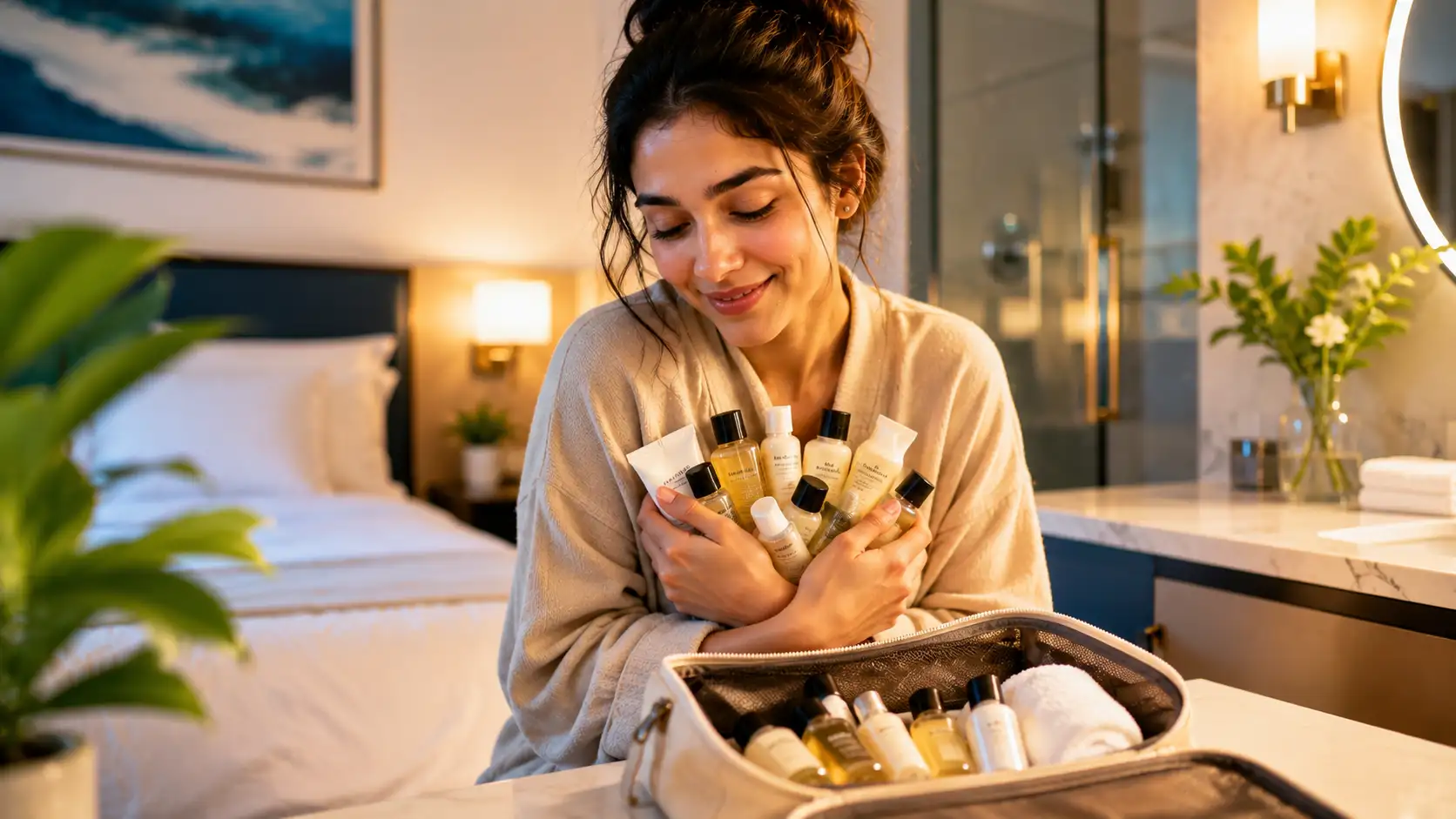
Many travelers have done it at least once. Before checking out of a hotel, they slip the complimentary shampoo, soap, conditioner, or lotion into their bag. Even people who already have similar products at home sometimes feel reluctant to leave these small items behind.
Psychology says this habit doesn't automatically mean someone is cheap or overly materialistic. In fact, behavioral scientists have identified several mental shortcuts that influence how people think about free items, ownership, and value. Hotels generally expect guests to use or take these complimentary toiletries, making the behavior a normal part of many travel experiences.
Free items often feel more valuable than expected
One explanation comes from behavioral economics and the Zero Price Effect. Researchers have found that people frequently place a disproportionately high value on items that are free, even when those items have a relatively small monetary value.
For example, a traveler who normally wouldn't buy a miniature bottle of shampoo may happily pack the complimentary version because it feels like a bonus rather than a purchase. The appeal comes not only from the product itself but also from the psychological satisfaction of receiving something at no extra cost.
Ownership changes how we value things
The Endowment Effect, studied by Daniel Kahneman, Jack Knetsch, and Richard Thaler, suggests that people assign greater value to something once they perceive it as theirs. After checking into a hotel room, complimentary toiletries become part of the guest's temporary personal space.
By checkout time, many people unconsciously think of those items as belongings they are entitled to keep. For example, leaving an unused bottle behind may feel like giving something up, even though they didn't specifically choose it.
People dislike losing something they could have had
Closely related is Loss Aversion, another principle from behavioral economics. Research shows that people generally feel the pain of losing something more strongly than the pleasure of gaining something of equal value.
Imagine realizing after checkout that you forgot to pack the complimentary lotion. Even though replacing it would cost very little, some travelers still experience a small sense of missed opportunity. The brain often focuses on what feels "left behind."
Small souvenirs help preserve memories
Psychologists have found that physical objects often serve as memory cues. A tiny bottle of hotel lotion may remind someone of a honeymoon, a family vacation, or an important business trip.
For example, seeing the hotel's branded soap months later may instantly bring back memories of a relaxing beach holiday. In this way, the toiletries become inexpensive souvenirs rather than practical necessities.
The brain organizes "free" differently
According to Mental Accounting Theory, developed by economist Richard Thaler, people mentally categorize resources in different ways. Complimentary hotel products often enter a separate mental category from items people buy themselves.
Someone may rarely purchase luxury shampoo at home but happily use the hotel's premium version because it belongs in the "included with my stay" category. This mental organization influences spending and collecting habits more than many people realize.
Scarcity can make items feel special
Research on the Scarcity Principle suggests that people often value items more when they are available only for a limited time. Hotel toiletries are available only during the stay. Knowing they will soon disappear can increase the desire to take them home.
For example, travelers may ignore similar products in a supermarket but feel motivated to keep the hotel version because it seems exclusive to that particular experience.
Habits can become part of traveling
For frequent travelers, collecting complimentary toiletries may simply become part of the travel routine. Someone who has packed hotel soap after dozens of previous trips may continue doing it automatically without giving the decision much thought. Like many habits, repetition eventually makes the behavior feel natural.
FAQs
Why do people take complimentary hotel toiletries home?
Psychologists say the behavior is influenced by factors such as the zero price effect, perceived ownership, memory, and the appeal of free items.
Does collecting hotel toiletries mean someone is cheap?
Not necessarily. Research suggests many travelers are responding to normal cognitive biases rather than trying to save money.