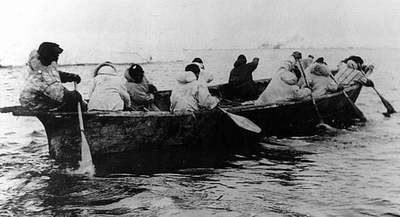
Ancient Scandinavians likely used animal skin boats to hunt and trade, study finds Ancient people were one of Scandinavia’s first seafaring societies, study says The Independent UK · Sep 20, 2024
Gen Z’s language might seem incomprehensible but slang has always sounded that way – just look at these five Victorian sayings All Gen Z slang might sound like “skibidi” to older generations, but every era has had its own confusing slang. For every “gyatt” today (originally a variation of “god damn”, now referring to a curvy woman) there was a “dog my cats” or “od’s fish” in the Victorian era (both… The Conversation · Sep 19, 2024
Gangs’stories: From the streets of Dhaka to human-rights advocacy in Bangladesh For the past five years, the GANGS project, a European Research Council-funded project led by Dennis Rodgers, has been studying global gang dynamics in a comparative perspective. When understood in a nuanced manner that goes beyond the usual stereotypes and Manichean representations, gangs and gangsters arguably constitute fundamental lenses through… The Conversation · Sep 18, 2024
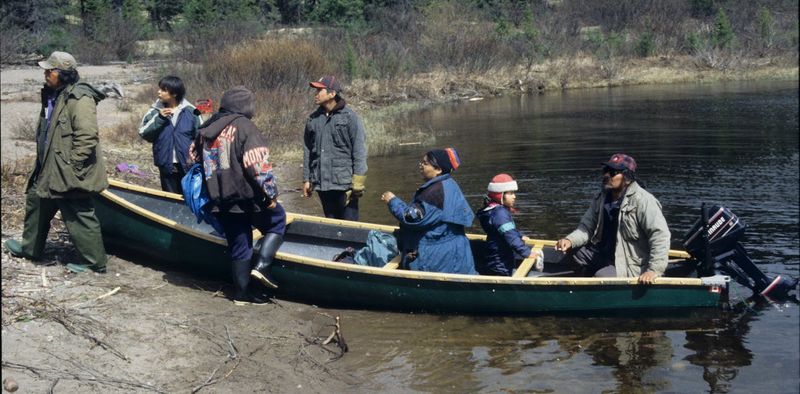
The Innu have lived in eastern Canada for thousands of years, yet their rights to this land are increasingly threatened by the question: who is Indigenous? A Canadian woman who fraudulently claimed her daughters were Inuit has been sentenced to three years in jail, in what is believed to be the first ever custodial sentence for a ‘pretendian’ … Nunavut justice Mia Manocchio said the case ‘must serve as a signal to any future Indigenous pretender… The Conversation · Sep 13, 2024
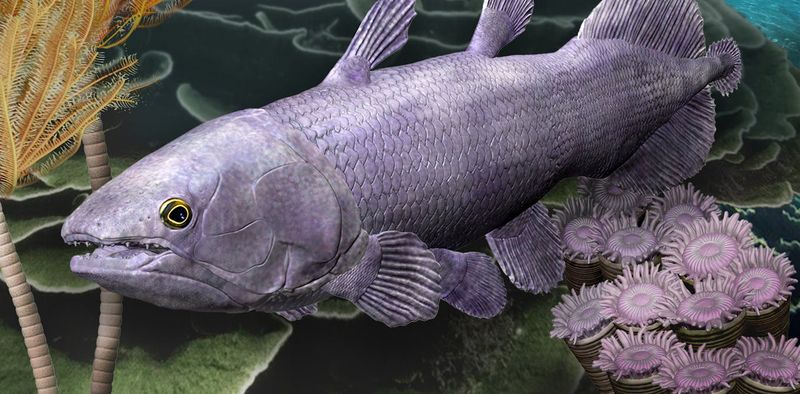
Exceptional new fish fossil sparks rethink of how Earth’s geology drives evolution Coelacanths are deep-sea fish that live off the coasts of southern Africa and Indonesia and can reach up to two metres in length. For a long time, scientists believed they were extinct. The Conversation · Sep 12, 2024
Where did all these dragonflies come from? If you’ve spent much time outdoors along the east coast of Australia in the past week, particularly near waterways, you’ve probably seen something quite interesting emerging: dragonflies, whether in ones and twos or what feel like clouds and swarms. The Conversation · Sep 9, 2024
Alexander von Humboldt: the groundbreaking naturalist who bankrupted himself to share his life’s work Alexander von Humboldt (1769-1859) was one of the most famous figures of his time, not only in his native Prussia but throughout the world. In addition to being a leading geographer, climatologist, ecologist and oceanographer, he attached great importance to the dissemination of knowledge to society as a whole. The Conversation · Aug 27, 2024
A city at the crossroads: how Gaza became one of the great intellectual hubs of the Roman Empire The years 2023 and 2024 will certainly be remembered as some of the darkest in the long and often violent history of Gaza. The Conversation · Aug 19, 2024
Ancient Rome had ways to counter the urban heat island effect – how history’s lessons apply to cities today As intense heat breaks records around the world, a little-reported fact offers some hope for cooling down cities: Under even the most intense periods of extreme heat, some city blocks never experience heat wave temperatures. The Conversation · Aug 19, 2024
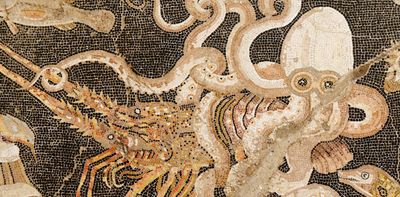
Aristotle, Aelian and the giant octopus: the earliest ‘citizen science’ goes back more than 2,000 years If we want to research a subject, how do we do it? We could read about it in books or do experiments in a lab. Or another way is to find people who know something about it and ask them. The Conversation · Aug 16, 2024
‘You can’t murder a people and walk away scot-free.’ In The Voyage Home, Pat Barker explores morality in war The first volume of Pat Barker’s trilogy of the Trojan conflict starts with an epigraph taken from Philip Roth’s The Human Stain: “All of European literature springs from a fight”. The Conversation · Aug 13, 2024
Joanna Murray-Smith’s new adaptation of Uncle Vanya reminds us Chekhov’s play is both timeless and timely Virginia Woolf always maintained that, of all of the great writers, the British novelist Jane Austen “is the most difficult to catch in the act of greatness”. The Conversation · Aug 2, 2024
‘Fanatical colonialist’: The uneasy legacy of the French founder of modern Olympics Baron Pierre de Coubertin, the controversial French founder of the modern Olympics, is proving to be a divisive figure for organisers of the Paris Games. Yet while some deplore his sexist and colonialist remarks, others have praised his dedication to using sport to promote peace, viewing him as a visionary… France 24 · Jul 18, 2024
Guide to the classics: On The Art of Physical Exercise, a 16th century account of ancient sports and workouts According to the World Obesity Atlas, 42% of the global population will be overweight or obese in 2025. Lack of physical activity is one of the primary causes. Experts regard this as a serious health problem and in Greco-Roman times, too, doctors thought being overweight was bad for one’s health. The Conversation · Jul 16, 2024
The Conversation · Jul 4, 2024 Euro 2024 in a super election year: how the Olympic Stadium is putting Germany’s past front and centre Germany is hosting the Uefa Euro 2024 men’s football tournament right in the middle of what has been called the country’s “super election year”. People are voting at local, state and European levels, amid renewed contests over Germany’s relationship with its Nazi past.
The Conversation · Jul 1, 2024 Did people in Ancient Rome and Greece love the same way we do? Perhaps even more hopelessly Sometime around 100 AD, the Roman lawyer and aristocrat Pliny sent a letter to his third wife, Calpurnia – who was staying in a different part of Italy – to express how much he loved and missed her:
The Conversation · Jun 27, 2024 ‘Gun control is dead and we killed it’: unmasking the ‘lonely incel’ who designed the world’s most popular 3D-printed firearm Every year, on Easter Sunday, Irish republicans commemorate their martyrs, remembering lives lost during the 1916 Easter Rising and in the years since. Such events have a pattern: a street parade, speeches and flowers at the cemetery.
The Conversation · May 29, 2024 Pirates and politicians: what a 300-year-old book about the most notorious buccaneers reveals about British politics Three hundred years ago, A General History of the Robberies and Murders of the Most Notorious Pyrates by Captain Charles Johnson first hit the shelves of London’s booksellers. The book aimed, according to Johnson, to give “a distinct Relation of every Pyrate who has made any Figure”.
The Conversation · May 27, 2024 Who really was Mona Lisa? More than 500 years on, there’s good reason to think we got it wrong In the pantheon of Renaissance art, Leonardo da Vinci’s Mona Lisa stands as an unrivalled icon. This half-length portrait is more than just an artistic masterpiece; it embodies the allure of an era marked by unparalleled cultural flourishing.
International Business Times · Feb 28, 2024 10 Most Beautiful College Campuses In California: Scenic Sanctuaries Of Learning No matter where you go in California, you're sure to find a college campus that not only inspires academic achievement but also captivates the soul with its beauty and charm.
France 24 · Feb 21, 2024 ‘He wanted to fight for France’: Manouchian honoured as symbol of foreign Resistance fighters Eighty years to the day since he was executed by the Nazis near Paris, Armenian Missak Manouchian, figure of the French Resistance, takes his place in Paris's Panthéon mausoleum alongside other French national heroes on Wednesday, February 21. His induction is seen as a tribute to all foreign Resistance fighters.
LiveScience · Feb 2, 2024 13 of the world's oldest artworks, some crafted by extinct human relatives Archaeological evidence suggests that symbolism in art, once seen as something that only modern humans were capable of, was produced by earlier hominins.
WEKU · Jan 24, 2024 NPR names tech executive Katherine Maher to lead in turbulent era Incoming NPR CEO Katherine Maher has a background in tech and world affairs. She says the network's mission fits neatly with her advocacy of the free flow of information in expanding democracy.
The Conversation · Jan 8, 2024 Freedom of thought is being threatened by states, big tech and even ourselves. Here’s what we can do to protect it The idea of free speech sparked into life 2,500 years ago in Ancient Greece – in part because it served a politician’s interests. The ability to speak freely was seen as essential for the new Athenian democracy, which the politician Cleisthenes both introduced and benefited from.
The Conversation · Jan 3, 2024 The strange story of the grave of Copernicus Nicholas Copernicus was the astronomer who, five centuries ago, explained that Earth revolves around the Sun, rather than vice versa. A true Renaissance man, he also practised as a mathematician, engineer, author, economic theorist and medical doctor.