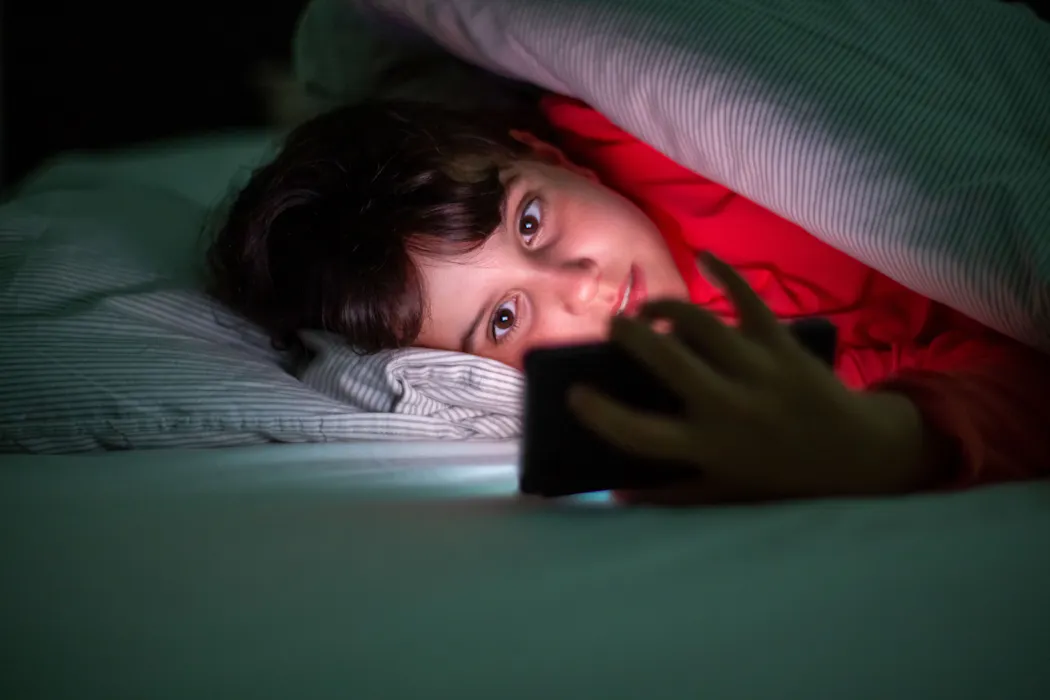
Sleep can be one of the trickiest things for families with little kids. It’s not just important for parental sanity or a child’s grumpiness levels the next day.
Sleep is crucial for brain development, especially in the early years. We also know getting enough sleep is important for learning and maintaining a healthy weight.
Screen use has been shown to impact the quality and quantity of sleep in adolescents and adults. Our new research closely examines the relationship between sleep and screen-use in young children.
Here’s what we found and what it means for screens in your home.
Our research
We surveyed 3,324 families with children aged six months to six years from across Australia. Caregivers were recruited through social media, flyers and newsletters.
This data is from the first year of a five-year longitudinal study by the Australian Centre of Excellence for the Digital Child.
Caregivers told us about children’s typical sleep patterns (their bed time, how long they slept, and naps) and any problems.
They also reported on how much time their children spent on screens and on what type of devices (were they handheld like a phone or tablet? Or static like a TV?), and if screens were used in the bedroom. We also asked how often children used screens in the two hours before bed.
What we found
The children in our study were exposed to digital technologies early and often.
Our findings suggest there may be different effects on their sleep, depending on their age, the type of device they use, and when they use it.
For example, fewer than half (between 27% and 44%) of children aged two to five met the national guidelines of less than two hours of screens per day.
This is similar to other studies, showing many parents struggle to limit screen use in everyday family life.
We found use of devices in bedrooms, particularly handheld devices, was occurring from infancy and increased across each age. By age five, almost 40% of children were using handheld devices in their bedrooms.
What about sleep?
For infants (6-12 months), we did not find any significant associations between screen use and sleep. This means screen use may not have as strong of an influence on infant sleep, as other social or biological factors.
However, we suspect passive exposure may be going unmeasured in this age group. For example, if a screen is being used around them by a parent or older sibling.
But things change as children get older:
-
for every hour of handheld device use per day, two-year-olds went to bed almost 30 minutes later.
-
for every hour of handheld device use per day, three-year-olds not only went to bed later but then slept less overall and showed greater difficulties functioning the following day.
We also found static screens had similar patterns of effects. However, handheld device use was typically stronger and more consistent across each of the ages. But this means both handheld (phones, tablet) and static (TV) devices were associated with less sleep and later sleep timing across most ages.
Evening screen use told a similar story. Children who more frequently used any type of screen in the two hours before bed had shorter sleep, later bedtimes, and more sleep problems across most age groups from one to five years. This is compared with children who had limited or no screen use in the two hours before bed.
What does this tell us?
This study provides unique insights into screen use and sleep in a large sample of Australian children. However, this is what researchers call “cross-sectional” data. It’s only taken at one time-point. So this means we can’t be sure about the cause of these relationships.
For example, this data shows screen use is associated with poor sleep, but it could also be that children who are awake longer have more opportunity to use screens than those who sleep longer.
We will continue to look at this as part of a broader, long-term study of this group. This will help us understand these relationships more clearly across time.
What this means for your family
The good news is these findings point to specific, achievable changes for families that may help their kids’ sleep.
Current screen-use guidelines focus on how much screen time children have. Our findings suggest that where, when, and on what device may also matter. So here are some concrete steps you can take.
-
Remove screens from bedrooms as much as possible. Having screens in bedrooms may lead to longer use times and using screens closer to bedtime. If there are no screens in bedrooms, this may reduce children thinking of their bedrooms as a place for exciting activities. It can also potentially reduce points of friction (for example, taking a device away) in the lead up to bedtime.
-
Create a relaxing pre-bed routine. If you think screens may be interfering with your child’s sleep, consider reducing or replacing screens before bed with activities like play, movement, reading and bath time. Families and children are all different and needs change. But when possible, having a predictable nighttime routine for young children is great for getting children ready to sleep.
-
Limit bright, handheld screens, held close to the face, especially before bed. Light emitted from screens and even our environment can interfere with our sleep promoting hormone, melatonin.
Young children’s sleep is important – for kids and parents. The screens in our homes are not going away, but with some simple adjustments to where and when they are used, families can protect the sleep their children need.
This article was originally published on The Conversation. Read the original article.