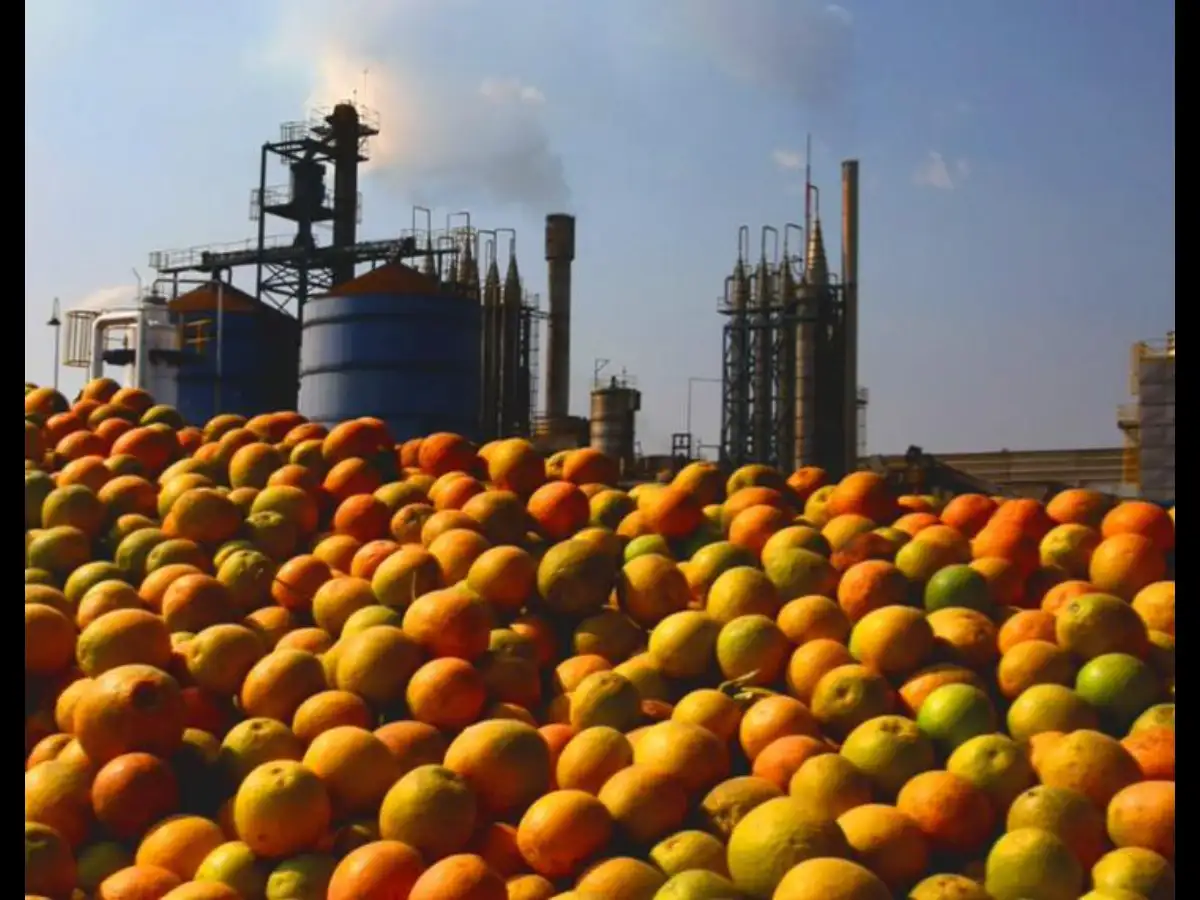
What happens to the huge amounts of waste created when millions of oranges are washed and processed into juice? In Brazil’s São Paulo State, one major agricultural company is turning that question into an energy solution. The 2.1-million-square-foot plant is expected to process between 13,770 and 14,125 cubic feet of raw effluent every hour. At full operation, it could generate more than 1.77 million cubic feet of raw biogas each day, or around 247 million cubic feet annually.
Louis Dreyfus Company is building a large-scale biogas plant next to its Bebedouro orange juice processing facility, designed to transform citrus wastewater into renewable energy. Once completed, the project is expected to become the world’s biggest plant of its kind, creating a new model for industrial waste management. The facility is expected to be completed before the end of 2026.
How orange juice waste becomes biogas
Orange juice production generates large quantities of liquid effluent during fruit washing and juice extraction. The wastewater contains dissolved sugars, organic acids and other organic material, making it difficult to release directly into the environment.
The new facility will use this organic-rich wastewater as a feedstock for anaerobic digestion. Instead of allowing that waste stream to become an environmental burden, the company plans to convert it into fuel for its own industrial operations.
The biogas will replace fossil natural gas
The biogas produced at the facility will be processed and converted into biomethane before being sent to the nearby juice factory. There, it will replace natural gas used to power industrial heating units.
According to the company, using self-generated methane could reduce direct carbon emissions from the juice complex by more than 20%. The project is also expected to significantly reduce fuel costs, creating both an environmental and economic benefit.
Why citrus wastewater is difficult to process
Turning orange waste into energy is not as simple as putting it into a conventional biogas digester. Citrus wastewater can be highly acidic and contains compounds such as limonene and antimicrobial oils from orange peels. These substances can interfere with the microorganisms normally responsible for anaerobic digestion.
Researchers therefore developed a specialized microbial mixture designed to tolerate the conditions found in citrus effluent.
Inside sealed anaerobic tanks, microorganisms break down the dissolved organic compounds without oxygen. As they consume the sugars and organic acids, they naturally produce methane and carbon dioxide.
The resulting gas is then cleaned to remove moisture and corrosive hydrogen sulfide before the biomethane is supplied to the factory's boilers.
The project also tackles water waste
Energy is only part of the plan. The same process is designed to treat the wastewater generated during orange processing. The company says its pilot testing exceeded baseline organic-load reduction targets by 15 percent, helping demonstrate that the technology could operate reliably at industrial scale.
Once treated, the wastewater can be managed for controlled discharge rather than being left as highly polluted industrial effluent.
Even the leftover solids can be reused
The process produces another useful byproduct: digestate.
After the microorganisms break down the organic material, the remaining solids can be processed into nutrient-rich biosolids. These can then be used by local farmers as organic fertilizer.
That creates a potential closed-loop system in which orange processing waste is transformed into energy, treated water and agricultural nutrients.
The project shows how an industrial food-processing waste stream can become a source of renewable energy rather than simply something that needs to be disposed of.