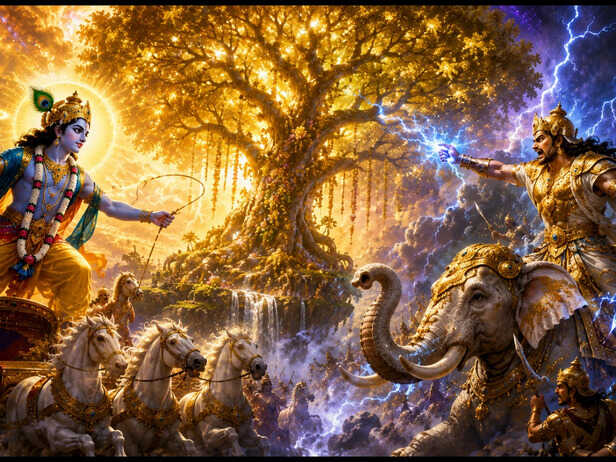
What if a single tree was so rare and magical that even the gods fought over it? It sounds like a fantasy, but this fascinating story comes straight from Hindu mythology. The Parijat Tree, which appeared during the Samudra Manthan, was no ordinary tree. Its flowers never faded, and their heavenly fragrance filled the air. This magical tree later became the reason for a surprising conflict between Lord Krishna and Lord Indra. But how did one beautiful tree become the center of a divine battle? The answer reveals a story filled with devotion, love, pride, and destiny.

A Magical Tree Rose From the Ocean
The story of the Parijat Tree begins during the famous Samudra Manthan, when the gods and demons worked together to churn the ocean in search of Amrit, the nectar of immortality. Along with many divine treasures, a beautiful tree emerged from the ocean. This was the Parijat Tree, unlike any tree seen before. Its flowers never wilted, and its sweet fragrance spread everywhere. Because of its extraordinary beauty, the tree was considered one of the greatest gifts from the ocean.
The Heavenly Garden Received a Precious Gift
After the Parijat Tree emerged, Lord Indra, the king of the gods, decided to plant it in Nandanvan, the heavenly garden of paradise. There, the magical flowers bloomed throughout the year without ever fading. The tree became one of the greatest attractions of heaven. Its fragrance filled the celestial garden, and every deity admired its beauty. For many years, the Parijat Tree remained safely protected in Lord Indra's divine kingdom.
A Visit Changed Everything
Many years later, Lord Krishna defeated the demon Narakasura and travelled to heaven with Satyabhama to return the earrings of Goddess Aditi. During their visit, they walked through Nandanvan, where the magnificent Parijat Tree stood in full bloom. As soon as Satyabhama saw the magical flowers, she was amazed. Their beauty, fragrance, and divine glow immediately captured her heart. That single moment quietly changed the course of this legendary story.
One Wish Led to a Divine Conflict
As Satyabhama admired the Parijat Tree, she wished to have it in Dwarka. To her, the tree was more than a beautiful plant. It represented love, devotion, and a precious memory from heaven. However, the tree belonged to Lord Indra, who was not willing to part with it. This simple wish slowly turned into a disagreement between two great divine personalities. What began as admiration soon became the beginning of one of Hindu mythology's most famous episodes.
The Meaning Behind the Story
The Parijat Tree story is much more than a tale about a magical flower. In Hindu beliefs, the tree represents eternal beauty, devotion, spiritual blessings, and divine love. The flowers never fading remind devotees that true spiritual values never disappear. The story also teaches that even heavenly treasures become meaningful only when guided by wisdom, humility, and devotion rather than pride or attachment.
What We Can Learn Today
Even today, the story of the Parijat Tree inspires millions of devotees. It reminds us that beauty should never create pride, and every blessing should be accepted with gratitude. Material possessions may be valuable, but love, respect, and humility are even greater treasures. Ancient stories like this continue to teach simple life lessons that remain meaningful for every generation, making Hindu mythology timeless and deeply inspiring.
The Story Doesn't End Here
The arrival of the Parijat Tree in heaven was only the beginning. Satyabhama's wish would soon lead to an unforgettable episode involving Lord Krishna, Lord Indra, and the magical tree itself. This legendary story continues to fascinate readers because it combines devotion, love, pride, and divine wisdom into one unforgettable tale. Sometimes, the greatest stories begin with the smallest wish, and the Parijat Tree is one of the finest examples in Hindu mythology.
Unlock insightful tips and inspiration on personal growth, productivity, and well-being. Stay motivated and updated with the latest at My Life XP.