
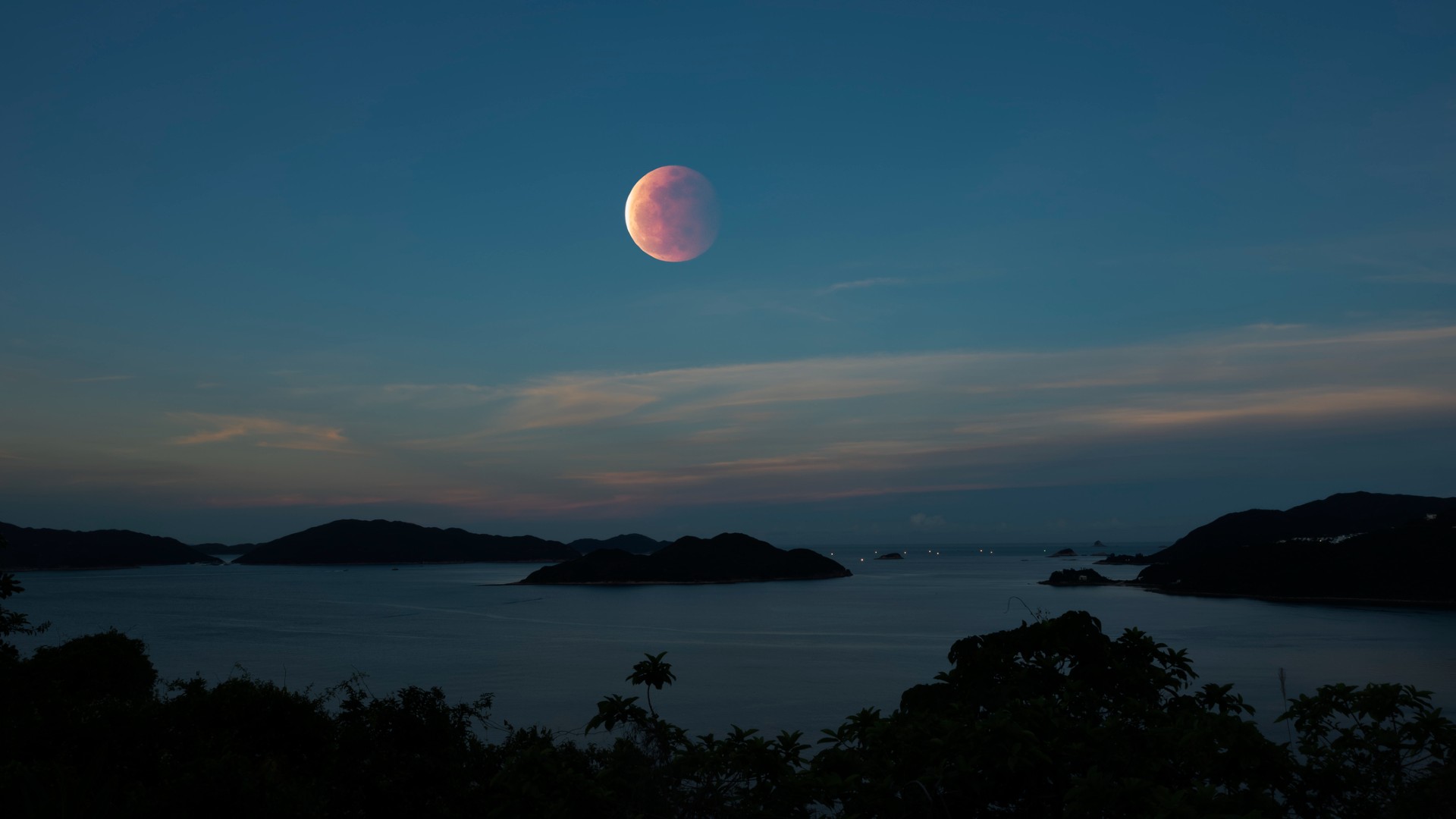
Just over two weeks after its dark silhouette crossed in front of the sun for parts of the Indian Ocean, extreme Western Australia, New Guinea and the Pacific Ocean, it is now the moon's turn to undergo an eclipse.
On May 5, the moon almost drops completely below the Earth's shadow, in the process sampling only the shadow's outermost part — called the penumbra — which is not only pale but grades to even paler outward, away from the dark, central part of the shadow, known as the umbra. As such, this event is called a penumbral lunar eclipse.













