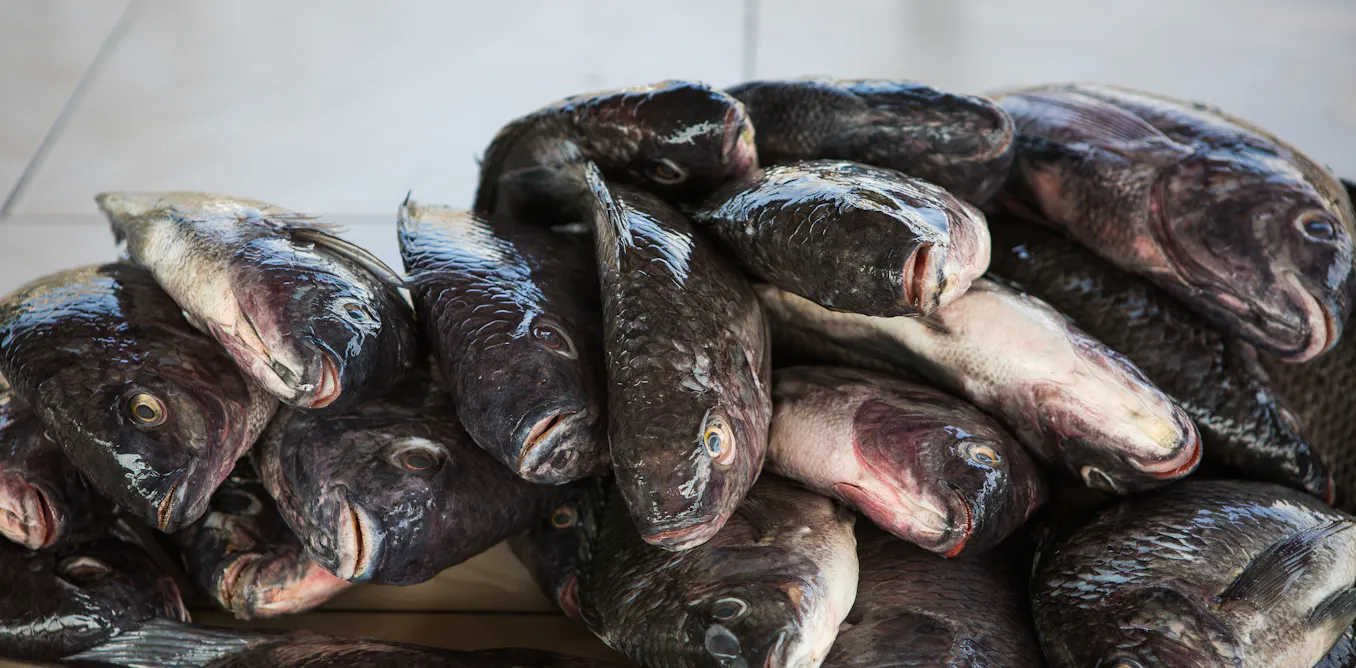
At lakeside markets along Lake Victoria, Africa’s largest lake by area, choosing fish to eat is part of daily life. A customer might pick a tilapia based on its freshness, size, price, and farmed or non-farmed origin, much like shoppers do in markets and supermarkets around the world. Whether grilled tilapia or salmon fillet, fish are a key source of healthy fats, such as omega-3s, essential for heart health. But these nutrients are invisible. We can’t see what’s inside the fish displayed at the market.
Risks are similarly invisible; as waters grow increasingly polluted, fish become more likely to contain harmful substances such as heavy metals or pesticides. Fish are thus a “bundled” product: the same tilapia that provides essential nutrients might also carry a health risk. This creates a dilemma. Consumers face a difficult trade-off.