Get all your news in one place.
100's of premium titles.
One app.
Start reading
WEKU
WEKU
Jane Arraf

What fighting in the Middle East means for the U.S. troop presence in Iraq

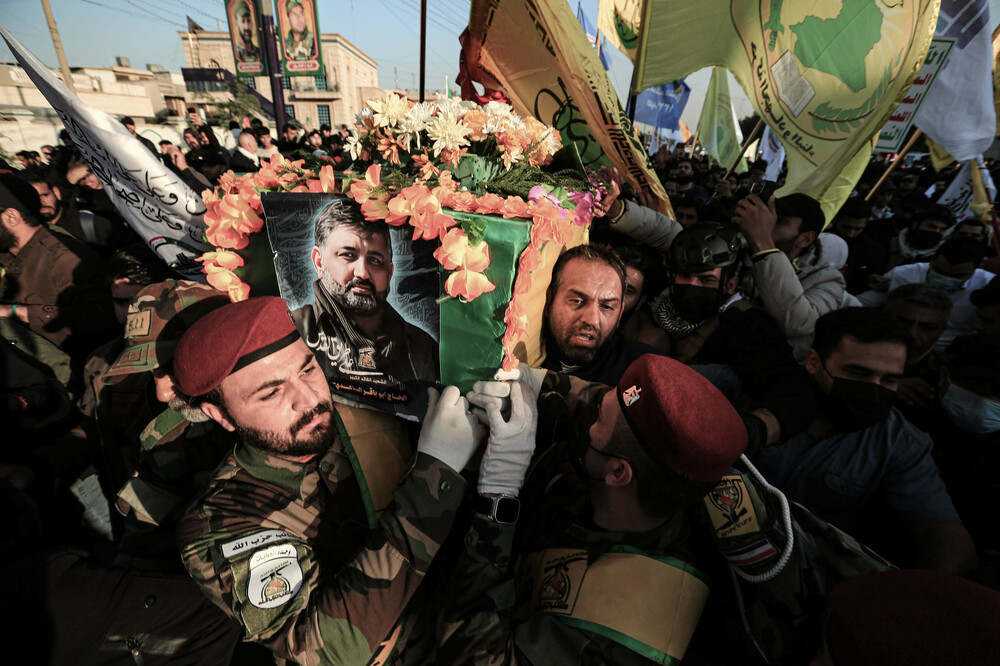
Fighters carry the coffin of Abu Baqir al-Saadi during his funeral on Feb. 8. He was a senior commander in Kataib Hezbollah, an Iran-backed Iraqi militia, who was killed in a U.S. drone strike in Baghdad. (Ameer Al-Mohammedawi/dpa via Getty Images)

BAGHDAD — The militia commander was driving in an unmarked car when the United States killed him, the drone attack flinging the vehicle to the sidewalk and incinerating it in a busy neighborhood in east Baghdad.

The Feb. 7 killing of Kataib Hezbollah commander Abu Baqir al-Saadi wasn't the first strike by the United States in retaliation for a deadly attack on a U.S. base in Jordan last month. But, like the U.S. assassinations of senior Iranian and Iraqi officials in Baghdad four years ago, the attack has wider repercussions on the future of the U.S. military presence in Iraq.
Sign up to read this article
Read news from 100's of titles, curated specifically for you.
Already a member? Sign in here
Related Stories
Top stories on inkl right now
One subscription that gives you access to news from hundreds of sites
Already a member? Sign in here
Our Picks
Fourteen days free
Download the app
One app. One membership.
100+ trusted global sources.