
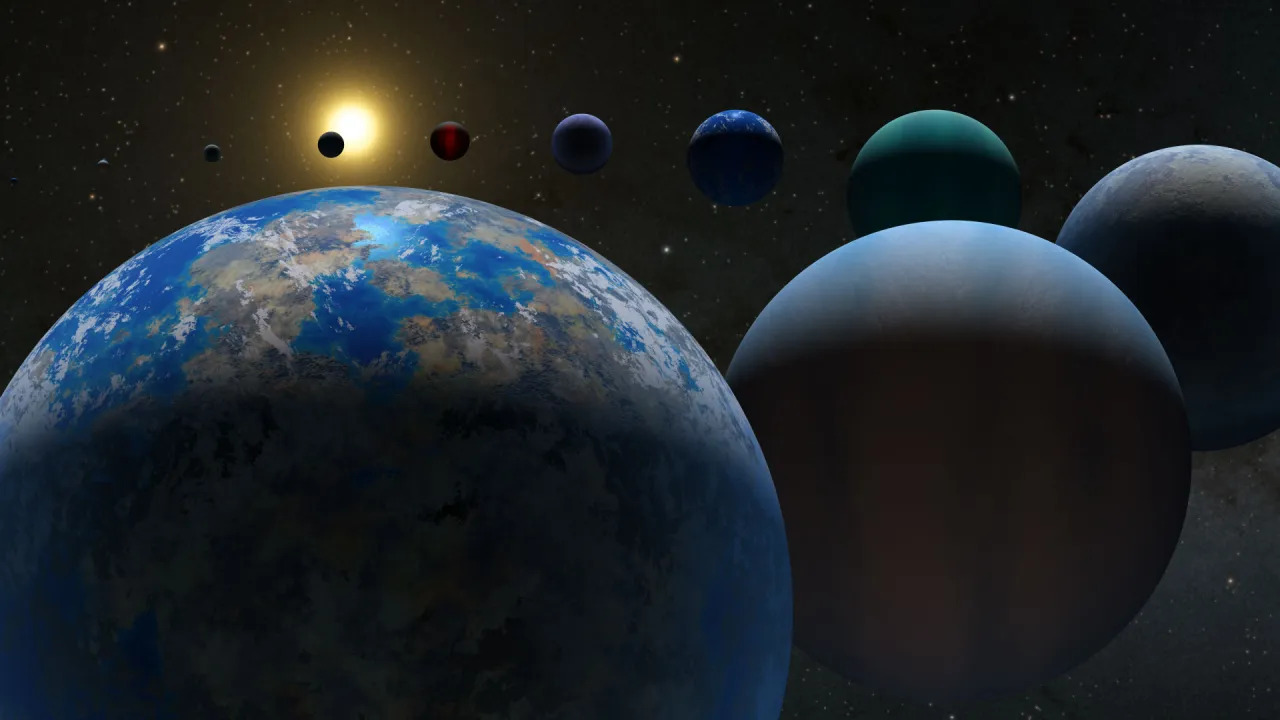
Three astronomers last week proposed expanding the official definition of a planet to encompass worlds orbiting stars other than our own, a nuance not currently included in the formal definition of the term established in 2006 by the International Astronomical Union, or IAU. If the trio's new definition pans out, thousands of celestial bodies across the universe could be confirmed as formal planets.
For a celestial body to qualify as a planet per the current IAU definition, it must orbit the sun, should have cleared the area around its orbit, and must have enough mass that its gravity would have sculpted it into a nearly round shape in order to be a "planet." The third requirement is particularly vague because it does not quantify just how round the celestial body should be, according to a team led by astronomer Jean-Luc Margot of the University of California in Los Angeles (UCLA).