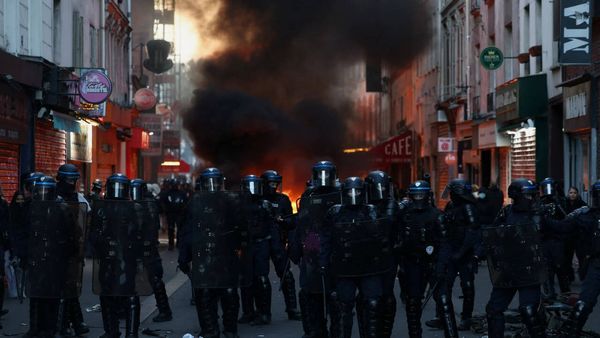
A worn-out power grid in Venezuela failed again this week, and residents' patience failed right along with it. Outages stretching past twelve hours in several western states pushed people in at least nine states into the streets between September 23 and 26, reviving a wave of cacerolazos, burning tires and blocked highways not seen since U.S. forces captured Nicolás Maduro this past January. The timing is awkward for Washington, which has leaned on Venezuela's post-Maduro image of stability to justify sending deported migrants and former TPS holders back.
This latest wave kicked off on the night of September 23, when fluctuations and cuts knocked out power across Caracas and at least thirteen other states, according to DSN Noticias. Street demonstrations followed fast: within a day, crowds had gathered in Portuguesa, Zulia, Mérida, Lara, Aragua, Guárico and Anzoátegui. Along the Zulia–Mérida border, residents of Nueva Bolivia shut down the Pan-American highway over the weekend; one woman on the scene summed up the mood for LaPatilla, saying flatly that "people have already lost their fear" of pushing back. Guárico's Zaraza logged a third consecutive night of protest by Saturday, according to LaPatilla's weekend coverage, while Infobae documented pot-banging demonstrations reaching Maracaibo's Coquivacoa neighborhood that same weekend.
In Carora — a Lara town that sits along the corridor into Zulia — protesters aimed their message straight at the White House on September 25. Hundreds blocked a road there and pressed President Trump to move faster on the grid instead of concentrating on oil contracts, according to LaPatilla's on-the-ground report.
A separate demonstration added another layer on September 24, when teachers, university employees and retirees marched nationwide over stagnant wages, El Nacional reported. Length-of-outage figures differ from one outlet to the next — some describe western cuts running eight to twelve hours, others put certain stretches closer to sixteen — but even the more modest counts describe the roughest patch of blackouts the country has weathered in years.
Rodríguez blames the outages on deliberate tampering with the gas pressure that feeds thermoelectric plants in the west, framing it as payback for the energy deals her government reached with Washington. She raised the accusation first in early September, telling assembled oil workers that technicians had caught operatives shutting gas valves to crash Zulia's grid, per Analitica.com's account of her remarks. No technical evidence has been made public, and Radio América VE's reporting points out that Venezuela's own generation shortfall — an estimated 13,000 megawatts available against roughly 36,000 installed — would leave the grid fragile with or without any interference.
The oil deals behind that accusation are sizable. U.S. Energy Secretary Chris Wright has said Venezuela's output should top 2 million barrels daily sometime before 2030, roughly double January's level and up from about 1.25 million barrels currently — a goal most analysts view as tough to hit while the power grid stays this shaky, Citizen Digital reported. Caracas has also lined up outside repair help: the government signed a memorandum with GE Vernova in June, with an initial goal of adding back roughly 1,000 megawatts of capacity within two years and scaling toward more than 5,000 megawatts by the early 2030s Siemens Energy has separately joined GE Vernova in assessing hydroelectric infrastructure, according to Crumpton Global's analysis of the grid agreement. None of it has stopped the outages so far. Rodríguez, for her part, spent that Tuesday evening in Manhattan at a private reception with Trump, Secretary of State Marco Rubio and other senior U.S. officials, held at the Lotte New York Palace — while demonstrators across Venezuela held her own government responsible for the crisis unfolding back home, MercoPress reported.
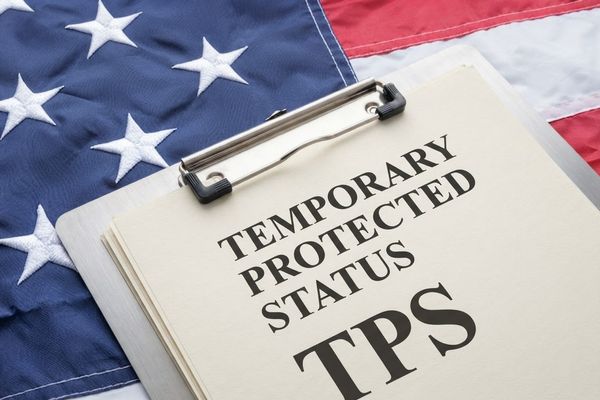
For Venezuelan communities in South Florida, this week's unrest lands at a sensitive legal juncture. After Maduro's capture in January, the Trump administration cast the operation as proof that Venezuela was stabilizing and kept its earlier termination of TPS in place — a decision the Department of Homeland Security says affected more than 500,000 Venezuelan nationals nationwide. Higgins made the opposite case back in January, calling the termination "reckless, dangerous, and wrong" and arguing that ongoing instability only proves the country still isn't safe for returns.
Noem has stood by the decision, pointing to refugee status as an alternative path and telling Fox News that "every individual that was under TPS has the opportunity to apply for refugee status" and that the review process would move forward. Her own department later clarified that refugee status is only available to people already living outside the United States — a distinction NPR reported immigration attorneys called misleading, since the vast majority of former TPS holders are currently inside the country. The underlying legal fight is still working through the courts: the Supreme Court let the termination proceed on a temporary basis in October 2025, and the case remains open.
None of this week's unrest settles that fight, but it gives advocates on each side fresh ammunition. Those pushing to reinstate protections point to burning tires from Zulia to Guárico as proof the crisis is ongoing; the administration keeps pointing to Maduro's removal, and to repair deals like the one with GE Vernova, as proof the country is on the mend.