Get all your news in one place.
100's of premium titles.
One app.
Start reading
The Economic Times
The Economic Times
Anupam Nagar

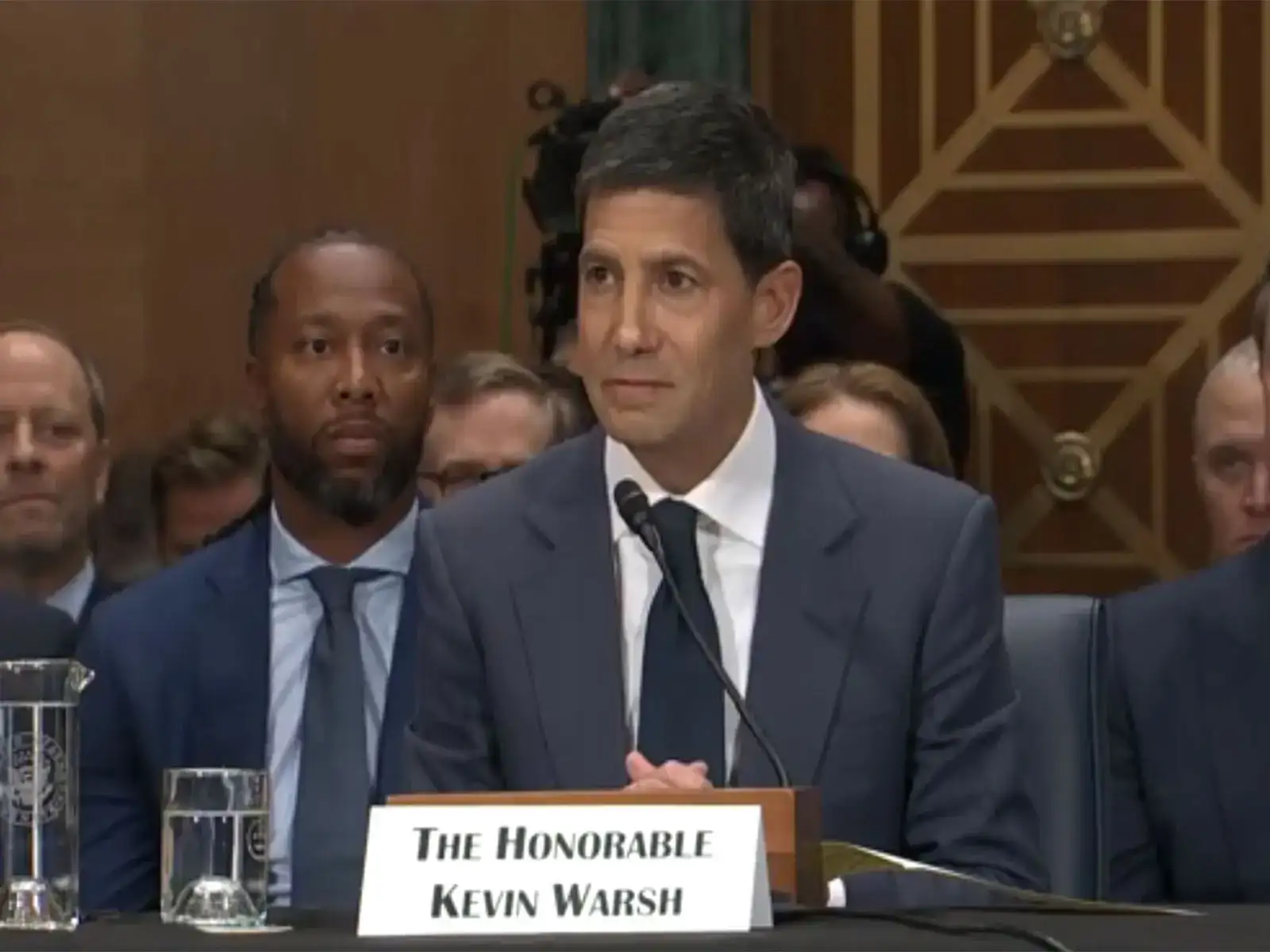
US Stock Market: Kevin Warsh’s Fed debut signals major shift in US monetary policy landscape

The appointment of Kevin Warsh as the new chair of the U.S. Federal Reserve marks a major shift in the relationship between the White House and the central bank, placing President Donald Trump firmly at the center of the country’s economic direction, according to a report by Reuters.

For years, former Fed Chair Jerome Powell served as a convenient target for criticism from Trump, who frequently blamed the central bank for elevated borrowing costs, sluggish economic momentum, and restrictive monetary policy. Trump often argued that Powell was not his preferred choice during his first term and pointed to advisers from his earlier administration for recommending him.

With Warsh now leading the Federal Reserve, that political dynamic changes significantly. Unlike Powell, Warsh is viewed as a direct Trump ally and an architect aligned more closely with the president’s economic thinking. His installation effectively completes Trump’s influence over the top layers of U.S. economic policymaking.

Trump underscored the importance of the appointment during a high-profile White House swearing-in ceremony attended by cabinet officials, Supreme Court justices, and senior advisers. The event reflected the administration’s expectation that the new Fed leadership will support stronger economic growth while avoiding policies perceived as restrictive.

The transition comes at a sensitive time for the U.S. economy. Consumer confidence has weakened sharply in recent months, with concerns over inflation, affordability, and borrowing costs weighing on households. According to Reuters, sentiment among independent voters and even Republican supporters has declined amid rising economic anxiety.

Housing affordability has emerged as another major concern. Mortgage rates in the United States have climbed above 6.5%, reaching their highest level in several months and further slowing an already fragile housing market. Inflation pressures have also intensified, with the Federal Reserve’s preferred inflation gauge reportedly accelerating from 2.3% in March 2025 to 3.5% annually.

Energy prices have added to the strain. Average gasoline prices in the U.S. have risen sharply following escalating geopolitical tensions involving Iran earlier this year, adding pressure on consumers already dealing with higher living costs.

The economic backdrop carries significant political implications ahead of the upcoming U.S. midterm congressional elections. Inflation historically poses challenges for incumbent governments, yet efforts to control rising prices typically require higher interest rates, a politically unpopular step that could conflict with Trump’s preference for stronger growth and lower borrowing costs.

Analysts believe this places Warsh in a difficult position. While investors and policymakers expect the Fed to remain focused on inflation control, the White House is likely to prioritize economic expansion and market stability.

Warsh inherits a Federal Reserve system designed to operate independently and through consensus. The institution includes a seven-member Board of Governors in Washington and twelve regional Federal Reserve bank presidents who all contribute to monetary policy discussions.

Although some past Fed chairs exercised strong individual influence, recent years under Powell saw a more consensus-driven approach. Warsh, however, has previously signaled support for more open disagreement within the Fed and a willingness to surprise financial markets rather than rely heavily on advance guidance.

That approach may create additional uncertainty for investors. Recent Federal Reserve meetings already showed increasing divisions among policymakers, with report stating that the April policy meeting recorded the highest number of dissents in more than three decades.

Several Fed officials are reportedly concerned that inflation could remain persistent enough to require additional rate hikes. Such a stance would contrast sharply with Trump’s long-standing criticism of higher interest rates and his repeated calls for easier monetary policy.

Warsh’s challenge is further complicated by the diverse makeup of the Federal Reserve leadership. Some current governors were appointed by former President Joe Biden, and ideological divisions inside the institution could become more visible in coming months.

Financial markets, meanwhile, appear increasingly convinced that inflation risks remain elevated. Bond yields tied to long-term borrowing costs have continued rising, signaling investor expectations that interest rates may stay higher for longer.

As the Federal Reserve enters a new era under Warsh, the political shield Trump once had with Powell is gone. The performance of the U.S. economy, inflation trajectory, and interest-rate environment will now be more directly tied to the administration’s own economic stewardship, with both Wall Street and voters watching closely.

Sign up to read this article
Read news from 100's of titles, curated specifically for you.
Already a member? Sign in here
Related Stories
Top stories on inkl right now
One subscription that gives you access to news from hundreds of sites
Already a member? Sign in here
Our Picks
Fourteen days free
Download the app
One app. One membership.
100+ trusted global sources.