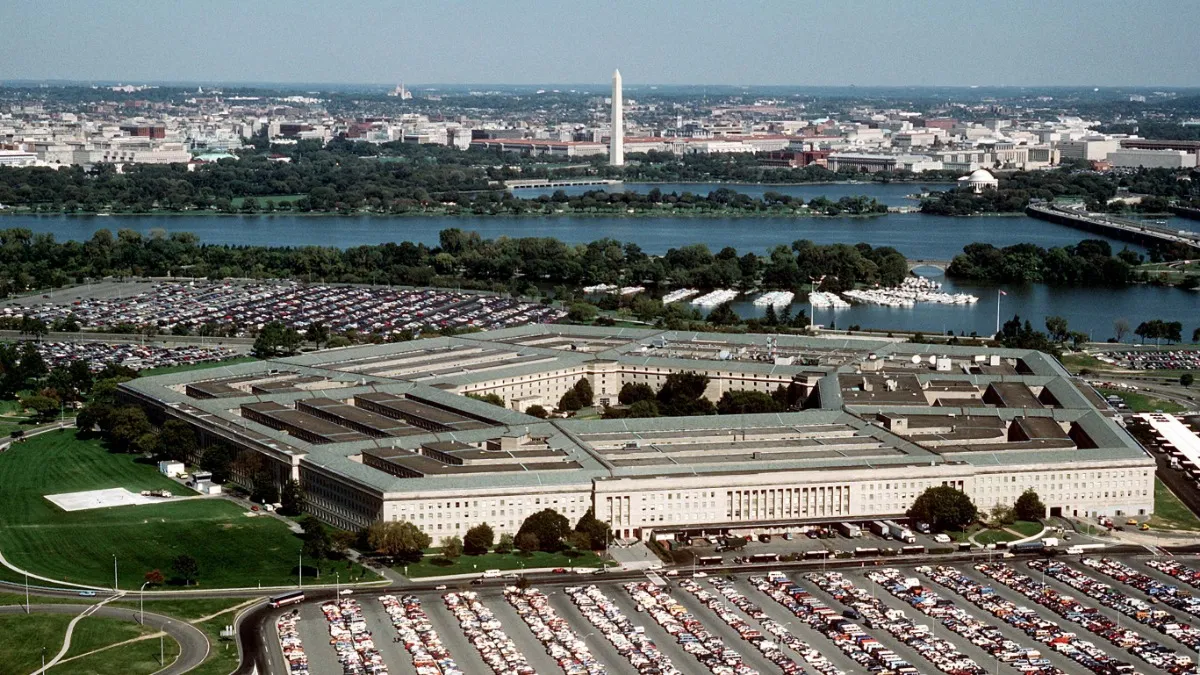
As the Iran war drags on, it seems like President Trump and the military are slowly beginning to face a limited number of options on how to proceed. So, they have reportedly approached an unusual source for help: their own people. According to CNN, a senior officer at the US military command recently sent out an email to a broad group of analysts stating, “We are looking for new creative and unconventional ways to pressure and punish Iran.
The message, which was allegedly sent last Wednesday, shows that U.S. Central Command is actively looking to reevaluate its current path. As Capt. Timothy Hawkins, a spokesperson for CENTCOM, told CNN, “U.S. Central Command has a long history of thinking and working in innovative ways.”

He reportedly added, “Admiral Cooper, in particular, reaches out to members of our great team, regardless of rank, to achieve the highest levels of operational performance possible.” One source familiar with the planning discussions noted, “You need creative minds at times — especially if you’re running out of conventional options.”
The hard reality
For weeks, the U.S. has been conducting air strikes meant to hurt Iran’s ability to threaten shipping in the Strait of Hormuz and force them to the negotiating table, but there is still no deal in sight. According to The Washington Post, Trump recently claimed he was canceling planned strikes because of progress toward a deal. However, there was no immediate sign of a breakthrough in Tehran.
In fact, Iran’s acting defense minister, Majid Ebn-e-Reza, dismissed the president’s claims as “psychological operations and cognitive warfare.” He reportedly signaled that the country is still bracing for more attacks.
Exclusive: The request from a senior officer at the US military command carrying out President Donald Trump's war with Iran came in an email: We need ideas.
— CNN (@CNN) August 3, 2026
"We are looking for new creative and unconventional ways to pressure and punish Iran," an officer in US Central Command's… pic.twitter.com/cLUJIYWQ5T
CNN reported that one persistent hurdle has been the current technical limitations of military hardware. Even with some of the most powerful weapons in the world, the U.S. is struggling to take out Iranian nuclear facilities because they are buried so deep underground. Sources have suggested that destroying these sites would likely require ground troops.
This is a tremendous risk that Trump has been reportedly unwilling to take, especially since the administration has been faced with questions about transparency with the other service member casualties. Thus far, eighteen U.S. service members have been killed in the strikes.
CNN also reported that Trump has been considering strikes that would function more like a “fireworks” display. These would be strikes targeting sites similar to those targeted a year ago, in hopes of a symbolic victory. One that will allow him to exit the war without actually meeting his stated goals for the war: getting rid of the Iranian nuclear program.
More importantly, it won’t resolve what has become the war’s primary issue: the Strait of Hormuz. Per the outlet, a source familiar with the situation claimed, “At the end of the day, POTUS will want a deal, so he’ll continually look for ways to get tough and get out of this.” Additionally, Raz Zimmt of the Institute for National Security Studies told the Washington Post that military options alone are unlikely to reopen the Strait of Hormuz.
Trump Team Crowdsourcing for “Creative” Ways to Punish Iran https://t.co/UFMamWCSgD
— The New Republic (@newrepublic) August 3, 2026
Zimmt noted, “The Iranians may pay a heavy price, but from their perspective, the price they will exact is at least equal, so it won’t help.” He further noted that “what could be done via airstrikes has already been done.”
According to CNN, both the Central Intelligence Agency and the Defense Intelligence Agency have also assessed that the current bombing strategy is unlikely to shift the Iranian negotiating position. Even the Chairman of the Joint Chiefs of Staff, Gen. Dan Caine, publicly admitted, “Air power has its limits.”
Which, of course, leads to another available option: maintaining the status quo of endless rounds of strikes and counterstrikes. It is an option that leaves the Strait and American lives at risk. That, with previous failures at negotiating and maintaining a peace deal, prompts concerns of an endless war, a concept that the president has previously criticized.
Despite the growing limit to available options, Trump reiterated his goal to win at a Cabinet Meeting on Friday. “I think we just want to win,” he said, per CNN. “We’ll be hitting them very hard, and you know, at some point, they’re going to say, ‘We just can’t take it anymore.’”
Beyond the war in the Middle East, there are growing concerns about infrastructure and cyberattacks. The Washington Post reported that at least seven states have recently dealt with cyberattacks on water or wastewater operations. They noted that intelligence assessments have pointed to Iranian involvement in similar attacks on municipal water systems in Minnesota. Additionally, reports have indicated that other critical systems in the U.S. might be at risk.