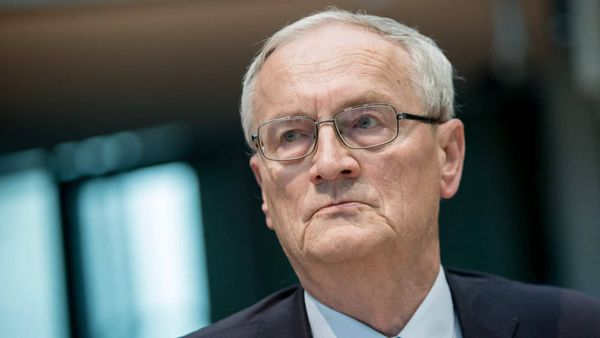
The chief constable of Thames Valley police has said he will consider joining legal action against the government if it fails to block the early release of two of PC Andrew Harper’s killers.
The Police Federation is contemplating going to court in its attempts to keep Jessie Cole and Albert Bowers in prison.

In August 2019, Harper, 28, died when he was dragged down a country road in Berkshire by a car as Cole, Bowers and their accomplice Henry Long fled the scene of a quad bike theft.
All three were convicted of manslaughter in 2020. Cole and Bowers were sentenced to 13 years in prison and could be released early as part of the government’s drive to free up prison places.
Long, who was driving the car, was given a 16-year jail sentence and does not qualify for early release.
On Wednesday morning, Jason Hogg, who was on duty the night Harper died, told BBC Radio 4’s Today programme that he would “certainly” consider joining the Police Federation in court action if the government refused to reverse its position, pending legal advice.
“I was contacted by the Police Federation yesterday who informed me they are seeking legal advice, exploring opportunities for a judicial review against the government,” he told the Guardian on Wednesday afternoon.
“So I’m watching with interest and I will be speaking to the Police Federation again.
“But my hope is that we will never get there and that there is no need for the Police Federation to go down the line of a judicial review because the government will listen.”
Prison capacity in England and Wales is at critical levels. From October, the government plans to release about 5,000 prisoners who have served a third of their sentence.
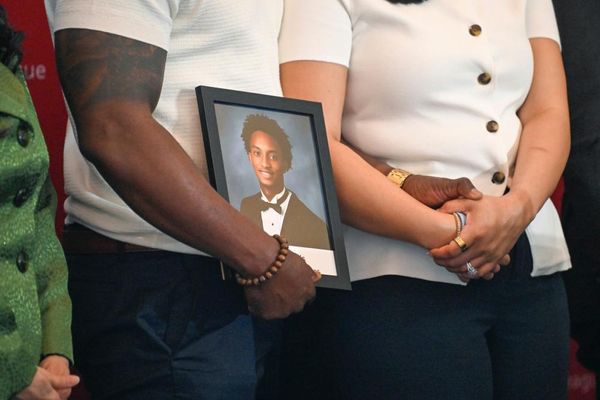
Harper’s widow, Lissie, successfully campaigned for a change in the law after his death.
Legislation introduced four years ago – the Police, Crime, Sentencing and Courts Act 2022 – means those convicted of the manslaughter of emergency workers on duty now face mandatory life sentences. However, the law cannot be applied retrospectively.
Hogg said he wrote to the prime minister, Andy Burnham, 12 days ago to express concerns that Cole and Bowers might be included in the scheme, but had not received a reply.
He added that he planned to write again to Burnham, the home secretary, Shabana Mahmood, and the justice secretary, Alex Norris, to convey “the impact of the decision on the morale of my officers, but also on the 2,000 people who work in policing across the country”.
Hogg would not be drawn on whether all prisoners convicted of manslaughter should be exempt from the scheme.
The government has already said those serving sentences for rape, serious child sexual offences and grooming will not be released early, after a campaign by victims.
“It isn’t my role to set government policy or set the law,” Hogg said.
“But I think if you ask most people in the streets, they would probably say people who take the life of another person in our country should remain behind bars as long as possible, and I don’t think that’s particularly controversial.”
However, he added that the fact Harper was an emergency services worker is a “significantly aggravating factor”.
Hogg said the criminal justice system also needed “greater investment around rehabilitation”. He said the National Police Chiefs’ Council estimated it would cost about £480m to manage the freed offenders in the community.
“I think there needs to be a balance between the risk caused [by] prisons being full, but also the risk of releasing people early who still pose a risk to the public,” he said.
“One of the challenges around the sentencing act [is that it] releases people on the basis of the crime committed, not on the basis of how reformed they are, have they been rehabilitated, and not on the basis of the risk they pose back in the community.
“So if you have somebody who still poses the risk … has felt no remorse, and they are back on the streets early, of course that risk has to be managed by the probation service and policing.”