
The Spiel des Jahres is one of, if not the, most prestigious tabletop awards around, with past winners including a who's who of the best board games such as Catan, Carcassone, Ticket to Ride, and Dominion. 2025's winner was Bomb Busters, a cooperative deduction-based game that involves players working together to defuse a bomb.
There were numerous worthy nominees, but Bomb Busters stood out because of its elegantly simple gameplay that focuses on logical deduction and low margin for error.
Bomb Busters features & design
Price |
$39.95/£34.99 |
Ages |
10+ |
Game type |
Cooperative/puzzle/deduction |
Players |
2-5 |
Lasts |
30mins |
Complexity |
Low |
Designers |
Hisashi Hayashi |
Publisher |
Pegasus Spiele |
Play if you enjoy |
Sky Team, Hanabi, Azul, Pandemic |
- A true cooperative game, players need to work together to cut bomb wires
- Victory is dependent on cutting all the wires, save for the red wire
- Has a friendly, cartoon style
As the name would suggest this game is all about defusing explosives before they go off. The key is good teamwork to ensure you cut the right wires. Otherwise? Boom.
At the core of Bomb Busters are 48 numbered tiles representing wires in a bomb. The wires are numbered between 1 and 12, with four of every wire. Each player takes a small stand and then the wires are evenly distributed amongst players. In the center of the table is a board containing several pieces of equipment that are unlocked as wires are cut, along with a countdown tracker to keep track of errors and a "validation tracker" to help keep track of which numbered wires have been cut in their entirety. Generally speaking, players can collectively make as many mistakes as there are players, although there’s some exceptions that result in an automatic loss.
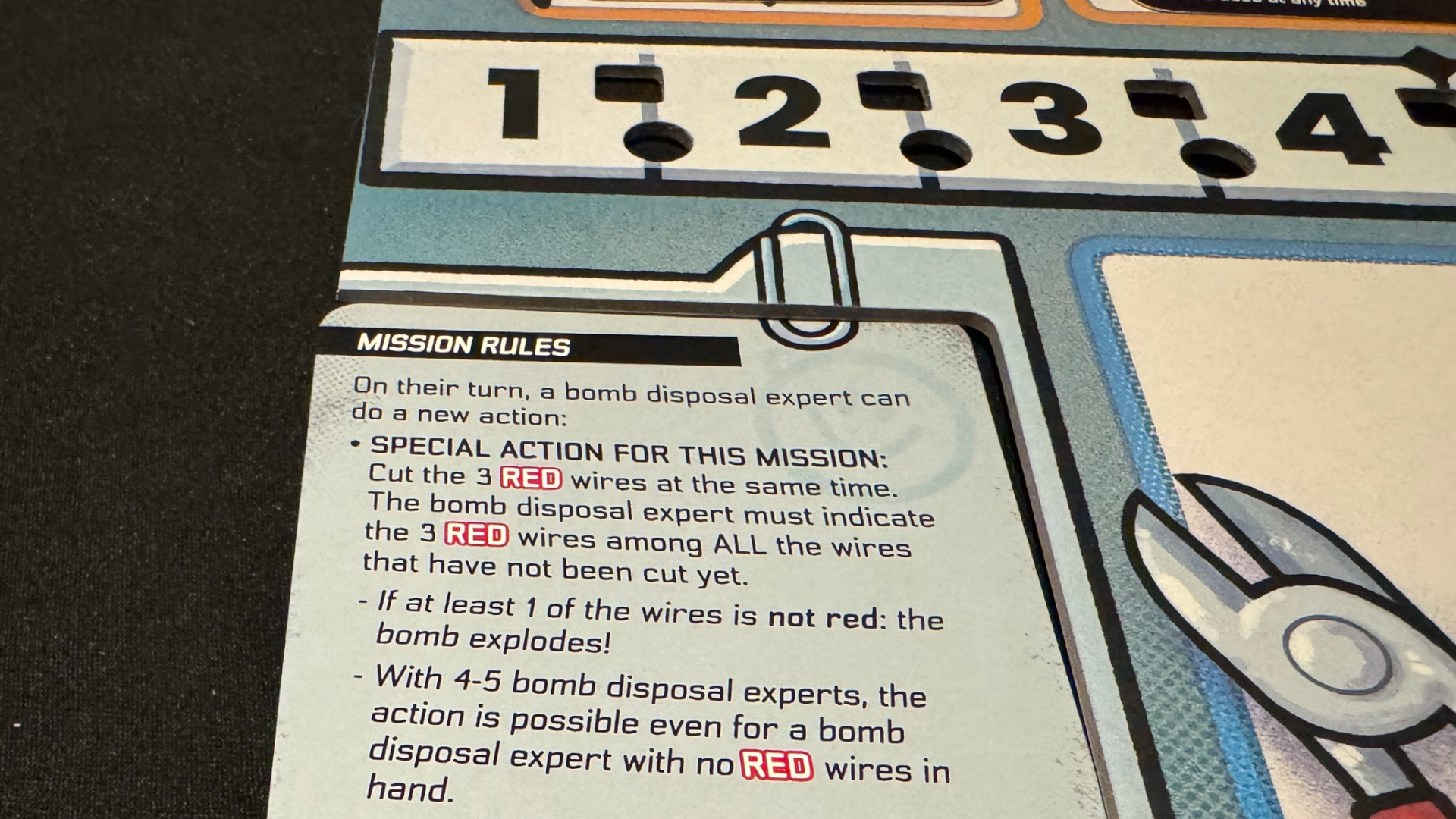
The game comes with 66 scenarios that are distributed through a number of sealed boxes. Roughly speaking, Bomb Busters is technically a campaign game, with players tasked with defeating various villains who sprinkle their bombs throughout the city. After a series of training missions designed to get players accustomed to the variable rules, the campaign starts in earnest, with new pieces of equipment, new variant rules, and other surprises sprinkled through each box. Although new rules are occasionally introduced via stickers placed into the rulebook, I wouldn’t describe Bomb Busters as a true Legacy game (for clarity on what that is, see our guide to the types of board games), as the campaign adds new material but never permanently removes any pieces.
The game itself supports up to five players, although in smaller groups of two or three, players will need to take multiple stands. Each stand contains its own separate set of wires, but both sets are counted collectively as the player’s hand, which matters when using equipment or giving out precious info tokens. Personally, I think Bomb Busters is played best at four or five players, as each player will only have one stand at this level.
Gameplay
- Using scant information provided by other players to make informed guesses to cut wires is key
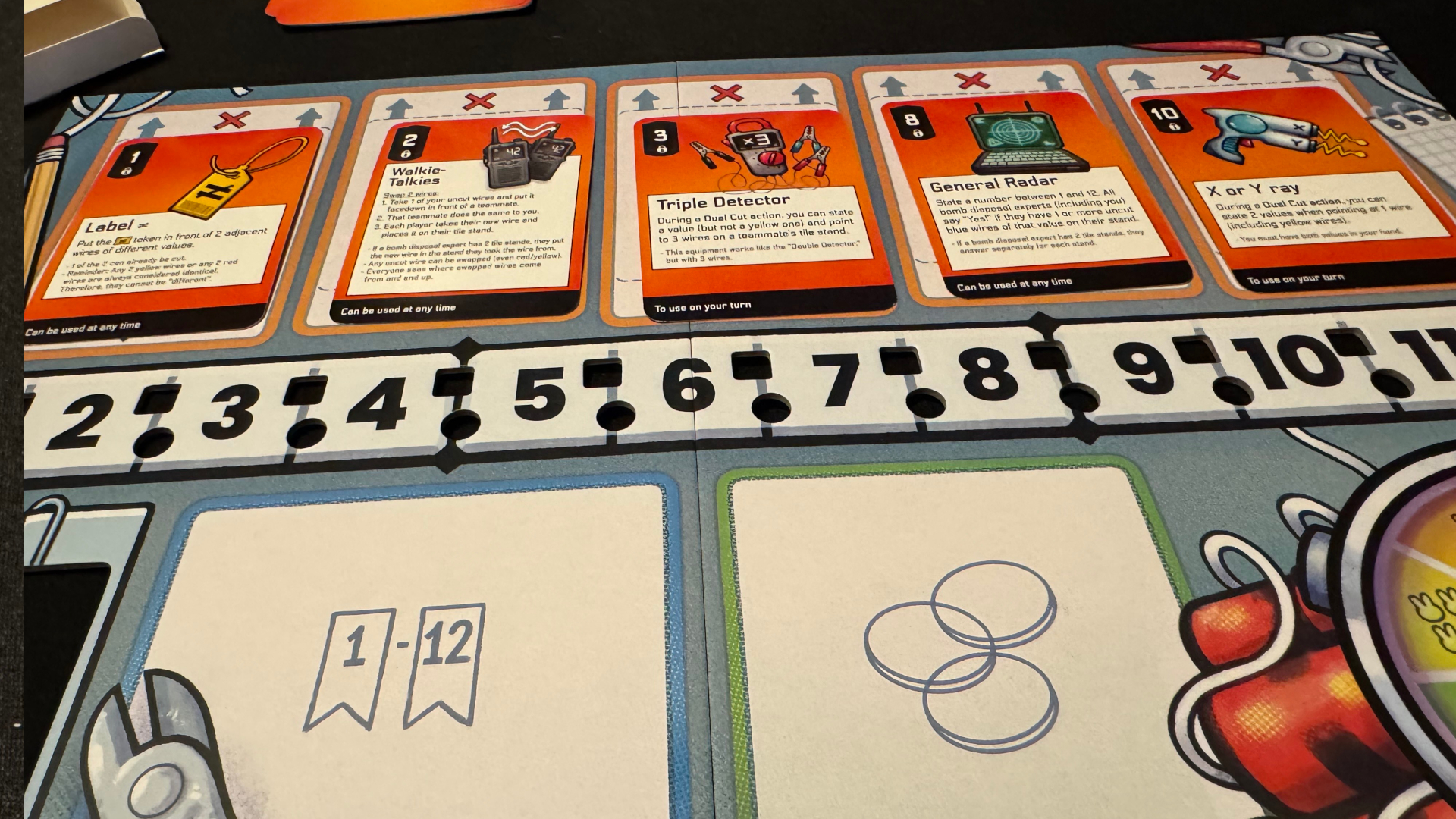
- Equipment can be used to either give out pieces of information or prevent disastrous mistakes
Bomb Buster’s gameplay is incredibly simple. On a player’s turn, they attempt to match one of the wires on their stand with a wire on another player’s stand. For the most part, this is done by indicating which tile they want to match and calling out the number they think the wire is. If they correctly guessed the wire’s number, both players remove their wires from the stands and place them face up on the table. If incorrect, the detonation timer drops one tick and the player "reveals" the wire’s correct numbering via an info token.
In addition to the standard numbered blue wires, players also have to contend with yellow and red wires. These wires have numbers with decimals (yellow wires are marked in intervals of 0.5, for example) and are interspersed among the blue wires when tiles are doled out. Each mission has a number of yellow wires and red wires to contend with. Yellow wires are always in pairs and must be cut with another yellow wire, while red wires are to be avoided at all costs. If someone ever attempts to cut a red wire, players automatically fail the mission.
Gameplay moves from one player to the next until one of three scenarios are met. Either players correctly cut every wire on the board, the detonation timer reaches red and players fail the mission, or they fail the mission by cutting a red wire or some other mission-specific fail condition. The key here is that players have a very limited number of wrong guesses, meaning that each piece of information given out is important. That injects a notable sense of pressure.
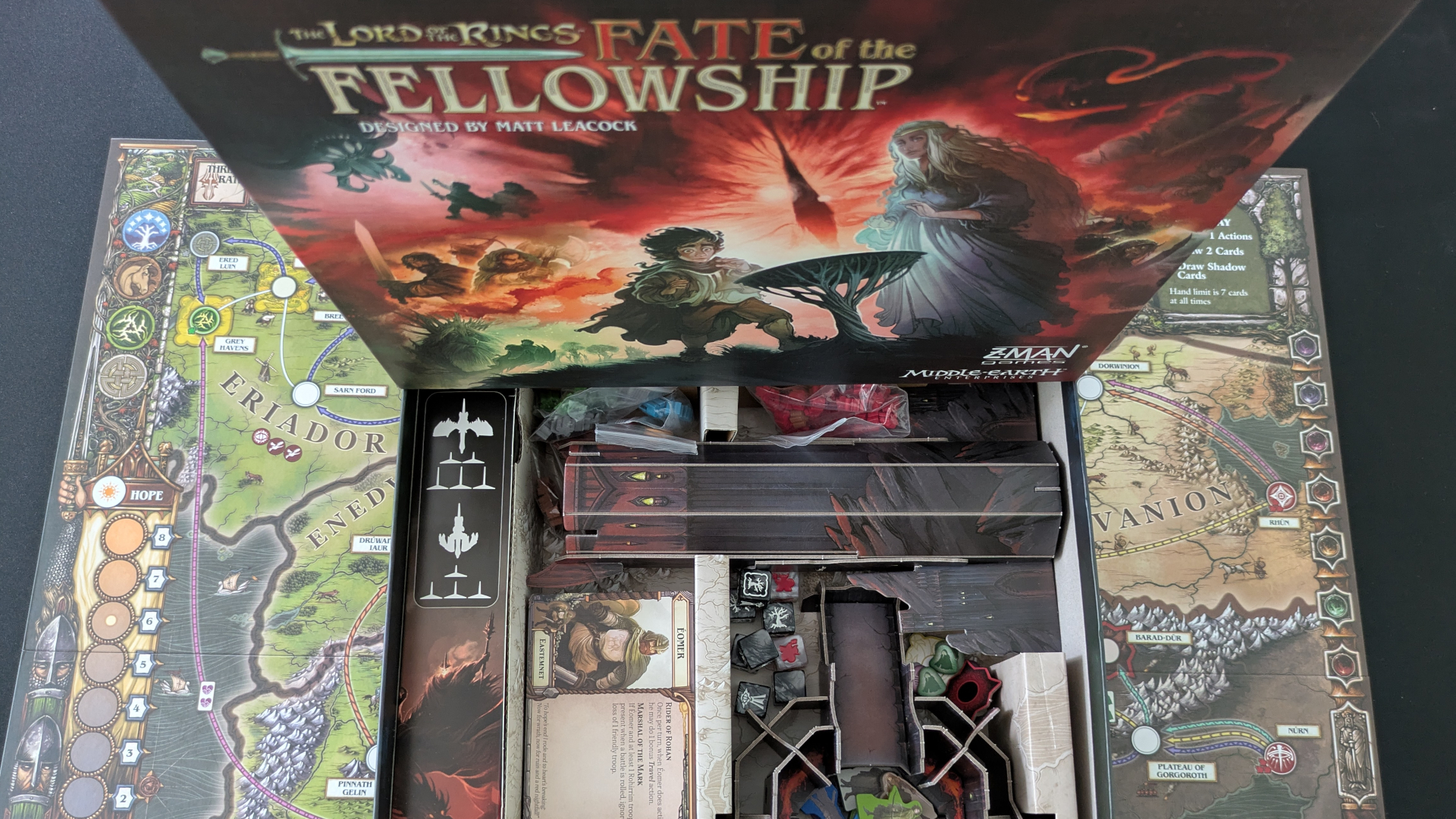
Looking for another big-hitter from 2025? Fate of the Fellowship walked away with a lot of buzz last year, and is absolutely worth a look if you enjoy tense co-op gameplay.
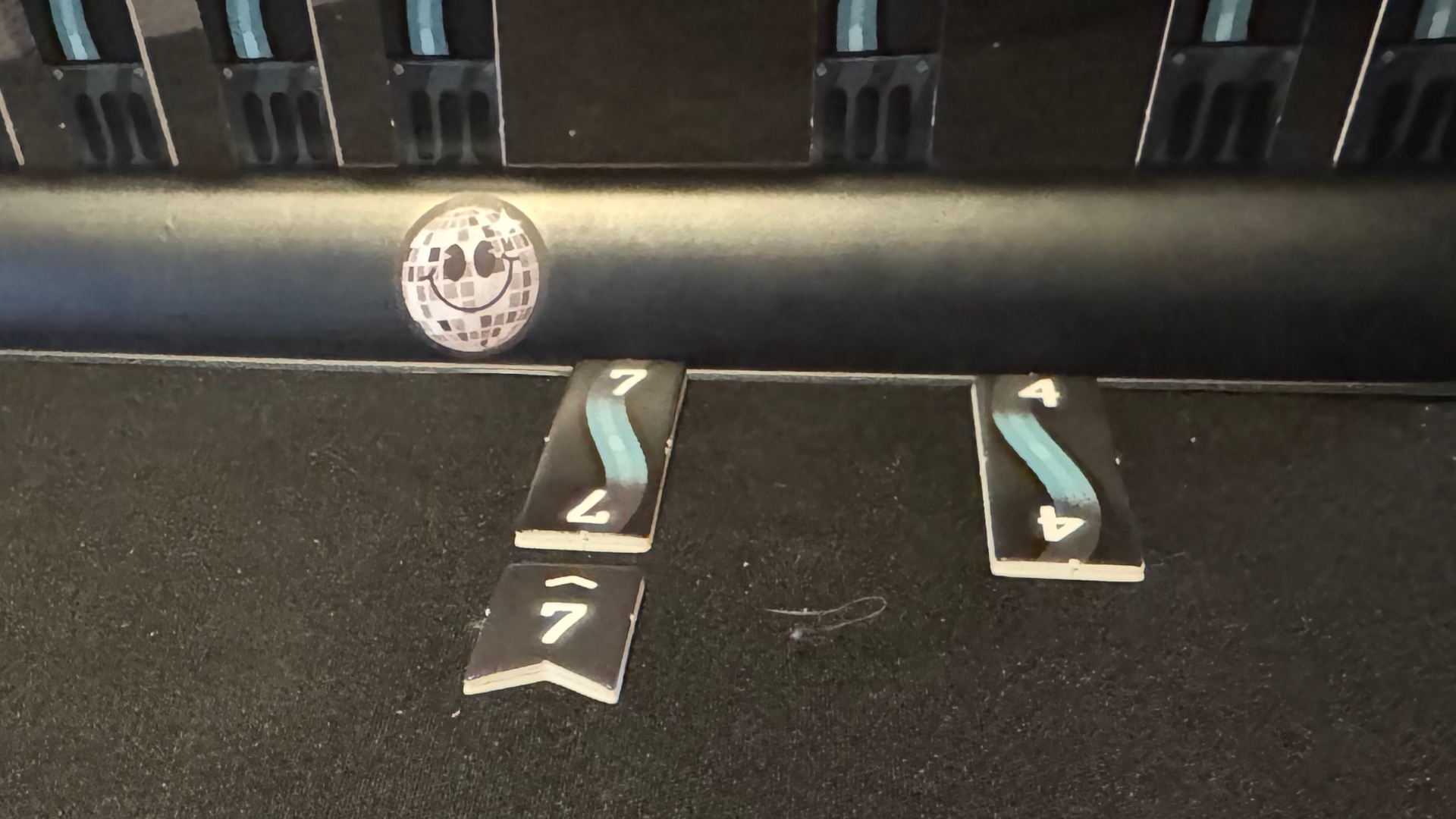
But how do players determine which wires to cut? At the start of the game, each player either chooses (or in later missions, is given) one info token. These tokens mark a blue wire’s number for all to see, providing crucial information to players. What info token a player chooses can provide snatches of extra information. Players might mark a 2 or an 11 sitting next to a 1 or a 12, which provides an extra hint. Or they might mark a 5 or a 6 at the end of their stand to signal that they don’t have a lot of high numbers on the board. Of course, each unsuccessful guess also provides valuable information, as the guesser reveals that they have a number on their stand and another player reveals the identity of the tile that was incorrectly guessed.
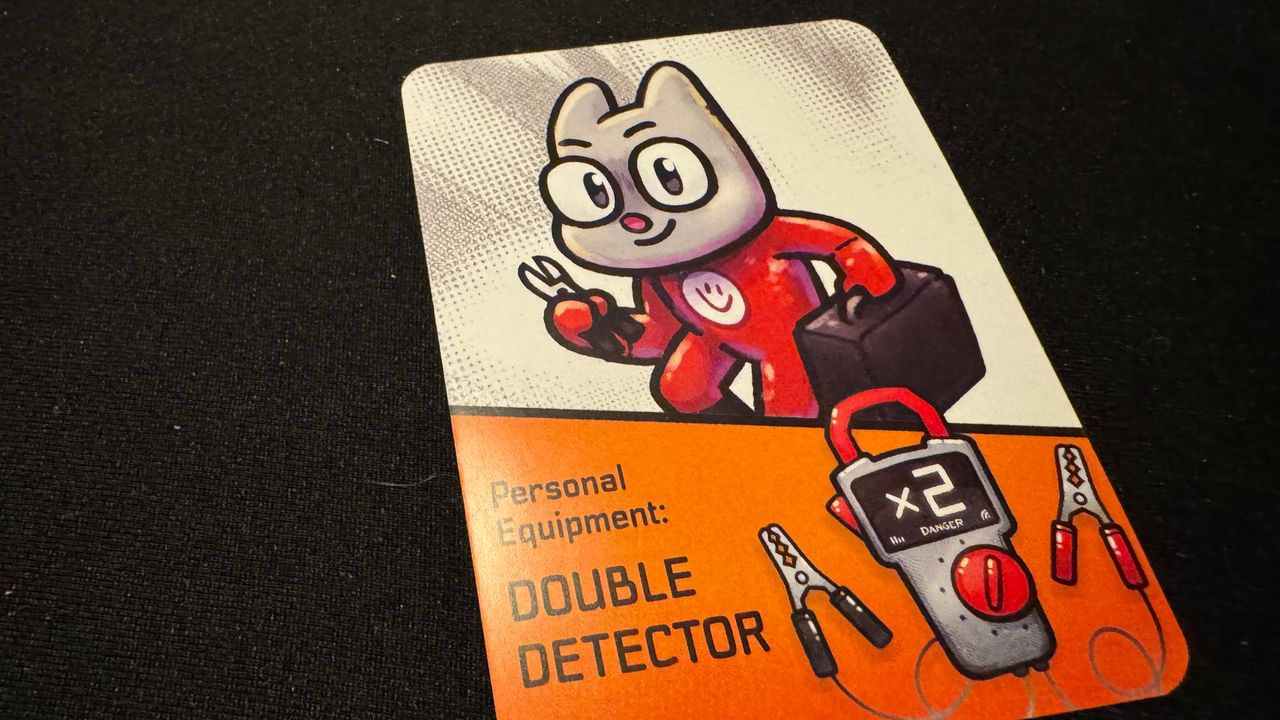
Players start with one tool at their disposal – a single use Double Detector. When using the Double Detector, they can pick two wires to potentially cut instead of one, lessening the risk considerably. The Double Detector is especially valuable when guessing a number close to a red wire – if players choose the red wire as one of their two options, they won’t cut the wire even on a miss. Of course, the Double Detector is only a one-use tool, so players have to use it wisely.
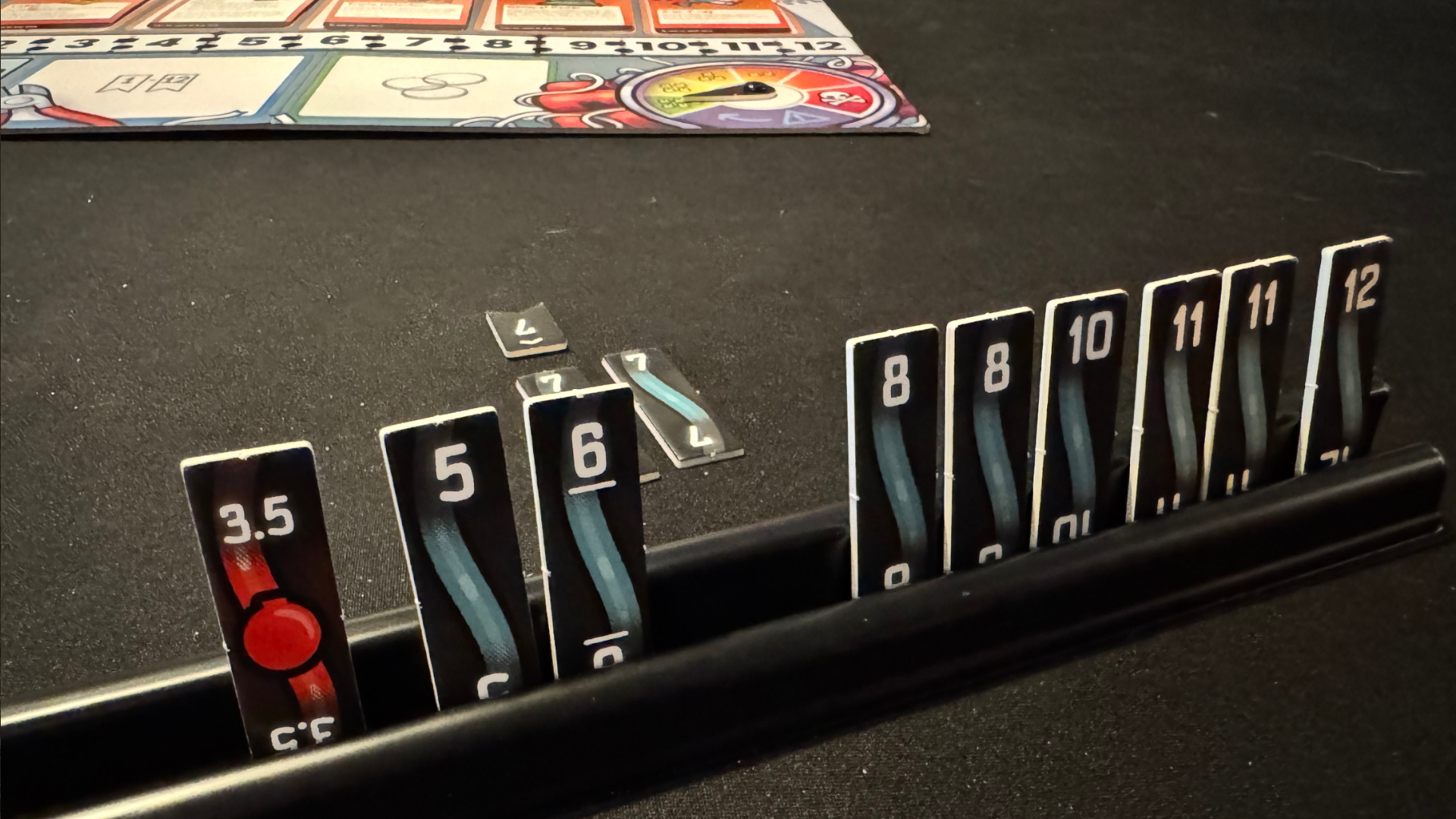
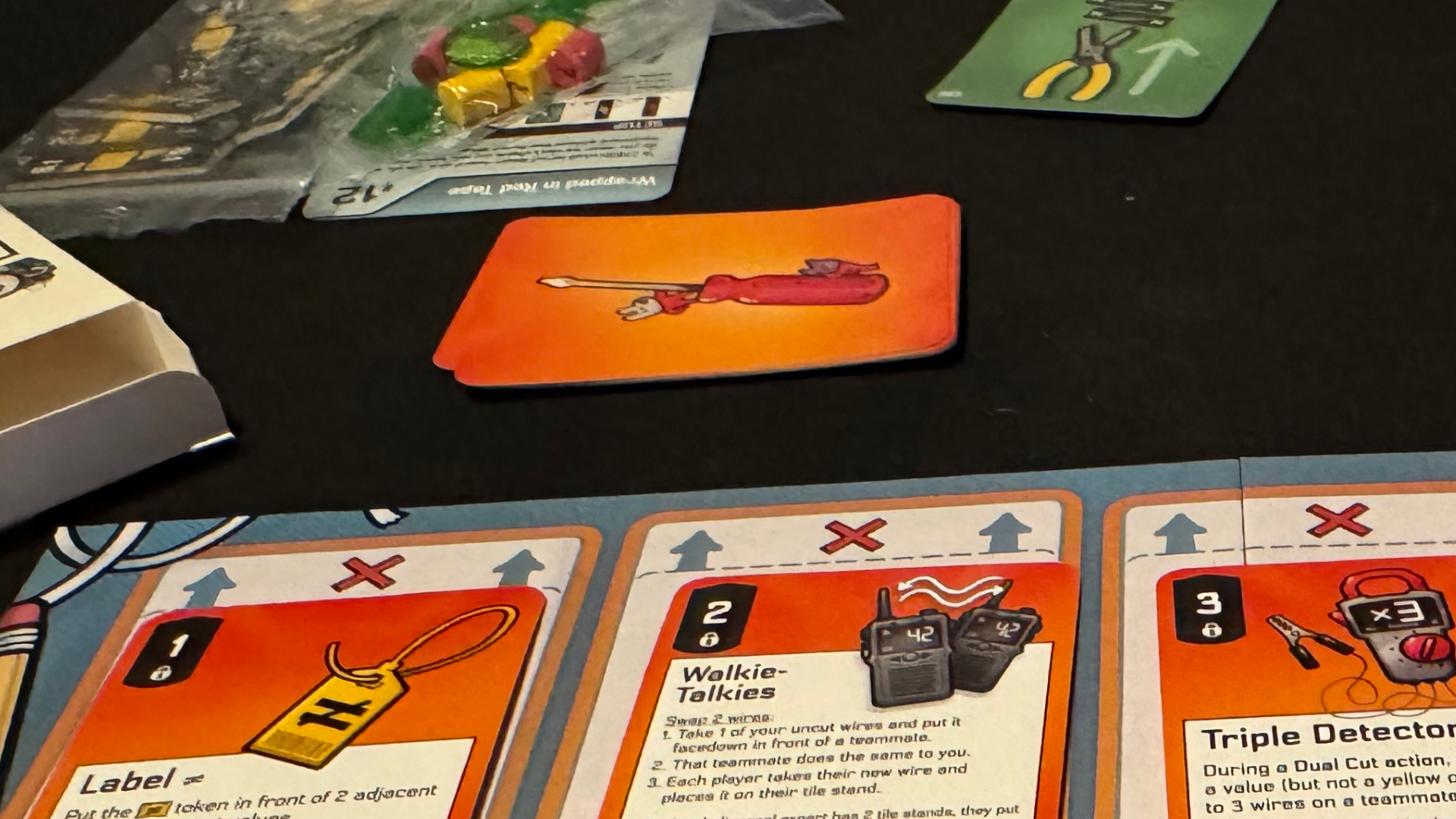
Once certain wires are cut successfully, players also gain access to random tools laid out on the board at the start of the game. These tools range from batteries to allow for an extra double detector, to a triple detector that allows a player to pick three wires instead of two, to a radar that allows a player to call out a number to determine who has a certain wire. These tools are also all single use and can be used by any player, so they can be helpful ways to get a player out of a rut or to get extra information out on the table.
For the most part, the best angle is to work from the extremes to the middle numbers. It’s easier to suss out a 1 or a 12 then it is a 5 or a 6. Players can also luck out if they have a pair of numbers on their stand. If players cut the other pair of wires successfully, then a player can choose to reveal their pair of numbers instead of taking a guess. Of course, that requires the other pair to be cut and sometimes it’s easier to sacrifice a pair of known wires to make a successful guess on another player.
Should you buy Bomb Busters?
Bomb Busters is a fun game, especially for those who enjoy deduction-based gameplay but don’t necessarily want to dive into social deduction games like Werewolf. The game rewards social deduction, but there’s no real benefit to having a hardy psychological understanding of another player. There’s no incentive to lie since it’s a cooperative game and the clues that players do provide can ultimately be followed to their natural conclusion, regardless as to the order that they’re laid out.
I personally love Bomb Busters because every mission is a different puzzle that needs to be solved, yet there’s not a single fixed solution. Each player has a different train of logic and as long as the wires are cut correctly, there’s no wrong way to reason through a guess. Even players who aren’t naturally gifted at logic puzzles should still enjoy Bomb Busters, because a lack of logic adds a dose of chaos to the proceedings and ups the tension even further.
I’m not sure whether players will want to run through 66 missions worth of content, but my gaming group has turned back to Bomb Busters a lot over a six month period, as it’s a great game for a 4-5 player group.
Ratings
Criteria |
Notes |
Score |
|---|---|---|
Game mechanics |
The game relies on a simple mechanic of pointing and calling out a number, so players don’t have a ton of complicated rules to remember. |
5/5 |
Accessibility |
Due to the simple mechanics, most players can jump into a game without any issue. Those who enjoy logic puzzles may pick up on common guessing schemes more quickly. |
5/5 |
Replayability |
With 66 missions to run through, there’s going to be a lot of replayability, although many missions offer only slight variations to gameplay. |
4/5 |
Setup and pack-down |
Setting up can be a little bit of a pain, as there are 48 tiny wire tiles to sort out, plus other components. Still, setup takes 10 minutes or less. |
4/5 |
Component quality |
Despite numerous playthroughs, none of the pieces I’ve used have experienced any significant degradation. |
5/5 |
Buy it if...
Don't buy it if...
How we tested Bomb Busters
This review was conducted using a copy provided by the publisher.
Our reviewer made sure they studied the game's rules before getting stuck in with multiple testing sessions that used a variety of player counts. Besides helping them familiarize themselves with Bomb Busters, testing the game in this way allowed them to see how the experience differed with different amounts of people.
For a broader look our process, see how we test board games or the GamesRadar+ reviews policy.
Want more recommendations? Check out the best adult board games or the best card games.